The Louvre in Paris is the world's finest museum with about 10 million people a year crowding into its glass pyramid to view the Mona Lisa and other masterpieces. So the opening of a new offshoot is cause for celebration.
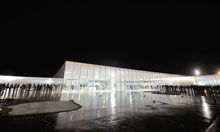
The new Louvre-Lens museum opened in December at a cost of €150m and is a shimmering vision in glass and polished aluminium that reflects the sky and the clouds around it. It's situated in a former mining town 45 minutes from Calais, built at the mouth of a disused coalmine and surrounded by landscaped gardens and, in the distance, some of the tallest slagheaps in Europe. It's a bold experiment in decentralising France's artistic riches that, to judge by the reaction of its first visitors, has paid off.
The museum has two key objectives: it will help regenerate Lens by attracting 500,000 visitors a year; and it will house a permanent collection of more than 200 of the Louvre's finest works, with greater room for experimentation.
The Louvre has for two centuries been mostly arranged by subject – French painting, or sculpture – whereas the central Galerie du Temps arranges works chronologically, from 3500BC to AD1850, in order to compare the progress of different countries and civilisations.
The Galerie du Temps is a vast, airy space without partitions, eerily reminiscent of Citizen Kane's warehouse of treasures in the final scene of the film. The walls are lined in polished aluminium that throws back visitors' reflections. Beyond it is the Pavillon de Verre (Glass Pavilion), which houses an annual themed exhibition, which until 21 October is about the perception of time. In addition, there's La Scène, a 300-seat auditorium for lectures and live performances to bring the collections to life.
There are also world-class temporary exhibitions. From 22 May until 23 September the museum is bringing out the big guns: Rubens' Europe will feature 170 works by the great Flemish painter, his models and some of his peers.
The whole philosophy of the museum is openness. Visitors will be able to watch the experts at work restoring paintings, for instance. Art-lovers are issued with a free handheld multimedia 3D guide, rather like an iPod, to improve their tour experience; and for the first year, the permanent exhibition will be free.
To find out more about this destination, visit gotofrancenow.com/northern-france-louvre-lens