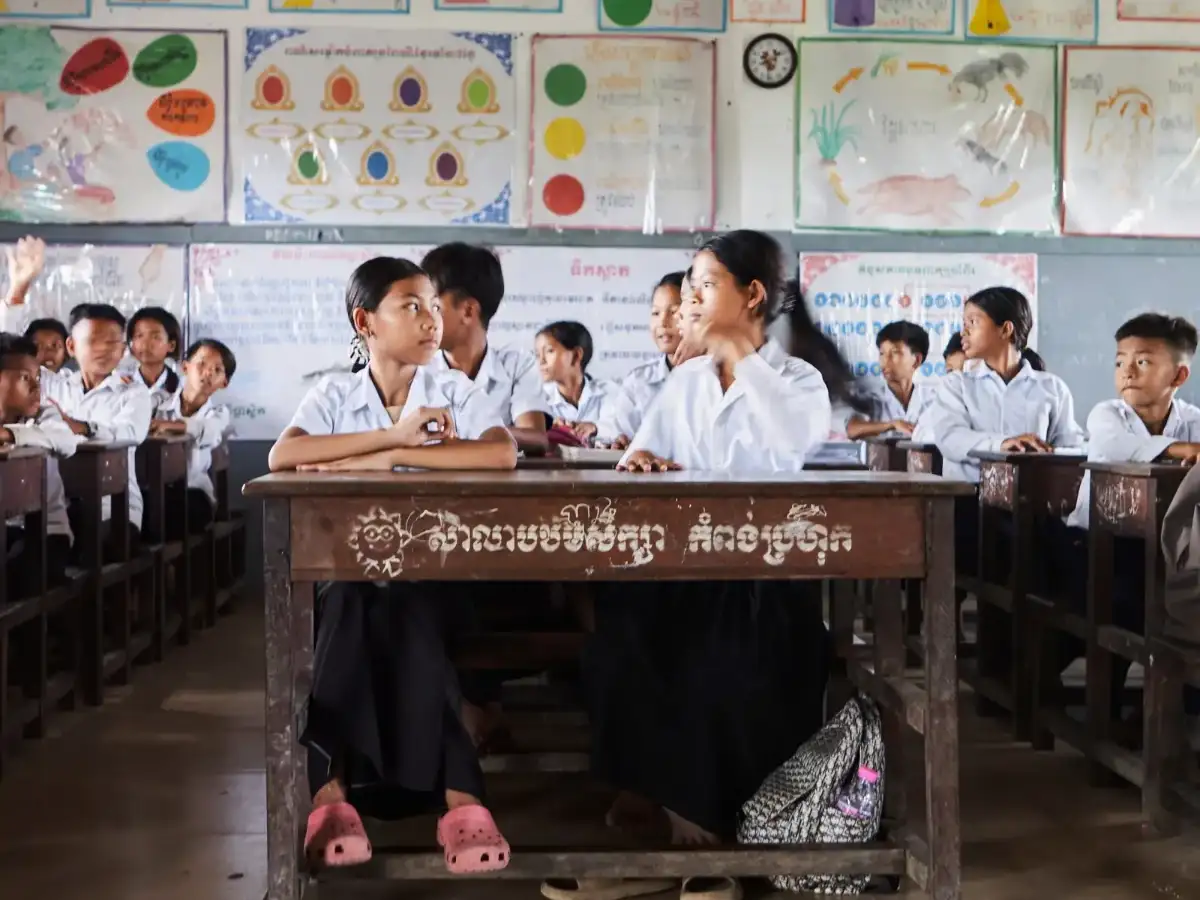
Kampong Prahok: Sou Sreynich dreams of becoming a teacher. But she knows she's far behind.
The 13-year-old first entered a classroom at 10, an age when most Cambodian children already have been in school for years. Her mother waited until she was old enough to swim, fearing the boat to school could capsize - a decision familiar to many parents on Cambodia's Tonle Sap, the largest freshwater lake in Southeast Asia.
Now, the price of gasoline has spiked because of the Iran war, an additional burden. Unlike outright school closures during COVID-19, the Iran war's impact on education is less visible. But it is falling first and hardest on the poorest families. Soaring fuel prices are making it more expensive for children and teachers to get to school, and for governments to fund education as national budgets come under strain.
On the lake, getting anywhere has always meant navigating the water. Climate change is making it harder, with increasingly unpredictable floods and droughts. Teachers at her school say 10 students have drowned over the years.
If the war continues, it could push up to 23.4 million more children like Sreynich into poverty by the end of the year, according to a recent United Nations Children's Fund report. About 80% of those children would be in Africa and Asia.