During the last war remote Pennine villages in Cumbria were given fire appliances in case stray bombs were dropped from Luftwaffe Junkers and Dorniers jettisoning their loads. Sometimes this resulted in direct hits to remote farms, killing on one occasion 11 occupants in a farm at Selside near Kendal in 1941.
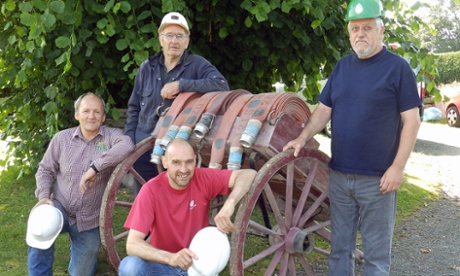
“The fire-carts,” says John Rudd, 75, of Dufton who lives in the picturesque village of Dufton nestling in the Eden Valley three miles from Appleby and beneath High Cup Nick, “were remarkably successful: two cart wheels carried hoses wrapped round spools that could be trundled to the nearest fire hydrant by horse- or man-power.” Local crews succeeded in quenching random blazes and also cooling buildings which were burning too fiercely to be extinguished, thus containing the conflagration as bleating sheep and squealing pigs escaped.
A big man, who makes hay rakes for a living, Mr Rudd continued: “At the war’s end my father – also called John – persuaded the powers-that-be for Dufton to keep its fire-cart because the narrow roads to the village are easily blocked by snow or floods, possibly preventing fire brigades reaching burning buildings.”
Dufton parish is one of the biggest in England, and is also the region of the Helm Wind. This blasts down Dufton Pike so violently it can fan fires into infernos.
Though the Dufton crew is considered persona non grata by local fire brigades, their appliance has prevented fire spreading by playing water into the dense smoke billowing, glowing embers spitting out and flames licking adjacent buildings until fire brigades from Penrith and Appleby arrived.
Once internal combustion ignited a wagon load of straw in Ghyll House Farm yard. Another blaze destroyed buildings at Dufton Hall farm as hens ran clucking and cows bellowed. “Fortunately,” says Mr Rudd, twisting a hose connection with weathered hands, “we could jet water on that one, enabling lads to enter and save the little calves that were being reared. Another time the water hydrant ran dry but villagers dammed Dufton Ghyll and saved the day.”