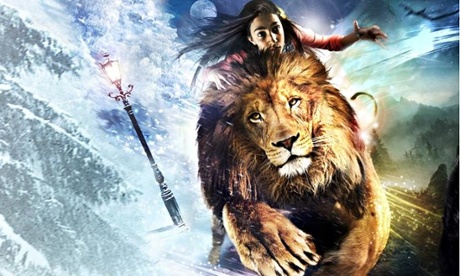
Adapting CS Lewis’ The Lion, the Witch and the Wardrobe was one of my first attempts at writing for the stage. Here’s what I learnt from doing it…
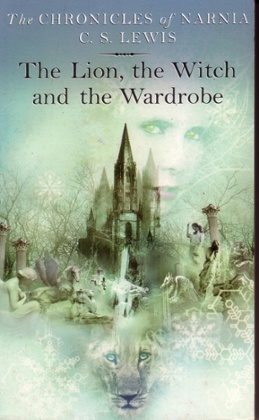
My mum’s in it (sort of)…
When I was working on it she told me about her experiences during the Blitz – being evacuated to a big house in the country; sitting up on a hill watching bombs exploding over night-time London; returning to find the windows of the family flat shattered, and the wardrobe scorched by a firebomb. Her memories inspired me to think about war as a character in this story, and the irony that the Pevensies, sent away to be safe from air raids, walk through a portal into an epic war between good and evil.
Zoom in, zoom out…
CS Lewis reached the front line of the first world war battlefield the Somme on his 19th birthday. Narnia’s anthropomorphic creatures are pointed to in his memory of an incident during that Great War. With opposing forces “pouring shells into our line about three a minute all day. I think it was that day I noticed how a greater terror overcomes a less: a mouse that I met (and a poor shivering mouse it was, as I was a poor shivering man) made no attempt to run from me.” A reminder that the best stories focus in on tiny detail yet pull out to see the big picture.
You don’t need an actual wardrobe to convince people they’ve seen a wardrobe…
I originally wrote the play for the New Vic in Staffordshire, which is a theatre in the round. Big items of furniture obstruct the audience’s view, so we had to come up with an ingenious solution. Remembering the games we children used to play in nan’s spare room, where blanket-covered tables, and old clothes, and disused rolls of carpet, and suitcases in store provided the props for a million imaginary adventures, I began to wonder: could you make a magical wardrobe out of nothing but a few fur coats and some imagination…?
Writing an epic battle between good and evil is easier than you’d think…
I struggled to write dialogue for the big battle, before remembering a lesson from the movies: great music and thrilling fighting can be worth a thousand words. So I scribbled a few stage directions for the composer and fight director, and sat back. They turned it into a stunning action sequence ending with a single grisly snap. Next time you have a scrap of bubblewrap to hand, twist it up till it pops and consider what that sound might be…
Fall in love…
“In the author’s mind there bubbles up every now and the material for a story… This nags him all day long and gets in the way of his work and his sleep and his meals. It’s like being in love”, CS Lewis wrote in an essay. Put time aside for this love affair, I’d advise. Unromantic, but: schedule it in…
If at first you don’t succeed…
CS Lewis’s first attempt at writing this story featured four children named Ann, Martin, Rose and Peter. His friends told him it was terrible. So he destroyed what he’d written, and started again. If you don’t get it right first time, try, try and try again. You may end up with something spectacular.
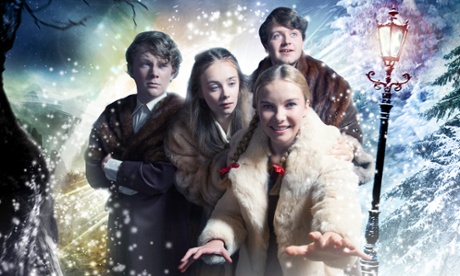
Talking…
Studying at university, I occasionally popped out the back gate to The Lamb and Flag and or the Eagle and Child pubs. I’d meet up with other students and talk about making theatre. While CS Lewis and JRR Tolkein were creating Narnia and Middle Earth, they’d meet in those very same pubs to discuss their fantastical creations with their literary group the Inklings. I often reassure myself: thinking about something can be as useful as doing it…
Tolkein…
Despite the fact that Narnia and Middle Earth were created in tandem, Tolkein wasn’t keen. Dryads and fauns from classical literature rubbing shoulders with Beatrix Potterish talking animals; fairy tales alongside Christian symbolism; Father Christmas. Art is subjective; people have different tastes. The trick is to use their comments; take their advice; but not be inhibited by them.
Children grow faster than books…
CS Lewis’s goddaughter Lucy Barfield was four when he began to write in 1939 and 14 when the book was finished a decade later. “I wrote this story for you,” he told her, “but when I began it I had not realised that girls grow quicker than books. You are already too old for fairy tales”. Worth remembering: it can take a very, very long time to create a piece of great art.
Adults love the story as much as children do
I thought I was adapting a play for children. But when they started bringing their mums and dads, and nans and granddads - even great-grans and great-granddads – I began to realise how special this story is. It appeals across the generations. That’s why it’s a perfect Christmas show: it’s something for families to enjoy together, at a time of year when family is so important.