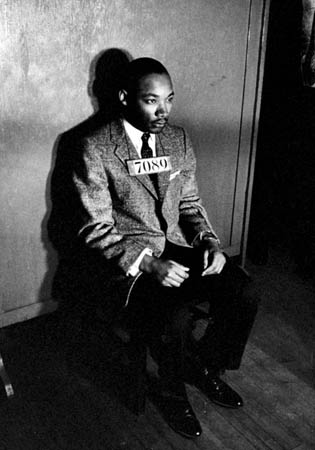
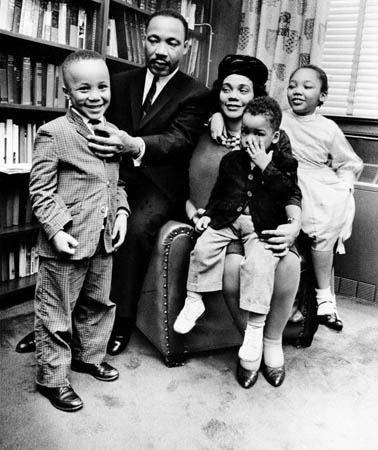
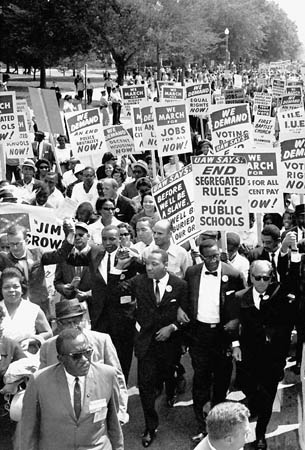
February 24 1956: Martin Luther King, then a pastor in Montgomery, Alabama, sits for a police mugshot after his arrest for directing a boycott of segregated buses. The 382-day boycott began when a black woman, Rosa Parks, was arrested for refusing to give up her seat to a white man.Photograph: Don Cravens/Time Life Pictures/GettyMarch 17 1963: King and his wife Coretta with three of their four children in their Atlanta, Georgia, home.Photograph: APAugust 28 1963, Washington, DC: The 250,000-strong March on Washington for Jobs and Freedom, at the time the largest such demonstration in US history. King marches among the placard holders.Photograph: AP
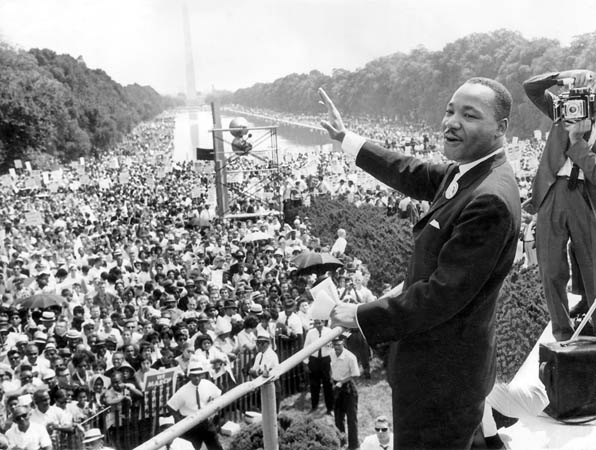
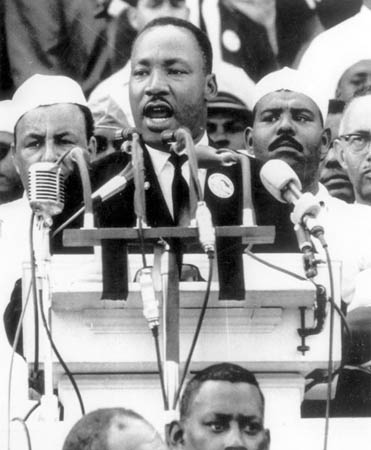
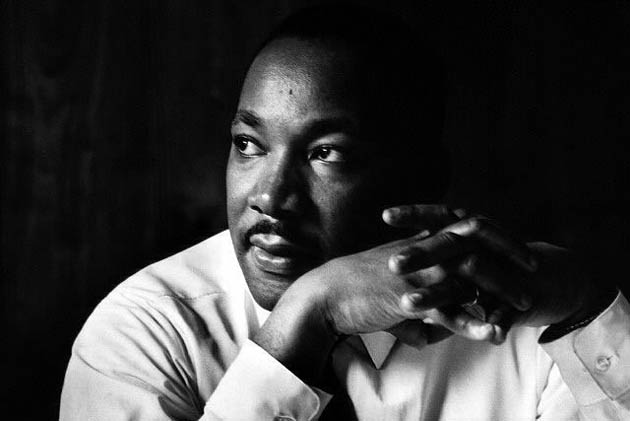
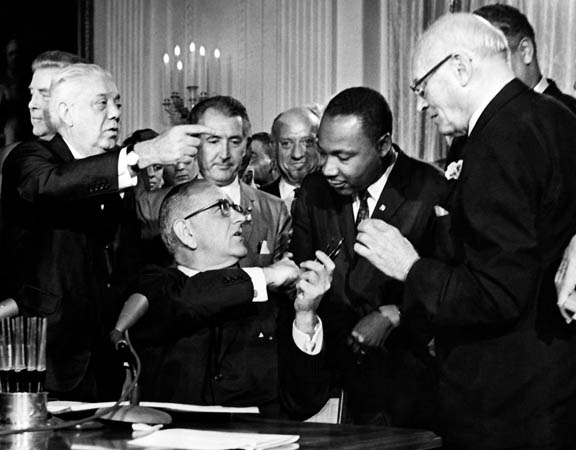
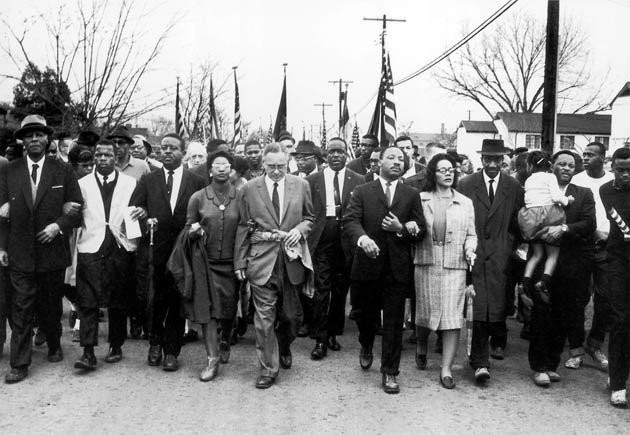
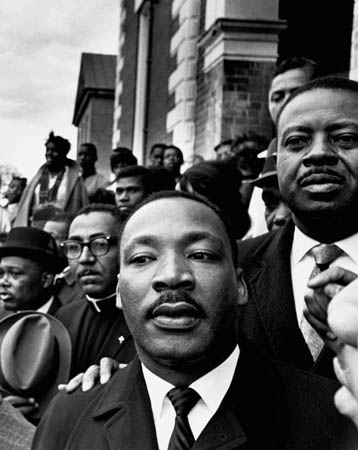
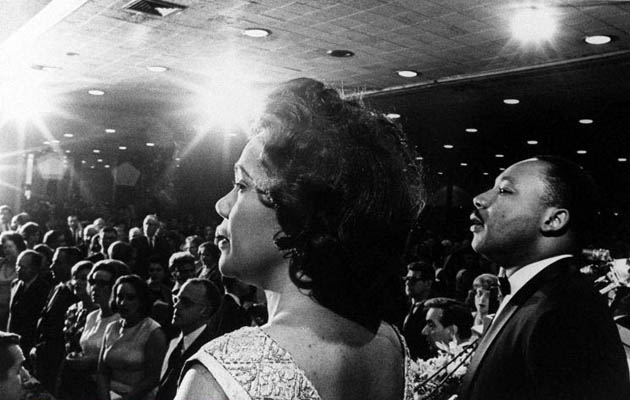
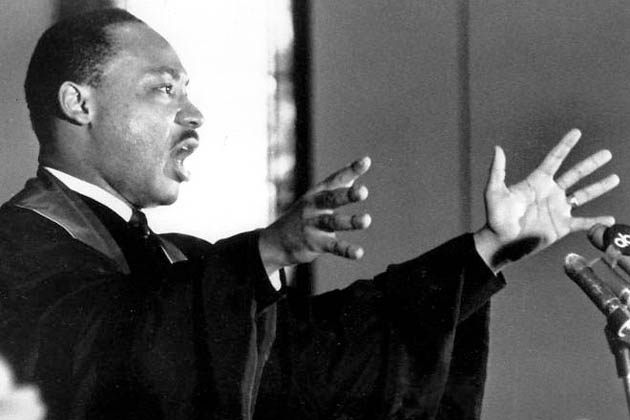
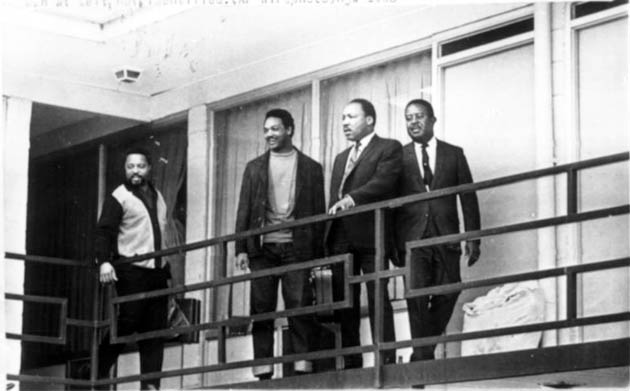
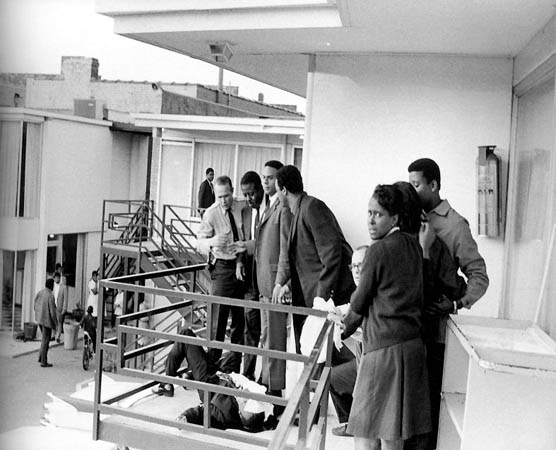
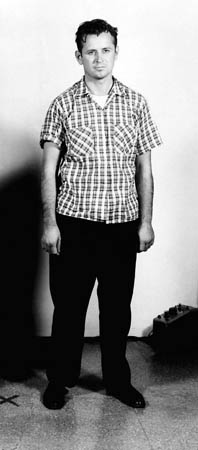
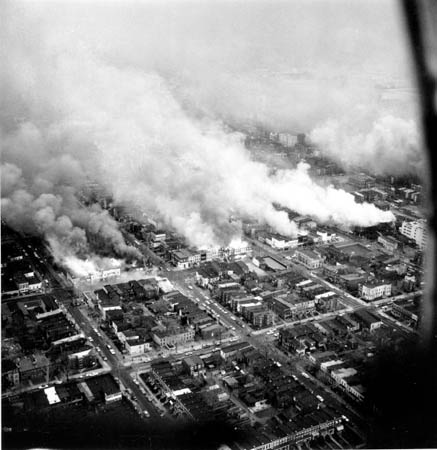
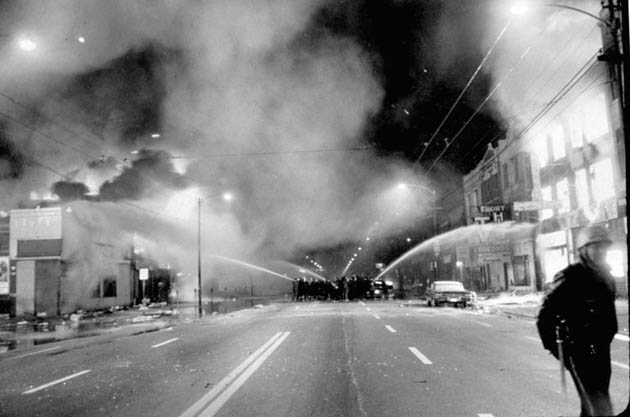
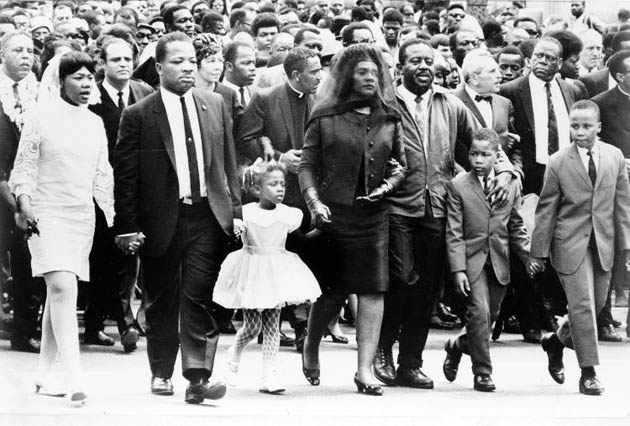
August 28 1963, Washington, DC: King waves to marchers assembled on the Washington National Mall from the steps of the Lincoln Memorial.Photograph: Hulton Archive/GettyAugust 28 1963, Washington, DC: He tell the marchers: "I have a dream." His speech on aspirations for racial equality in America becomes a landmark in 20th-century oratory.Photograph: APApril 1964, Atlanta, Georgia: King listens at a meeting of the Southern Christian Leadership Conference (SCLC). The civil rights organisation was formed following the success of the Montgomery bus boycott.Photograph: Flip Schulke/CorbisJuly 2 1964, Washington, DC: US president Lyndon B Johnson shakes King's hand following the signing of the civil rights act. The act outlawed segregation in schools, employment, government and public places.Photograph: AFPMarch 30 1965, Selma, Alabama: King and his wife lead a black voting rights march from Selma to the state capital in Montgomery. Photograph: William Lovelace/Express/GettyMarch 1965, Selma, Alabama: King stands next to Reverend Ralph Abernathy and Reverend Joseph Lowery at a rally during the marches to Montgomery.Photograph: Flip Schulke/CorbisJune 15 1965, Atlanta, Georgia: King and his wife at a dinner in honour of his 1964 Nobel Peace Prize. At the age of 35, he was the youngest-ever recipient. The $54,123 was turned over to the furtherance of the civil rights movement.Photograph: Sipa Press/Rex FeaturesApril 30 1967, Atlanta, Georgia: King speaks to his congregation in the Ebenezer Baptist church as he urges America to repent and abandon what he called its "Tragic, reckless adventure in Vietnam".Photograph: APApril 3 1968, Memphis, Tennessee: King stands on the balcony of the Lorraine Motel the day before his assassination there. To the left is Jesse Jackson.Photograph: APApril 4 1968, Memphis, Tennessee: Civil rights leader Andrew Young and others stand on the balcony of the Lorraine Motel and point in the direction of the gunshots.Photograph: Joseph Louw/Time & Life Pictures/GettyApril 4 1968, Memphis, Tennessee: Police stand with civil rights leaders over King's body following his assassination. He was 39 when he was killed.Photograph: Joseph Louw/Time Life Pictures/GettyJames Earl Ray, King's assassin. The picture was taken in 1959 at the time of his arrest in St Louis on an armed robbery charge.Photograph: APApril 5 1968, Washington, DC: King's assassination was followed by rioting in more than 100 US cities. In Washington, the riots lasted four days, burned 1,200 buildings, claimed the lives of 12 and devastated the inner city economy for decades. Clouds of smoke rise from burning buildings. The fires resulted from rioting and demonstrations after the assassination of Martin Luther KingPhotograph: APApril 1968, Chicago: Firefighters combat blazes during rioting in the city that killed 11.Photograph: Lee Balterman/Time Life Pictures/GettyApril 9 1968, Atlanta, Georgia: The family of Martin Luther King during his funeral procession.Photograph: Don Hogan Charles, New York Times/AP
Sign up to read this article
Read news from 100’s of titles, curated specifically for you.