To thine own self be true. Some fake breasts and fabric tape might also help. That’s the feelgood moral of Matthew Lopez’s charming, trivial The Legend of Georgia McBride, about a young southern scamp who finally becomes a man when he becomes a woman.
Deep in the Florida panhandle, young lovers Jo (Afton Williamson) and Casey (Dave Thomas Brown) are making a go of adulthood. She’s waitressing, he’s doing roofing work part-time and trying to make his loose-hipped Elvis impersonation pay. (It doesn’t.) They have opened “a real honest-to-God checking account with debit cards and cheques with pictures of seagulls on ’em”. But their rent cheques keep bouncing.
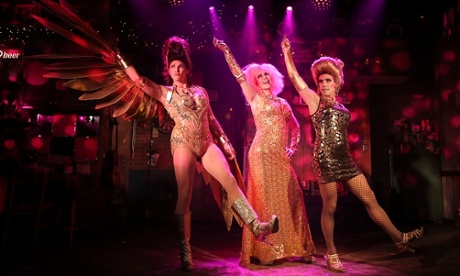
And then, in a not entirely persuasive concatenation of events, Casey is forced out of his Elvis jumpsuit and into an Edith Piaf wig. Gender illusionist Tracy (Matt McGrath) is putting on drag shows at the bar where Casey used to snivel and sneer. When she finds herself short a girl, she drafts a guy. Casey doesn’t take to the shoes or boobs at first, but he was a drama geek in high school and once he embraces his Georgia McBride persona, he’s lip-synching and shimmying with the best of them.
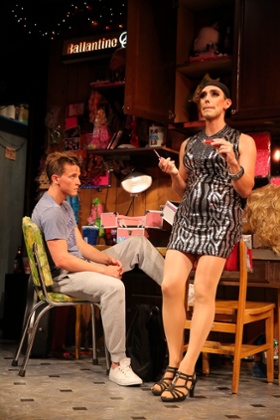
Lopez’s former play, The Whipping Man, made effective use of writerly formula in large part because the setting and characters were so surprising. At the end of the civil war, a Jewish soldier returned to a Virginia mansion attended by the family’s last two slaves, also Jewish. But the world of Georgia McBride is a lot more familiar and so the storyline feels somewhat canned, especially as the play veers away from anything too controversial. Casey’s heterosexuality is never in doubt and while the play scolds him for lying to his wife about his female impersonation, the play never dares suggest that it does anything but make him a better husband, father and provider.
“Drag is not for sissies,” says the dipsomaniacal drag queen Rexy (Keith Nobbs). But the play wimps out, leaving questions of gender and sexuality uncomplicated and unexplored.
All of this would be more frustrating were it not for the cheerful abandon with which director Mike Donahue and his cast plan and execute the musical numbers. McGrath, long reliable as a character actor, is a particular wonder, especially in a terrifying medley that jumbles pretty much every Broadway ballad and some pop ones, too. His Tracy is an utter caricature, though always somehow sympathetic and credible. And McGrath looks surprisingly good in capris.
“Life is a banquet,” Tracy says. McGrath is feasting.