The Legacy (Sky Arts) | Sky Go
Remember Me (BBC1) | iPlayer
Skint (C4) | 4oD
Posh People: Inside Tatler (BBC2) | iPlayer
What makes for good drama, something that is intelligent, textured and gripping? The answer most often found on television, particularly in recent years, is murder. While there are plenty of dramas featuring murders that are dull and unengaging, good dramas that don’t involve a murder are as rare as England flags in north London’s Barnsbury.
One of the best was Six Feet Under. Although it was set in a funeral parlour and thus steeped in death, it looked for and found its drama in the secrets, lies and emotional turmoil of a family – the story that is as old as murder and almost as punishing.
Since that series finished almost a decade ago, there’s been very little family drama that has stood out above the thin lather of popular soap. But The Legacy (Arvingerne, for the Scandi cognoscenti), a Danish production that has been consigned to the backwater of Sky Arts, may prove to be the exception.
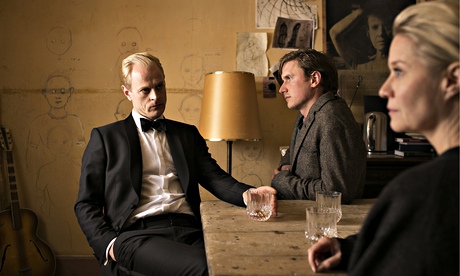
It started in confident naturalistic style, effortlessly imbuing several disparate, everyday scenes with a suggestion of slow-burning tension. At its core was the suppressed churning of a family haphazardly created, like a throwaway artwork, by a bohemian matriarchal artist, Veronika (Kirsten Olesen).
We saw her visit an attractive young woman in a flower shop, at whom she gazed just a little too longingly. It turned out that the flower seller was the daughter Veronika had abandoned when she was a baby. As recompense, she informed her surprised biological daughter of the truth, left the young woman her sprawling country house and promptly died, setting the scene, presumably, for an unholy inheritance battle with Veronika’s recognised three adult children.
Described like that, it sounds like pure melodrama. But The Legacy displayed the same subtle gift for social observation that made the first series of The Killing such a phenomenon.
As a light snow fell, the troubled family gathered for an un-Christmassy Christmas in the spiky matriarch’s vast but unhomely home. It didn’t quite match the explosive gathering in Festen, the excellent Danish film that launched the Dogme school that has had such an influential role in Danish television drama. But it did pack a sweetly deceptive punch.
If the Killing effect is anything to go by, be prepared for a spate of intense, roiling British family dramas in about two years’ time.
For a brief period at the start of Remember Me it seemed as if a whole hour might pass in British peak time drama viewing without a murder being committed. It began with Michael Palin, in straight-man mode, playing an elderly and prickly Yorkshireman in impressively method-like style – so fully realised was the performance, with its jerks and grimaces, that it didn’t allow any opportunity for thoughts of Palin’s imperishable turn in the Four Yorkshiremen sketch to intrude on proceedings.
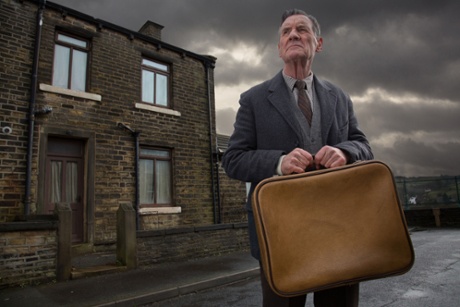
Keen to escape his solitude, Tom (Palin) faked an accident to get into a care home. At that stage it looked like an intriguing study of the isolating effects of old age, but unfortunately that’s when the body went flying out of the window. Crash!
The social worker who’d taken Tom to the care home was found chewing the driveway concrete, having been defenestrated from the top floor of the building. Did she slip or was she pushed? No one, least of all the police, seemed much bothered either way.
Thereafter it was all ghoulish japes and ghostly noises, and the less than thrilling prospect of a supernatural “thriller”. Clearly summat i’nt right at Tom’s ’ouse. Though nothing, I’d guess, that a couple more stiffs can’t sort out.
By one of those coincidences that enliven the pulse and sharpen the national appetite for irony, a film about the privileged goings-on of Tatler magazine was scheduled last week against a documentary series about the poor in Grimsby. One of the most depressing journalistic assignments I’ve ever undertaken was an investigation into a heroin-trade killing in Grimsby. That was more than 15 years ago and, by the look of Skint, life in grimmer quarters of Grimsby has not made a radical improvement.
Amid a haze of booze, fags and drugs, the story of a hopeful young couple, Ryan and Chaz, was especially bleak. Ryan had a “no regrets” outlook to life, which, given that he was wearing a tag and looking at a likely prison sentence, may have been a virtue born of necessity.
In any case, after showing his romantic side in a touching Valentine’s Day scene, Ryan took his girlfriend out on a joyride. They were chased by the police and in the ensuing crash Chaz, a likable girl with tragically narrow horizons, was paralysed. Ryan suddenly grasped the concept of regret.

“None of the posh know what real proper life is,” said Chaz, and watching Posh People: Inside Tatler it was difficult to make a case against that telling observation. Like the magazine itself, the film gently mocked the rich but, again like the mag, in a way that adds to the greater glory of actually being rich. Look, it said, here are these absurdly wealthy people indulging themselves. And laugh all you like, but you’re not invited.
Some things didn’t require comment or a funny camera angle, they spoke eloquently and humorously for themselves. For example the name of features editor: Sophia Money-Coutts. You don’t make names up like that. You mint them.
The star of the show was Tatler feature writer Matthew Bell, who swanned around filing what the programme accurately described as “dispatches from the frontline of privilege”. His tone stayed carefully on the respectful side of acerbic, only stiffening for a moment when a tailor in Oxford refused to speak to him about the Bullingdon Club.
“It would be ghastly,” he said at one point, “if everything in life was relevant.”
Grimsby suffered from a surfeit of relevance. Everything mattered and no one cared. At Tatler nothing mattered and everyone cared. Just not about Grimsby.