
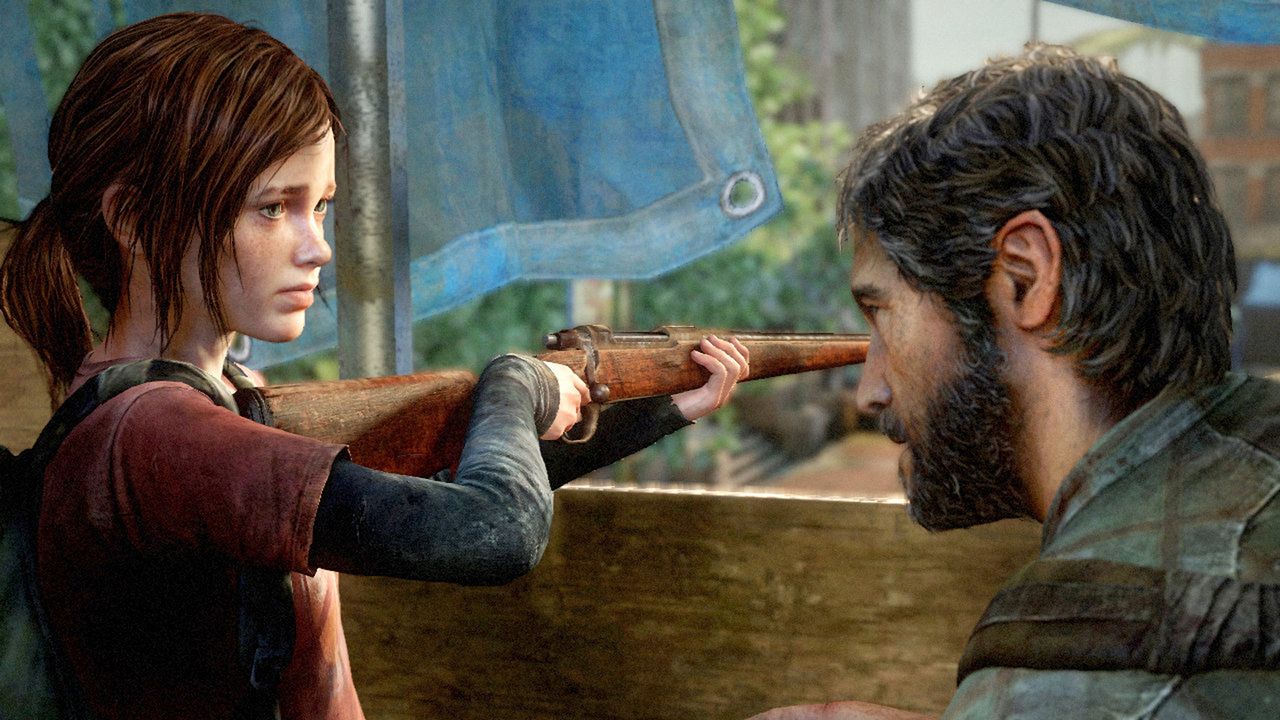
The Last of Us director Bruce Straley has given his most personable and in-depth explanation of why he left Naughty Dog back in 2016, citing the "repetition" of the studio's established game design as one of the key reasons for his departure.
"I had been there 18 years. That's a long time for anybody to be anywhere," Straley tells Polygon. "I think I played a very integral role in building that brand up and those titles, and I had a really amazing experience with those teams. But I felt like I was answering the same questions over and over again.
"We were kind of in this paradigm of this style of game — that I was part of creating! But it felt like I've been in this position before. My brain isn't good with that type of repetition. I need new problems to solve, I need new creative outlets. I'm not saying there wouldn't be opportunities there, but couple that feeling with the idea that I was working really, really hard at something that wasn't mine."
Straley's first job at Naughty Dog was artist on Crash Team Racing, and he would go on to become co-art director on the first Uncharted game from 2007, and then game director on Uncharted 2, The Last of Us, The Last of Us: Left Behind, and finally, 2016's Uncharted 4 before his departure the following year. Straley founded his own studio, the independent Wildflower Interactive, in 2021, and last night at The Game Awards 2025, its debut game, single-player adventure Coven of the Chicken Foot, was revealed.
Although we haven't seen enough of Naughty Dog's next game, Intergalactic: The Heretic Prophet, to say if and how its game design has evolved since The Last of Us 2, it sounds like Straley simply wanted something different after directing three giga-budget, cinematic, narrative-driven adventure games. And Straley was right on the money: Naughty Dog ended up banging this same drum – literally, in the case of The Last of Us 2 re-releases – for years to come.
"For me, it's this evolution of: How can I just take something from a different angle and create a fresh perspective on a genre that's been well-trodden?" he said. "And if I'm not doing that… I just don't have it in me. I would make a lot more money if I did!"
Notably, Coven of the Chicken Foot is described as an "emotionally-rich, stylized, single-player adventure," which definitely doesn't sound antithetical to the design philosophy that's largely defined Naughty Dog games for almost two decades, but at the very least, stylistically it's very distinct, with a vibrant, colorful, cel-shaded, almost Ghibli-esque vibe that's nothing like the near-photorealistic style of modern Naughty Dog games.
In terms of gameplay, Wildflower says it's "a charming yet dark, character puzzle-platformer set in a stylized world that 'winks' at the tropes of a traditional fantasy-adventure game," which indeed lines up with what Straley said about wanting to avoid repetition.