South Korea’s highest-grossing film of all time, The King’s Warden, is rolling out internationally after its record-breaking domestic run, opening in UK and Irish cinemas this month.
The historical drama about exiled Joseon monarch Danjong and a village chief tasked with guarding him has rewritten box-office benchmarks, earning over £70m to become the top-grossing film in the country’s history, according to The Korea Herald.
The King’s Warden has now secured distribution deals in the UK and Ireland, North America, Australia, and multiple Asia countries, including Japan, Singapore, and Thailand, Screen Daily reported.
Directed by Jang Hang Jun, the film follows the sixth monarch of the Joseon dynasty, Danjong, who ascended the throne in 1452 at the age of 12 and was forced to abdicate three years later in a coup led by his uncle. The young boy was stripped of his titles and exiled to a remote mountainous region, where he was eventually killed at the age of 16.
Released on 4 February, the film crossed 10 million admissions within a month and became the first film to do so in two years after 2024’s Exhuma and The Roundup: Punishment. Earlier in its run, it drew 2.67 million admissions over the five-day Lunar holiday period alone, accounting for 62.5 per cent of total box-office revenue during that stretch, according to Yonhap.
The film, produced on a budget of $6.9m, is also the third most-watched film in Korean cinema history, with 14,757,103 cumulative admissions.
It ranks behind only two films by admissions – the 2014 war epic The Admiral: Roaring Currents, which drew 17.6 million viewers, and the 2019 action-comedy Extreme Job, which recorded 16.2 million, according to Korea Joongang Daily.
In revenue terms, however, The King’s Warden has already surpassed both, taking 142.5bn won (£71m), compared with 135.7bn won (£67.6m) for The Admiral: Roaring Currents and 139.6bn won (£69.5) for Extreme Job.
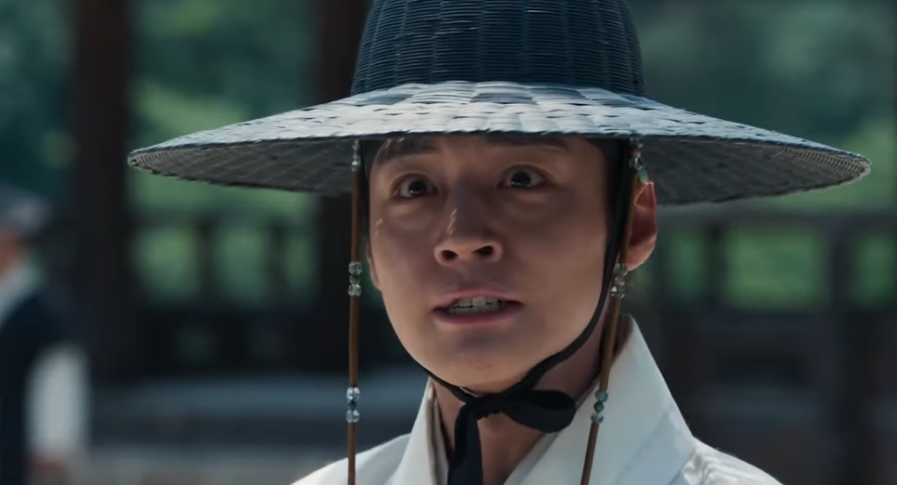
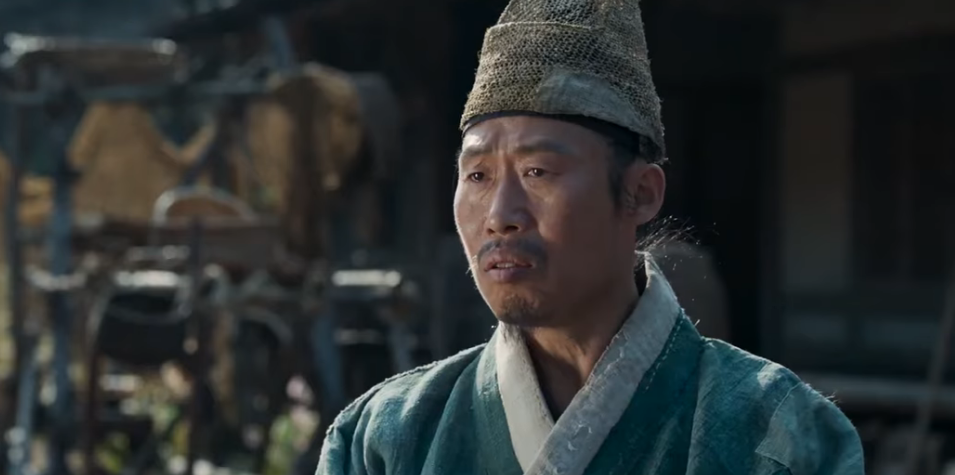
Veteran South Korean actor Yoo Hae Jin plays Eom Heung Do, the village chief who watches over the exiled king, while Danjong is played by Park Ji Hoon, who played the lead in 2022’s Weak Hero.
Historical accounts offer conflicting versions of Danjong’s death, with some suggesting he was strangled and others that he was given poison, the customary method of execution for deposed royals. Some records also say his uncle, King Sejo, ordered the body to be thrown into a river and decreed punishment for three generations for anyone who recovered or buried it.
Despite this, records refer to a low-ranking official, Eom Heung Do, who is believed to have secretly retrieved the body and buried it at what is now known as the royal tomb Jangneung, before going into hiding.
Local media say that the film’s success has been largely driven by the emotional pull of its tragic historical narrative, strong word-of-mouth buzz, and Yoo’s and Park’s performances, even leading to repeat viewings well beyond its opening weeks.
“It is not just about political fights in the palace. I saw it as a story about ordinary people, which is quite rare in Korean historical movies,” Lim Eun Jung, CEO of the film’s production company Onda Works told The Korea Times, on why the film chose to centre the relationship between the teenage deposed king and the village chief, as opposed to the coup that preceded it.
The film’s popularity has even led to a wave of royal mania across the country, with tourists heading in droves to Yeongwol, the mountainous county in Gangwon province where the king was historically exiled.
Visitors have been heading in droves to Cheongnyeongpo, the king’s place of exile, and Jangneung. According to the Korea Times, sales across 2,161 tourism-related businesses in Yeongwol rose 35.7 per cent in the four weeks following the film’s release compared with the previous month.
More than 70,000 people visited the two main heritage sites, nearly double the county’s population of 35,917.
Hong Jeong Hak, who runs a restaurant near Yeongwol Station, told the outlet that the number of out-of-town customers had risen by more than 30 per cent since the film’s release.
Other regions like Daegu and Jecheon have also tried to capitalise on the momentum. Daegu, which is where the village chief Eom Heung Do is buried, has launched a series of themed tours taking visitors to places linked to figures associated with Danjong, including the Yuksinsa Shrine, which commemorates six loyalists who attempted to restore the king.
Seoul prepares for 260,000 at BTS comeback gig – but city says only 48,000 show up
‘We’re back’: BTS thrills thousands of fans with massive comeback concert in Seoul
Seoul raises terror threat level as 260,000 fans descend for BTS comeback gig
Tina Fey makes Epstein Files joke as Mary Poppins in new SNL UK trailer
Peaky Blinders creator addresses star’s ‘confusing’ absence from new film
Jason Momoa shares update after evacuating Hawaii home amid historic floods