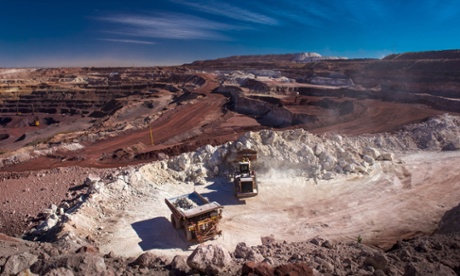
At Anglo American, when we embark on a new mining project, we look at the bigger picture. From exploration and build to operation and closure, it’s important to us that we help leave a legacy to that region that makes a positive difference.
Last week, our socio-economic development manager Christian Spano took part in the “Licence to Legacy – creating social impacts throughout the project lifecycle” webinar organised by Ethical Corporation, alongside John Abraham, principal, Abraham et al, a social mining project consultancy.
Here are the key sustainability challenges discussed in the webinar.
The big issues
When embarking on a new mining project, all stages need considered attention when you are thinking about maximising your socio-economic contribution (the difference you make to the community and its economy).
But which are the most difficult stages to navigate in that process?
During the webinar, 36% of attendees believed that the post-closure period would prove most problematic, while 29% thought that feasibility and exploration respectively were. 14% chose production and no one thought that closure would be most difficult.
However, Christian was keen to point out that the construction period of a mine, if it had been included, would likely have been the option most would have selected.
“Local stakeholders wait for construction to start as it represents the beginning of a significant change in their life. They can get support and access to procurement, work for the mine and improve their wellbeing. But they can also miss the opportunities and solely experience negative impacts (noise, dust, etc.). That uncertainty makes everybody nervous during the construction phase.”
Exploration, feasability, and construction
When asked what they thought would be the biggest challenges during the exploration, feasibility and construction stages of a mining project, 74% of webinar respondents chose “managing community expectations” as most challenging; 13% chose “assessing future project requirements”; 9% selected “procurement”; 4% chose “developing a local content plan” and no one thought “assessing skills and competencies at a local level” was the biggest challenge.
Ensuring that you have the trust of the local community can only be achieved if you deliver on what has been promised. Commenting on the result, Christian highlighted how working closely with the local community is essential for success.
“When you experience unrealistic expectations from the community, it could be a sign of unsuccessful engagement or an over-saturation of grant-funding. It’s important that the project is viewed as a partnership where you work closely with local organisations, businesses and government. If you don’t connect your socio-economic activities directly with local stakeholder priorities and business milestones, you are going to be in trouble.
“You need to involve local organisations, NGOs, banks, government and local partners from exploration to closure to ensure that a social infrastructure and a mindset of self-dependency remain in place once the mining company wants to leave the area. It makes the process of closure smoother and less costly, demonstrating the business advantages of our SED strategy,” he added.
Production, expansion and contraction
33% of webinar attendees chose “managing budgets and adapting to your external environment” as the biggest legacy challenge during production, expansion and contraction stages, with 28% choosing “adapting to a contracting or expanding project’”. 11% believed that “executing your strategy” was most difficult, while 22% chose “stakeholder engagement” and 6% went with “planning for closure”.
However, for Christian, the production and expansion phase is where legacy is built. Through that period, local capacity is created and the role of the mine is diminished as a proportion of other players join the development process. “If you perform that phase well, then every other challenge will become more straightforward,” he said.
Closure and post-closure
A third of respondents (33%) thought that “preparing local businesses for success post-closure” was the biggest challenge during closure and post-closure. 27% chose “preparing employees for life after the project”; 20% chose “use of the land post-closure”; 13% thought “establishing lessons and learning for the next project”; 7% thought “being able to communicate your successes” was the biggest challenge.
To ultimately leave a strong legacy for the surrounding communities, closure and post-closure stages need to be kept front of mind before the project even begins.
Christian reinforced the point that we should always consider the legacy the local population wants to create and not what the company wants to leave. “At the end, we leave and they stay, so it is their vision of legacy that should be considered,” he said.
You can watch the full webinar from Ethical Corporation here.
Content on this page is paid for and provided by Anglo American, sponsor of the social impact hub