
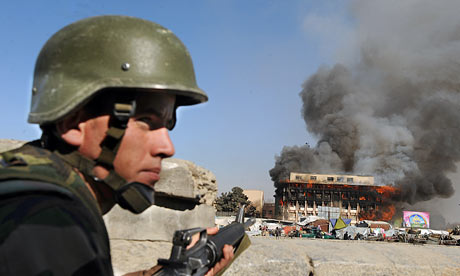
When the insurgents struck at quarter to ten this morning, I was doing what most Kabulis do for much of the day - sitting in traffic. In a city frequently visited by car bombers the usual boredom and frustration is always tinged with anxiety. I was in a western embassy vehicle with its telltale high antennae moving in a short motorcade. A sitting duck, in other words, for what the Nato military call a VBSIED (vehicle-borne suicide improvised explosive device).
I am only here for a few days. The people who live here, Afghans and foreigners alike, learn to live with the risk. They hope that any would-be car bombers are stuck in traffic too, out of range. They avoid driving in the morning, on the grounds that suicide bombers tend to strike early, while their resolve is intact. If they spend hours cruising around looking for a target of opportunity, so the thinking goes, their self-destructive zeal ebbs away.
Most of all, the people who live here put their trust in statistics. It is a city of 3.5 million people. There is a security incident every seven or 10 days, but some of those are poorly aimed rockets. Complex attacks like this happen once or twice a year. Ultimately, it's a matter of luck, and so far Kabulis and foreigners have been prepared to live with the odds.
The city is booming. Areas that were brown earth two years ago are now crowded with new buildings. The outskirts of the city are a sprawling car park for the biggest collection of construction equipment I have ever seen gathered in one place.
The daily odds would be improved if Afghan and Nato intelligence improved. It would also help if Pakistan's Inter Services Intelligence agency (ISI) and that country's military establishment took action against the Haqqani network, which is based in North Waziristan and believed to be behind many previous attacks of this sort.
But Kabul will only be secure once a peace deal is done, and even then there will be dead-enders who stick to violence for years afterwards, as in Northern Ireland. The problems of Kabul are ultimately no more than a reflection of the country as a whole. It cannot and will not be safe while the rest of the country is at war.













