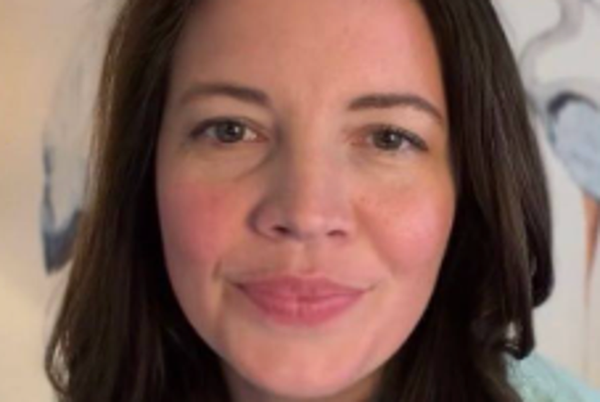
‘My sister is already overworked. If the contract is imposed she might give up completely’
Anna Babic, NHS management trainee
My sister, a junior doctor, is already overworked but remains motivated and keen. If this contract is imposed she might move abroad, and I would miss her, as would our NHS. She might give up completely on something for which she is highly trained and passionate about. But she would probably stay because she believes in our wonderful NHS. She would be stretched so thin that she would have no time to invest in her professional development, preventing her from becoming the best doctor she could be. She would have even less time to spend with each patient, reducing the quality of the care she provides. She would be tired and make mistakes, something she would find unbearable. She could become so absorbed by the constant lack of safety that she would struggle to give much time or attention to anything else.
The contract is questionable in terms of workers’ rights. Fragmented shift patterns are already having a huge impact on the health of NHS staff and their families. We already have the challenge of an often overtired, under supported workforce; we should be finding ways to deal with this and reduce sickness rates, decrease reliance on agency staff, and generally make working conditions better, not worse. A tired workforce results in unsafe care and no time to do anything beyond immediate patient survival. Medicine isn’t just about survival, it is far more holistic.
I worry about how implementation of the contracts would pan out. There is talk of foundation trusts having the independence to not impose nationally agreed contracts. Not all trusts are foundation trusts, and not all trusts that can refuse, will. Those that do will be more popular than others, thus better staffed by more experienced people, and therefore safer. In turn these trusts will attract far more investment. The postcode lottery will be amplified, with healthcare inequalities further dividing our already unequal society. My sister might only work at specific trusts, herself becoming part of the health inequalities problem.
‘I’m worried my sister will be the face imposing things she doesn’t believe in’
Rachel Babic, junior doctor (FY2)
The main issue with the junior doctor contract is that it is unsafe. The NHS is already underfunded and understaffed when compared with other western healthcare systems. Despite this it delivers consistently high quality care due to the goodwill and hard work of its people. Imposing a contract is not only dangerous for patients, it is dangerous for the entire workforce.
The contract is not trying to increase emergency cover at weekends, this already exists 24/7. They are trying to increase elective work at the weekend without added staff. So either we will work more hours, or wards will be more understaffed throughout the week, both of which are unsafe options for staff and patients. This is not about a seven-day NHS, as junior doctors already work shifts every day of the week. To get a true seven-day service, the secretary-of-state would need to persuade all NHS staff who don’t already do so to work shifts over seven days. He would also need to create more of them, because spreading five days of staffing across seven days makes for a thinner spread. With a fragmented shift pattern, longer hours and reduced numbers of staff there would be increased levels of stress, lower morale, a severe lack of plan, and less time to spend with each patient. We would have created a breeding ground for error.
My sister, as a manager, will be stuck between an unrealistic contract and a diminishing workforce. She will feel all the more isolated from both colleagues and the political centre, constantly trying to form an unachievable plan to keep staffing up and patients safe, knowing she is stretching demoralised staff. She will be constantly firefighting and working long hours, which will lead to mistakes. She’ll get no job satisfaction. She won’t be able to switch off or have time or space to think strategically. She’ll be endlessly responding to complaints, investigating incidents and trying to staff her services, providing no time to form anything sustainable.
She is highly committed to the NHS and is strong enough to overcome many organisational challenges, but I’m worried that she’ll be the face imposing things she doesn’t believe in. She will have to live with the knowledge of safety risks in her service, but her ability to address and fix these issues will be increasingly limited. Instead of striving for services that have a holistic and modern approach to healthcare, she will have to run them like factories – understaffed, unsafe factories at that. Or she’ll leave, pursue her passions elsewhere, and the NHS will lose the very managers it needs.
Join the Healthcare Professionals Network to read more pieces like this. And follow us on Twitter (@GdnHealthcare) to keep up with the latest healthcare news and views.