Anthony Koutoufides – Souvlaki Hut
Not content with forging a secondary career as Melbourne’s foremost souvlaki franchise impresario, Carlton football great Anthony Koutoufides has also proven to be a trailblazer of the advertising world on account of his infamous appearance next to an animated Gorilla in the delightfully homespun Souvlaki Hut TV advert, now a veritable internet sensation.
My guess is that you’d have to be under the influence of particularly potent hallucinogens to fully comprehend the narrative arc of this one but Kouta’s confusion at the difference between monkeys and gorillas certainly stands out like a sore thumb – primate or human – as does the great man’s noncommittal attempt at dancing towards the end. Still, it’s doubtful that anyone has ever dodged an imaginary flying banana with the same grace as Kouta and the Comic Sans style typeface on “kids eat free” finishes proceedings off like one last delicious burst of garlic sauce across a perfectly-constructed lamb souva.
Some will say that in the realms of Koutoufides’ career moves this pales in comparison with his sidestep into the ill-starred reboot of TVs Gladiators (“you’ll know you’ve been marked when you’ve been marked by Kouta” promised the show’s hard-hitting website), but I am not amongst them.
The only truly great moment that Kouta’s Gladiators stint spawned – and he did perfect The Duel, The Gauntlet and The Pyramid every bit as well as he did a TW Sherrin so fair is fair – was a Daily Telegraph Q&A in which the former footy idol was posed the kind of age-old dilemmas dealt with by a host of other notable Greek gods, like “Is Outlaw’s long hair really made from the hair of wolves that he hunted and fought with his own bare hands?” and “Kouta, if Fev had urinated on your Souvlaki shop, what would you have done?”
More importantly, what would the Souvlaki Hut gorilla have done?
Buddy Franklin’s Nena & Pasadena T-shirt label
With his millions of dollars and legions of adoring fans you’d hesitate to say it’s a tough life being Lance Franklin, but the Swans star has certainly had his ups and downs during his time in the public eye. Neither the first nor the last footballer to dip his biceps into the high-end T-shirt game, Franklin has most definitely put his own stamp on things by co-owing and promoting the Nena & Pasadena fashion label.
Controversy has never been far away. “It looks like some third-rate 1970s attempt at soft porn,” bristled the Herald Sun in 2012 after one controversial line of T-shirts spruiked by Franklin started to appear on the radar of talkback radio hosts and columnists. One advertising campaign featured naked men and women graffitiing walls and smoking cigarettes, which was at the very least a thorough and multi-pronged attempt to push as many outrage buttons as possible. Judging by the backlash, it was also an effortlessly successful one. Cue a “Collective Shout” petition decrying the “pornified fashion label”. They certainly had some reasonable grounds for complaint.
But Nena & Pasadena is just another in a long line of T-shirt brands popularised by AFL footballers, a cottage industry that has shown no sign of slowing since trailblazers Nathan Brown and Craig Ellis first appeared on the scene with their St Lenny label. Since then Adam McPhee, Alan Didak, Dane Swan, Bryce Gibbs, Jordan Russell, Liam Jones and Koby Stevens have all tried their hand too. Cyril Rioli differentiated himself by getting involved in online underwear sales. His former team-mate Michael Osborne went with pyjamas. One wonders where the madness will end. Trucker hats, you’d suppose.
As subjective as matters of fashion are, you do sort of wonder what possesses anyone to wear muscle tops with pictures of a naked woman on them, but the sartorial halo effect can’t be denied when punters are forking out hundreds of dollars to be decked out like hungover footballers on their way to ice baths. You really can put a price on a look that brings to mind nothing less than a typographer and artist frantically stabbing each other to death atop a sheet of outstretched fabric.
And for the portlier gentleman, these skinny-cut, scoop-necked garments are obviously a garish and unseemly look but do at least project a certain aura while the wearer has an elbow propped on the bar and a schooner in hand: “No, I mightn’t be a league footballer myself but watch on as I wow you with third-hand tales of my mate’s brother who once spent 12 weeks on North Melbourne’s supplementary list.”
The real fun here is to be had assessing the business names. Like outer-suburban hairdressing salons, the more deliberately misspelled and pun-based they are the better. Behold Gibbs’s label Tushay, Stevens’s Kluminati and Jones’s Such a Tees; all heading for landfill eventually but in the meantime, one hopes, providing the perfect bib to catch the spillage of any hastily-raised glasses of Jack Daniels and Coke.
Karl Langdon and Vista Blinds – an open and shut case
Speaking of drug consumption, how confused were football-loving stoners the first time two Karl Langdons appeared on their TV screens arguing about scorching hot deals on new venetian blinds in the graveyard advertising slots? Just as cricket lovers think of Mark Taylor every time they reach for the air-conditioning remote, I’d like to think that footy fans now ritualistically acknowledge the former West Coast premiership star every time they part the curtains and start a new day. No? OK, fair enough.
Josh Gibson’s ‘Rise of Intelligentsia’
For all this mockery of their efforts, the overlap of Aussie Rules footballers and fashion is at least a longstanding one. Don Scott was a fashion plate, as was Brent Crosswell. Rene Kink’s Kinky Hair hairdressing salon provided some of the finest bowl cuts and mullets to grace the floors of 1980s discos.
But those were all fairly straightforward forays into the world of style and glamour. What is the fashion-illiterate sports blogger to make of Hawthorn defender and renaissance man Josh Gibson’s Rise of Intelligentsia, “a collaborative partnership focused on discovery and dissemination”? What is that exactly? “The collective was founded on the belief that we all need the simple luxuries in life – a killer pair of sneakers, an amazing watch, a stylish armchair or a book of the world’s most breathtaking rooftop swimming pools.”
This might all ring true to a certain amount of people, I’m sure, but I can’t for the life of me work out what this business actually is. A group of friends who go out shopping together? A message board for trading luxury sneakers? A bespoke tailor for budding breakdancers?
“As our global marketplace grows,” say the collective, “so too does the desire to make purchases based on experiencing a connection, seeking inspiration, a random encounter – this collaboration is dedicated to fuelling that desire, to finding Australia’s creative Intelligentsia.” And buying lots of shoes, you’d assume.
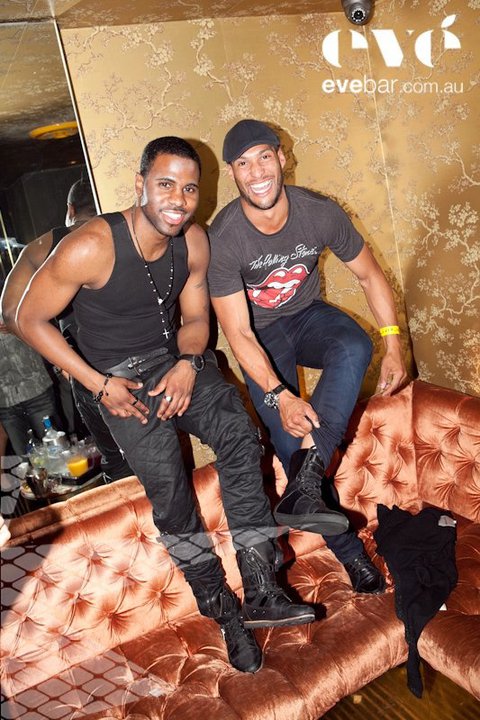
And you can hardly argue with the results. Would Brent Moloney and Colin Sylvia have tracked down precisely the type of torn-up jeans they required without the Intelligentsia? One has to assume not. It’s also doubful that any other business is better positioned to satisfy Jason Derulo’s ultra-specific nightclub-based whims. This proud nation is often skeptical of the intelligentsia but you get the sense they might get behind it in this case. See you at your nearest rooftop pool.
Liquorun – drowning Melbourne’s sorrows
Once was the time that league footballers didn’t actually derive their primary income from playing, so there’s a chance that some of you once had your plumbing done by a young Kevin Sheedy or awkwardly shuffled into John Worsfold’s pharmacy in pursuit of some Imodium. These were traditional jobs though, ones that probably remind us too much of our own mundane lives.
There can’t have been anything mundane about the brainstorming session that culminated in Liquorun, a 2013 phone app collaboration between Melbourne footballers Joel MacDonald (who, joy of joys, had previous experience in the T-shirt game), James Strauss and Rowan Bail. The premise was simple: people always want booze and often they’re either too lazy or drunk to leave the house to get it. This is an age-old dilemma that the modern footballer probably knows well and after all, it’s not like he can go anywhere public to drink without being hassled.
This was MacDonald’s precise experience, one he relayed to a reporter with an admirable level of candor. “A little while back, I was involved in an altercation in a taxi rank in Brisbane and ended up getting arrested. I had this vision that the hospitality and late night transport industry needed a bit of a shake-up,” MacDonald said in gloriously unguarded fashion. His theory was sound though: who’d want to be punched in the head by a stranger and detained by police when they could simply get blotto from the comfort of their own living room? A fool, that’s who.
Liquorun aims to remove that hassle and the likelihood that a rip-roaring binge would simply peter out. When that all-encompassing bender sets in and the need to get further hammered is paramount, Liquorun simply delivers the booze to your door. The real kicker here though is the comprehensiveness of the service, which encompasses not only every type of grog your heart desires but also “condoms and beef jerky”,a combination of words I really couldn’t bring myself to separate. Is Kid Rock a silent partner?
Liquorun is serviced by a network of drivers now, which is the only downside I can see. Imagine the alternative thrill of Rowan Bail arriving at your front doorstep fresh from a spirited display with the Casey Scorpions, enthusiastically toting a six-pack of green demons and a jumbo box of Ansell Ultra Thins. The fun police and also the actual police tried to nip this one in the bud, somewhat inevitably, but like all good ideas that involve alcohol it wasn’t long until it prospered. Now MacDonald is looking into drones, which Melbourne might also do well to investigate as a list management strategy. As for their supporters, what business could be better suited to a fan base than one that offers the potential to at least partially erase bad memories?
The Peter Daicos Goalmaster
There’s no way of definitively establishing this but there’s surely no nicer man in football than Collingwood’s Macedonian Marvel, Peter Daicos. He might have been elevated to living legend status for his deeds on the field but less resilient human beings than Daicos also would have been worn down by the constant stream of painful injuries that threatened but never quite tamed his godlike talents, and that’s before you get to the business ventures turned sour. Through it all he’s remained an affable and lovable figure.
Nobody ever heard the Magpies No35 bleat and moan when interest rate hikes and a crippling recession put paid to his burgeoning Melbourne pub empire in the early 90s and his year-long display of genius in the Pies’ premiership year of 1990 is all the more impressive when you consider that those classic performances came with bankruptcy woes encircling him. His mother had always advised him to pump his football earnings – not as high as they might have been for one so gifted – into real estate, but pubs just felt like a better fit for a league footballer of the late 80s.
That financial wipe-out didn’t deter indefatigable Daicos from embarking on other ventures though and the best of them was The Goalmaster, a specially-designed football that promised aspiring young players that soon they too could enjoy a Daicosian mastery of the oval-shaped ball. It was certainly an advance on the paper and taped-up rubber bands the great man had used to hone his own skills as a youngster. This new ball was labeled with different zones for each different kick and handball, helping the user how to unleash their own perfectly-weighted banana.
This was also the era that also brought us the Garry Lyon-endorsed Rebound Football, attached to a long piece of bungee cord and a tent peg that enabled players to practice alone, the theory being that a hefty punt would spring back into one’s path immediately. The reality in backyards across Australia was the tragic sight of miffed youngsters reeling the ball back towards themselves like tired fisherman, the rope not quite as heavily elasticised as the adverts made out.
Though the Daicos Goalmaster seemed to better deliver on its objectives, details of its commercial success or otherwise are scarce, but it suffices to say that the man for whom it was named eventually ended up in the best of all career locations for ex-footballers: the commentary box.