This series discusses the present and future of washoku traditional Japanese cuisine. In this installment, David Wells, an American chef of Japanese cuisine, discusses his passion for cooking.
I'm a chef for hire who specializes in Japanese cuisine. I travel back and forth between Japan and the United States, cooking at homes and other places for people who request my services.
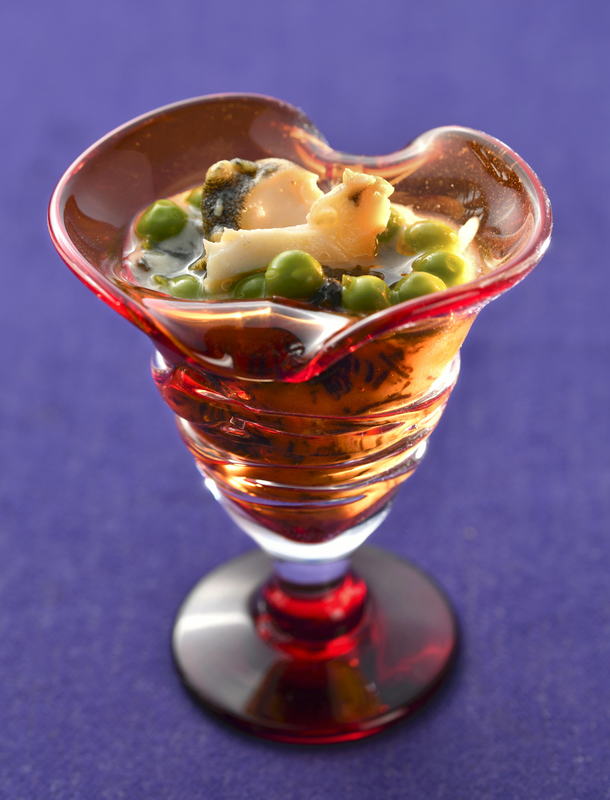
I cook all kinds of things that are in season. I decide on a theme beforehand, select what tableware to bring and set the table when I arrive.
In my mind, Japanese cuisine is beautiful to look at, takes nature as its base, and gives a sense of the seasons by valuing seasonal ingredients. In the end, there is a beauty to the fact that it is eaten up. I express this using my cuisine and tableware.
When I was studying art in the United States, I saw a movie by Yasujiro Ozu. In it, there was a succession of seemingly meaningless cuts of a scene of just sky and earth. In this, I felt the Japanese aesthetic sense of "space," which got me interested in Japan.
There were Japanese people at my university, with whose help I enrolled in Waseda University to study abroad. There, my friends introduced me to mozuku seaweed and natto, which got me interested in Japanese food culture for the first time.
As I learned more, I thought this was something I wanted to be involved in, that all of art could be expressed through a combination of tableware and food.
In the West, it feels like the tableware is considered as the frame and the food as the picture. Both are to be appreciated separately. In Japanese cuisine, tableware and food become one to create a single picture.
When I tried to study at a cooking school in Tokyo, I was turned away at first. They probably thought, "Why should a foreigner have anything to do with Japanese food?" But that did not dampen my enthusiasm, and I ended up studying cooking there.
Later, I trained at a ryotei restaurant in Asakusa. I thought I could speak Japanese, but when it came to cooking terms, there was a lot I did not understand. It was a struggle each time the menu changed for the month. The experiences there were my starting point for cooking.
After that, I returned to the United States to work as a private chef for a company chairperson. Thanks to my employer, I had another opportunity to study cooking in Japan.
Japanese people pick up dishes when they eat. Therefore, harmony between the food and the dish is more important than in the West, I think.
Bowls of Oribe ware are shaped like hands cupped to drink water. To that extent, their shape is adapted to the Japanese hand.
When I thought about things like that, I wanted to learn how to make tableware. I went on to study at [now-defunct] Saga Prefecural Arita College of Ceramics and other places.
I go back to the United States in summer. There, I teach how to prepare Japanese cuisine and tell people about the culture.
Supermarkets in Japan have a wide variety of vegetables and fish, much more than in the United States. It is a joy that there are a wide range of ingredients and I can cook with them. I hope Japanese people recognize how great this is.
Recently, more foreign tourists have been coming to Japan, and it feels like ryotei are adjusting their menus accordingly. Some places are using ingredients that have not been used in Japanese cuisine, which feels a little sad.
There are also a lot of Japanese who are not interested in Japanese cuisine, which I think is such a waste.
I'm thinking of writing a book on Japanese food culture, events, hospitality, etiquette and other areas. I would like to publish it in English, Japanese and other languages as well.
I want to tell foreigners and even Japanese people about the philosophy of Japanese cuisine that I have experienced.
-- This interview was conducted by Yomiuri Shimbun Staff Writer Ryo Kato.
-- David Wells / Chef of Japanese cuisine
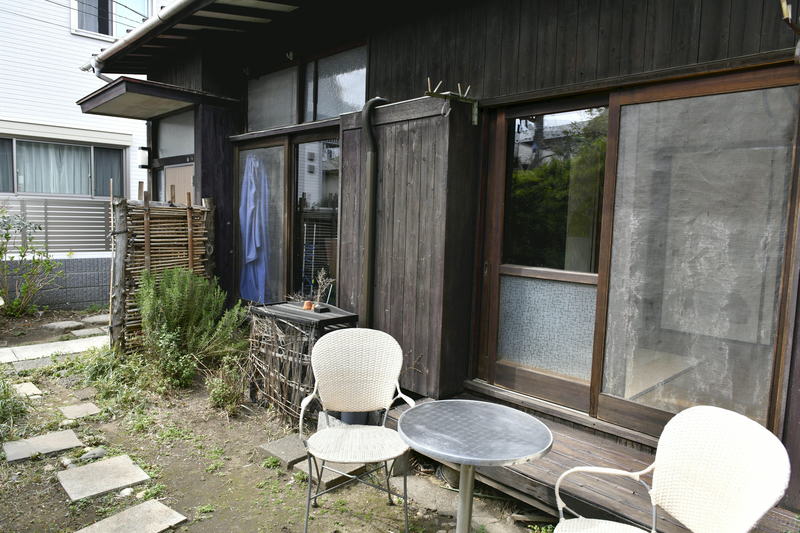
Born in 1957 in South Carolina, Wells first came to Japan in 1979 and studied cooking and tableware-making. He works out of an old house in the Ogikubo district of Tokyo. In 2018, he received the Agriculture, Forestry and Fisheries Ministry's Certification of Cooking Skills for Japanese Cuisine in Foreign Countries.
To find out more about Japan's attractions, visit http://the-japan-news.com/news/d&d
Read more from The Japan News at https://japannews.yomiuri.co.jp/