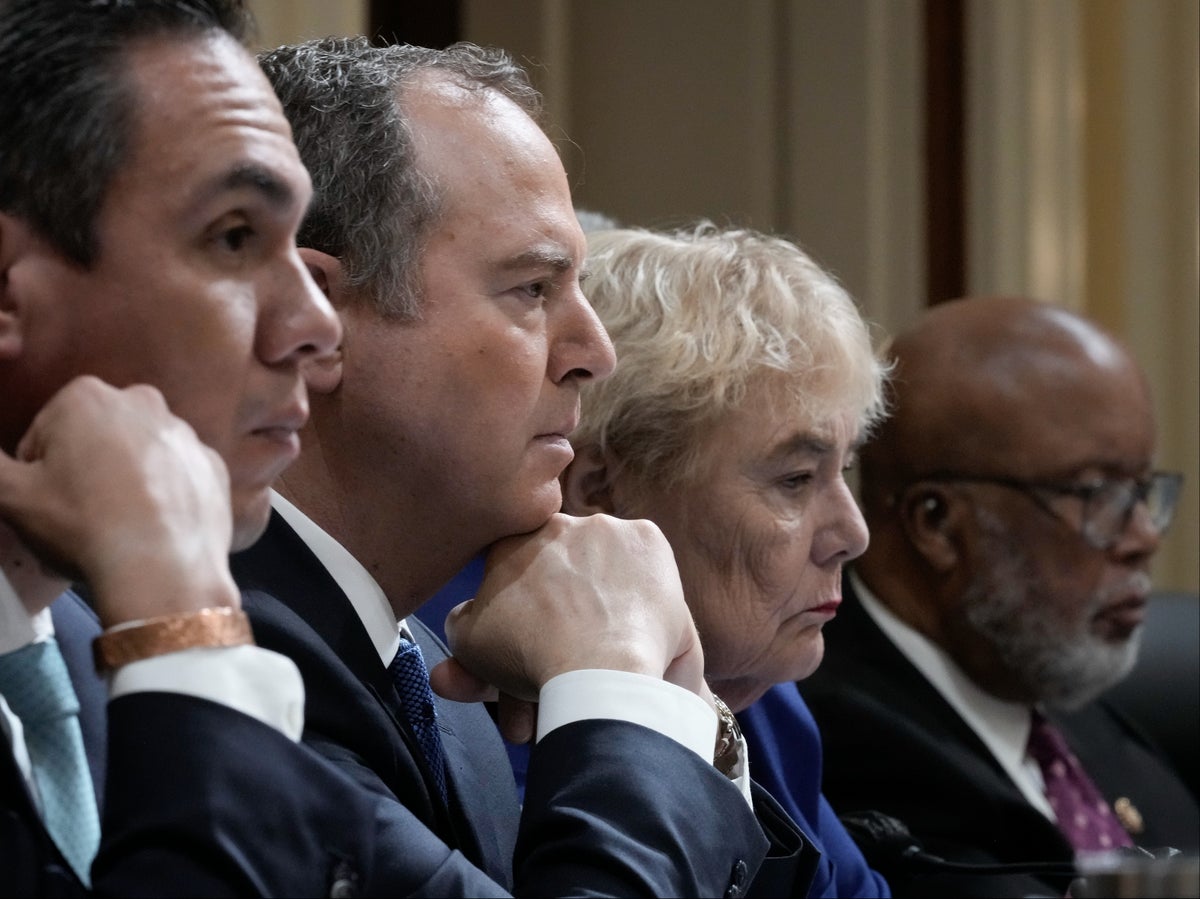
With less than three months until the 117th Congress comes to a close, the House January 6 committee voted on Thursday to issue a subpoena commanding former president Donald Trump to appear and give evidence before the panel that has spent the last year and a half investigating the attack he fomented.
The select committee’s chairman, Representative Bennie Thompson of Mississippi, said he and his colleagues had decided to seek Mr Trump’s testimony as a way of bringing about “accountability to the American people”.
“This committee will demand a full accounting to every American person of the event of January 6. So it is our obligation to seek Donald Trump's testimony,” he said.
His Republican colleague Liz Cheney of Wyoming said the select committee is “obligated to seek answers directly from the man who set this all in motion”.
But will they get those answers? Probably not.
On one hand, it’s not unprecedented for an ex-president to testify before Congress.
The 38th President of the United States, Gerald Ford appeared before a Senate Judiciary Committee subcommittee to testify about the bicentennial of the US Constitution in 1983, six years after he left office following his 1976 loss to Jimmy Carter.
The 33rd president, Harry Truman, testified to the Senate Foreign Relations Committee about the UN Charter in 1955. And the 27th, William Howard Taft, made a dozen appearances before House committees after he left office, though those trips to the Capitol were part of his post-presidency “retirement job” as Chief Justice of the United States.
But on the other, those ex-presidents’ appearances weren’t before a committee investigating a riot they’d incited, made up of people he’s spent (in some cases) years turning into hate objects for his supporters.
Mr Trump has long made it his practice to avoid any situation in which he might be made to speak under penalty of perjury. Even if he isn’t sworn in as a witness, giving evidence before Congress leaves him open to criminal charges if he were to lie (which he has a tendency to do).
The ex-president could avoid criminal jeopardy by asserting his Fifth Amendment right against self-incrimination, but considering how he may well run for president again two years from now, doing so would not exactly be a good look.
Instead, it’s far more likely that he’ll file a civil lawsuit to quash the subpoena and hope one of the many federal judges he named to the bench will come to his aid.
He’s also likely to take this step because the calendar is his friend at this point.
In less than a month, Americans will vote on whether the Democrats who’ve controlled the House for the last four years will continue to have a majority in that chamber. Two months after that, the 117th Congress will come to an end and the select committee will cease to exist (unless the 118th Congress votes to reauthorise it).
If Republicans take control of the House (as is expected) a renewed January 6 committee is almost certainly not going to happen, which would mean the subpoena could simply disappear if the GOP majority decides not to continue fighting him in court.
So while partisans may be pleased to see the select committee finally subpoena the ex-president, their glee will almost certainly be short-lived.