Whenever you have a league followed by play-off games, there’s the worry that the flash-in-the-pan side will prevail over the consistent one. That did not happen in this IPL. The best team, by a distance, won the trophy. Mumbai Indians started the season 1-5, while Chennai Super Kings were 6-1 at halfway. Thereafter, Mumbai won nine out of 10 while Chennai lost six games, including two to Mumbai in the play-offs. Starting with their final league game – a knockout tie in all but name against Sunrisers Hyderabad – Mumbai were just imperious, winning the matches that mattered by nine wickets, 25 runs and 41 runs.
Top man
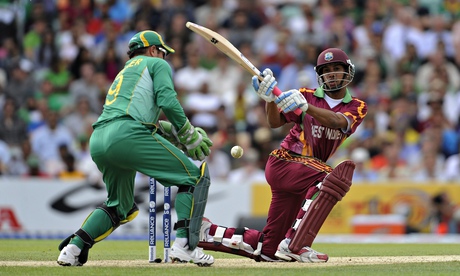
Lendl Simmons. His international career has been underwhelming, but Simmons was in his element this IPL. David Warner made more runs, AB de Villiers scored far quicker, and Chris Gayle whacked almost twice as many sixes, but the West Indian finished off with 48 (off 44 balls), 65 (51) and 68 (45). It took his tally to six half-centuries in 13 innings. According to the Impact Index measure that Wisden India uses, he was the highest impact batsman of the tournament, ahead of Ajinkya Rahane, Virat Kohli, De Villiers and Rohit Sharma, whose 119-run partnership with Simmons was crucial in the final.
Bowler everyone wanted in their side
The highest impact bowler in the competition has been one of Mumbai’s stalwarts for years. Lasith Malinga is no longer svelte and he’s nowhere near as quick as he once was either. This season (24 victims at 18.5, and an economy rate of 7.40), he took two fewer wickets than Dwayne Bravo, and wasn’t as economical as R Ashwin (5.84) or Mitchell Starc (6.76). But in the pivotal matches, he had figures of two for 17, three for 23 and two for 25. The new-ball partnership with Mitchell McClenaghan (third-highest impact bowler after Starc) was central to the Mumbai renaissance.
Young gun
Yuzvendra Chahal and Harshal Patel, who both proved such able foils to Starc in the Bangalore line-up, are both 24, and have definitely put their names into contention for the World Twenty20 that India will host next year. But the real eye-opener was Shreyas Iyer, who followed up a strong Ranji Trophy season for Mumbai with 439 runs for an otherwise disappointing Delhi Daredevils side. If he can avoid sophomore blues, across formats, he could well be the next Mumbai batsman to watch out for.
Most nail-biting finish
Delhi did have the consolation of featuring in the match of the tournament. Having scored 184, they then reduced Rajasthan Royals to 78 for four in the 11th over. Rahane’s 47 and a blistering 25-ball 54 from Deepak Hooda kept Rajasthan in the game, but 12 were needed from the final over bowled by Angelo Mathews. With eight needed off the last three, Chris Morris and Tim Southee struck a four each to condemn Delhi to an 11th successive IPL defeat.
Most impressive catch
There were goalkeeper-like efforts from the likes of Simmons, Bravo and Faf du Plessis, but the catch of the tournament – and one of the best you’ll ever see – came as early as the third game. George Bailey launched a full delivery from James Faulkner towards deep midwicket. It took incredible agility for Southee to even reach the ball, leave alone grab it one-handed. Realising that he was about to cross the rope, he palmed it back in for Karun Nair to dive low to his right, as though at forward short leg, and pouch it half a foot off the ground. Teamwork, presence of mind, quicksilver reflexes – this catch had everything.
Comeback kids of the tournament
Both Harbhajan Singh and Ashish Nehra were key performers when India won the World Cup on home soil in 2011. Nehra, now 36, hasn’t played for India since, while Harbhajan’s last international outing was in March 2013. Nehra’s 22 wickets were the most for an Indian pace bowler, and he maintained an impressive economy rate of just over seven until Kieron Pollard and friends took 23 off his final over. Harbhajan, who turns 35 in July, took two for 26 and two for 34 in the playoffs, but there were more than a few raised eyebrows when he was recalled to the Test squad after only six wickets (from three games) in the last first-class season.
Most important game-changer
When he was good, Andre Russell was exceptional. Kolkata Knight Riders’ defence of the title went off-piste largely because of the uncertainties over Sunil Narine’s bowling action, but Russell’s all-round exploits still took them within a point of the playoffs. His 326 runs came at a strike-rate of 193, while his 14 wickets came at an economy rate of less than eight. Shakib Al Hasan’s absence – he played only four matches because of international commitments – was barely felt as Russell filled in with aplomb.
Biggest disappointment
Last July, Ravindra Jadeja was one of the heroes of a famous India Test win at Lord’s. Since then, starting with a not-guilty verdict for Jimmy Anderson in the aftermath of ‘Pushgate’ at Trent Bridge, it’s been downhill. Dropped from the Test side later in that series, and now not even part of the squad, Jadeja managed just 132 runs and 11 wickets this IPL. He wasn’t the only marquee player to fail for Chennai, but his woes had a severe impact on their team balance.
The thanks-for-the-memories-but-it’s-time-to-move-on award
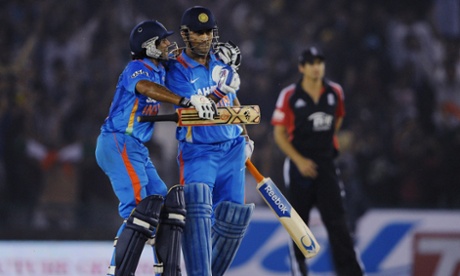
Mahendra Singh Dhoni made 372 runs but the strike-rate of 121.96 was as low as it has ever been in eight seasons. This was Chennai’s fourth defeat in six final appearances and the look of helplessness on Stephen Fleming’s face long before the end suggested that the captain-coach combination might have taken Chennai as far as they can. Rohit has now won the IPL twice in three seasons as captain, while Kohli’s Bangalore – who won seven and lost just two of their last 11 games – would undoubtedly have given Mumbai a keener contest. Chennai’s once-envied settled core has seen better days. Renewal is the name of the 2016 game.