Vítor Gonçalves is the Portuguese auteur around whom a cult mystique has grown since releasing his first film A Girl in Summer in 1986, on which Pedro Costa worked as second-unit director. The Invisible Life is Gonçalves’s first film since then, a study of male loneliness; it made a strong impression at last year’s Edinburgh Film Festival and is much admired.
For me it was intriguing but sometimes exasperatingly inert: it shows Gonçalves’s devotion to darkness (to which Costa is himself often committed), a tendency to shoot scenes indoors with the curtains almost closed and the lights off, an aesthetic decision and an aesthetic worldview that does not always make satisfying sense.
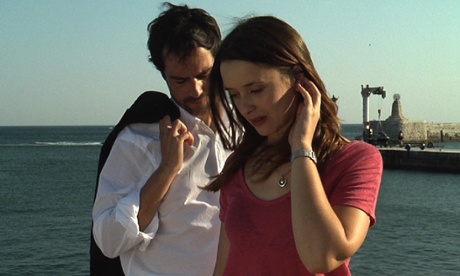
Hugo (Filipe Duarte) is a thirtysomething man, stunned by the death of his much older friend António (João Perry): he can see in this his own future, lonely end. His mind is carried back to a painful relationship with a beautiful woman, Adriana (Maria João Pinho). When Adriana enters the story, letting in scenes with sunlight and fresh air, the film comes to life, and these scenes work dramatically in juxtaposition with Hugo’s gloomy male loneliness. A clotted, crepuscular, uningratiating film, but with a gaunt poetry of its own. PB