The Indian college producing village solar engineers - in pictures
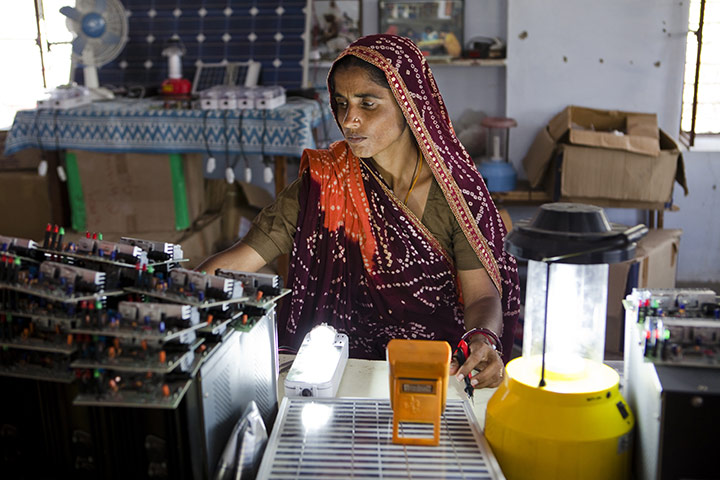
An Indian student studying solar engineering in the Barefoot College in Tilonia village in Ajmer, Rajasthan. She brings her son to school so that she can take care of him and study at the same time. The college is spread over eight acres Photograph: Suzanne Lee/PanosIndian student Meera Bhai, aged 38, from Junak Khera village in Madhya Pradesh, has been studying solar engineering at Barefoot College for six months. She will soon leave to start a solar panel and light installation practice in her villagePhotograph: Suzanne Lee/PanosKamla Devi, aged 38, from Shironj, Ajmer, was the first woman from Rajasthan to graduate from Barefoot College as a solar engineer. She now also teaches at the college, which was set up in 1972 to teach new skills to people living in rural areasPhotograph: Suzanne Lee/Panos
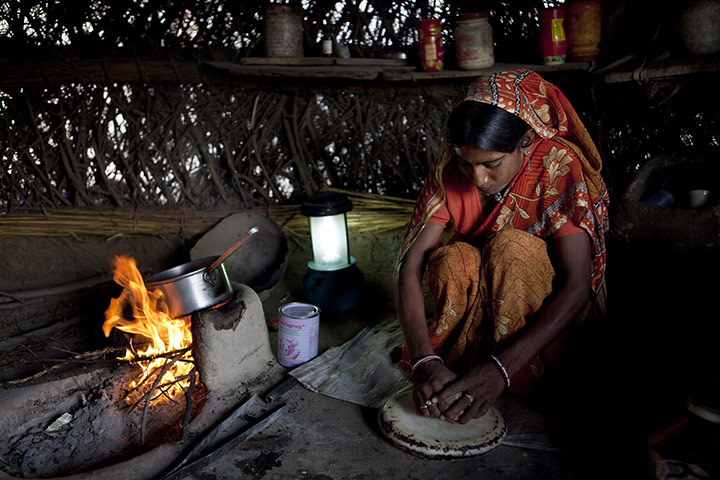
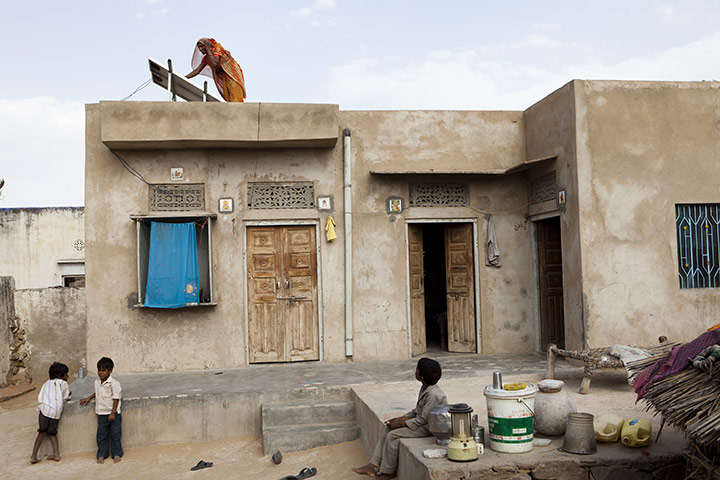
A boy carries a solar lantern as Santosh Devi (unseen), toils in her workshop. Since graduating from Barefoot, she has introduced solar power to 20 homes in Balaji Ki Dhani in Nagur district, making it India's first 100% solar-powered villagePhotograph: Suzanne Lee/PanosDevi, at 19 the country's first Dalit solar engineer, makes tea in her kitchen. She lives in a cement-built house, the only one in the village, with her husband, young son and in-laws. She is semi-literate and graduated from the Barefoot College two years agoPhotograph: Suzanne Lee/PanosA sari-clad Devi climbs on to the rooftop of her home to maintain her self-installed solar panels. After the departure of the previous solar engineer from the neighbouring village, she does all the solar power maintenance there tooPhotograph: Suzanne Lee/PanosDevi fixes some solar lanterns in her workshop. Since the solar course was launched in 2005, more than 300 Barefoot engineers have brought power to more than 13,000 homes across India. The college prefers training women in solar engineering because there is a greater chance they will remain village-based instead of moving to India's citiesPhotograph: Suzanne Lee/PanosNomad Santra Banjara, aged 25, poses for a portrait with a solar lantern. Sceptical when the college tried to sell them solar panels and lanterns three years ago, her family later borrowed a set from the village school and have since ordered their ownPhotograph: Suzanne Lee/PanosVillagers and staff walk around the Barefoot College, which was founded by Sanjit 'Bunker' Roy. The college claims to have trained 15,000 women in skills including solar engineering, healthcare and water testingPhotograph: Suzanne Lee/PanosIndian students solder and assemble circuit boards in class in the college. Graduates are helping to reduce reliance on fossil fuels in rural India, home to more than 70% of the population. This reliance, which the government hopes to transfer to renewable sources, currently hampers India's chances of hitting its environmental goalsPhotograph: Suzanne Lee/PanosA classroom drawer at the college. Bhagwat Nandan, the co-ordinator of Barefoot’s solar division, says Roy’s engineers have already saved at least 1.5m litres of kerosene a year which would otherwise have been used to power lamps and stovesPhotograph: Suzanne Lee/PanosSocial activist Sanjit 'Bunker' Roy, 65, the college founder. Barefoot takes illiterate and semi-literate men, women and children from the lowest castes, and from the most remote and inaccessible villages in India and other African and south Asian countries, and trains them to become, among other things, water and solar engineers, architects, pathologists, midwives and accountants. Graduates work in their own communitiesPhotograph: Suzanne Lee/Panos
Sign up to read this article
Read news from 100’s of titles, curated specifically for you.