The impact of the global food crisis on Azerbaijan - in pictures
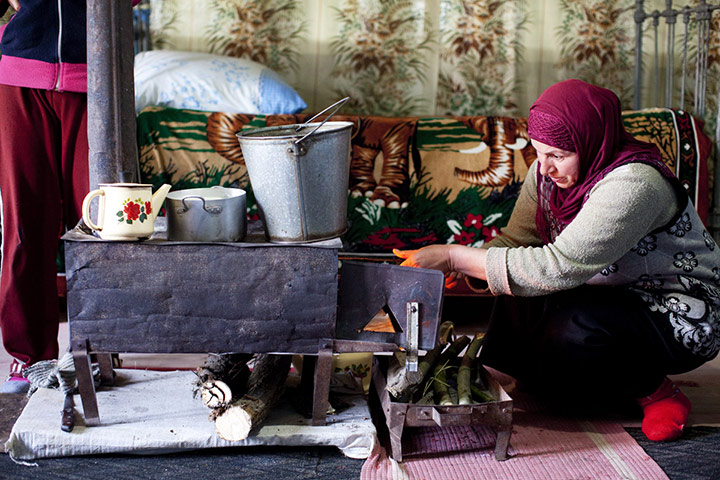
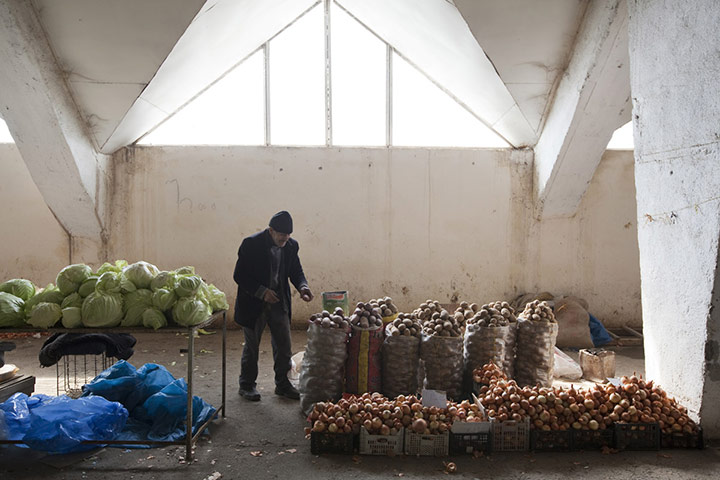
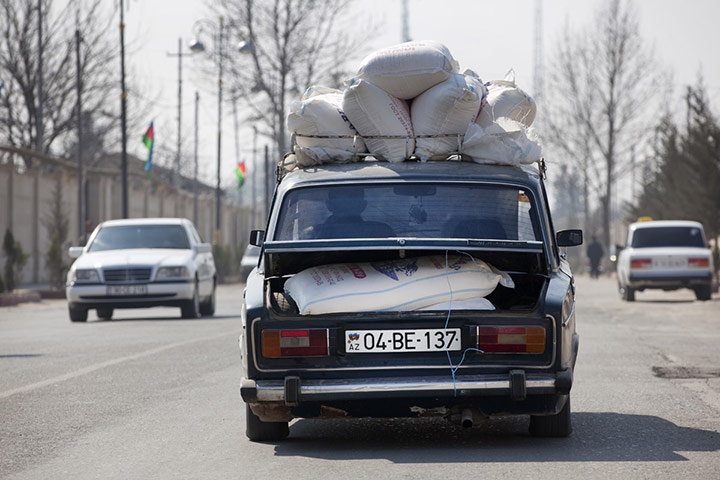
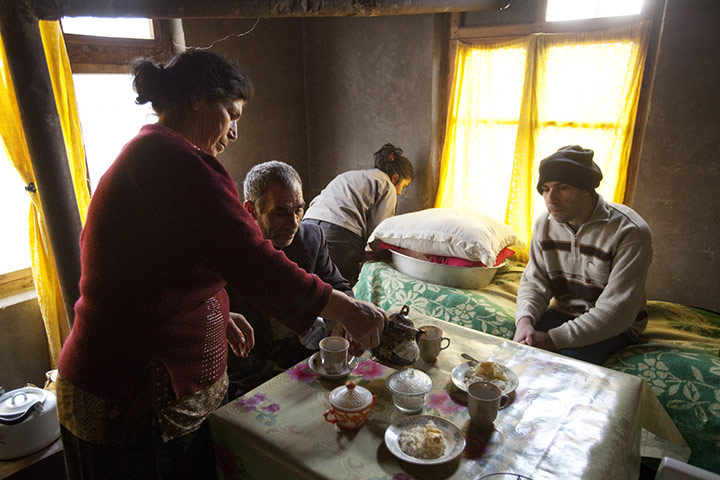
Gulnara and her family use the wood oven for both heating and preparing food. Gulnara lives in Kelenterli village. Her family owns about 1 hectare of land. She is married to Tayyub, and has three children, Farhad, 17, Lamiya, 14, and Gulmira, 12. 'We buy meat once every three weeks on average. About 70% of our income is spent on food, the rest on educating my kids, transport and heating. If the food prices were lower, I could afford to send my elder daughter to college or university as she is so keen to continue her education, but with these prices, it is hardly possible for us,' says TayyubPhotograph: David Levene/OxfamBarda fruit and veg market. Many people can't afford to come here to buy fresh fruit and vegetables any more due to rising food prices. 'Before the prices shot up, we used to buy 20kg of potato, now we have to buy 15kg, which means we have to cut down on nutrition. Recent price increases are much higher than previous ones: flour used to cost 14 AZN last year, now it is 22 AZN. We have cut down on other food items, and increased bread consumption,' says Shakir Hasanov. 'I would say most of my income is spent just on food. My biggest fear is that I won't be able to afford to buy food for my family and there will be hunger. Also I'm scared that we'll have long queues for food items as we had during the war'Photograph: David Levene/OxfamA car loaded with flour on a main road in Barda. In the countryside, many men have no permanent jobs and turn their hands to different kinds of work to earn a living. The prices of basic food items (such as bread and eggs) have increased considerably (by 17% and 20% respectively). On the other hand, the farm gate price of farmers’ products has decreased. It hits many poor and smallholder families in the rural regions, where agriculture is the only source of income Photograph: David Levene/Oxfam
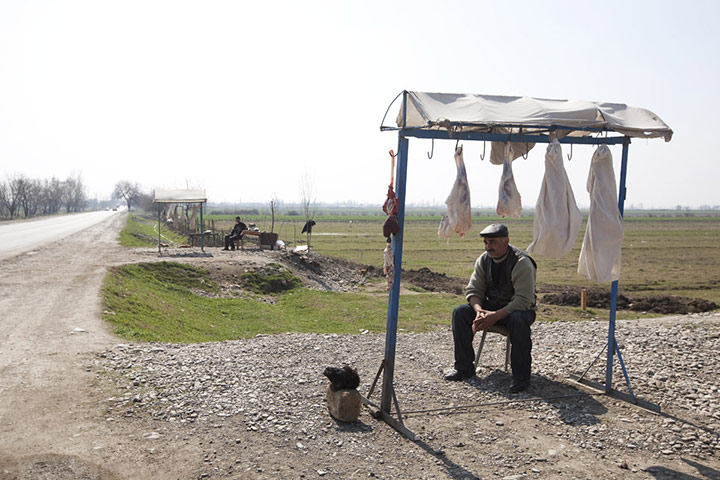
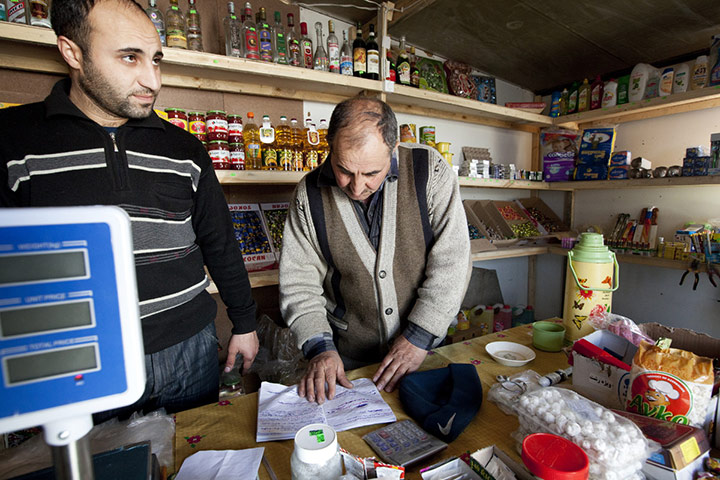
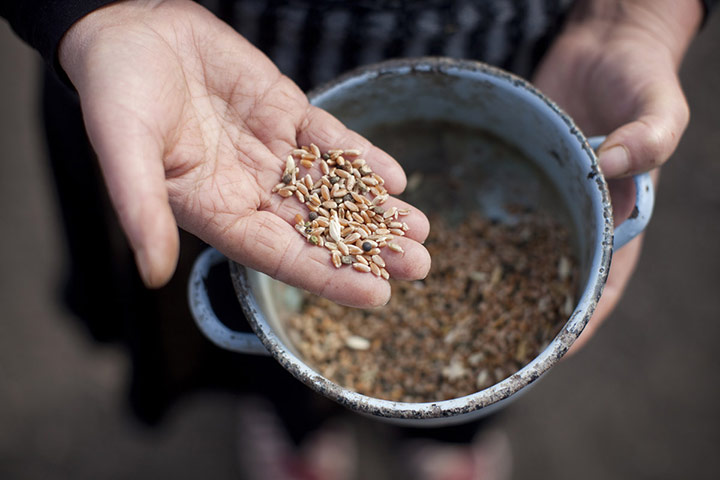
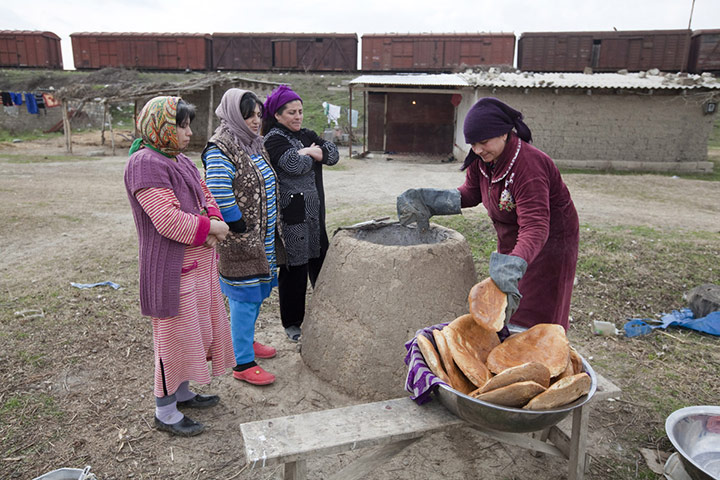
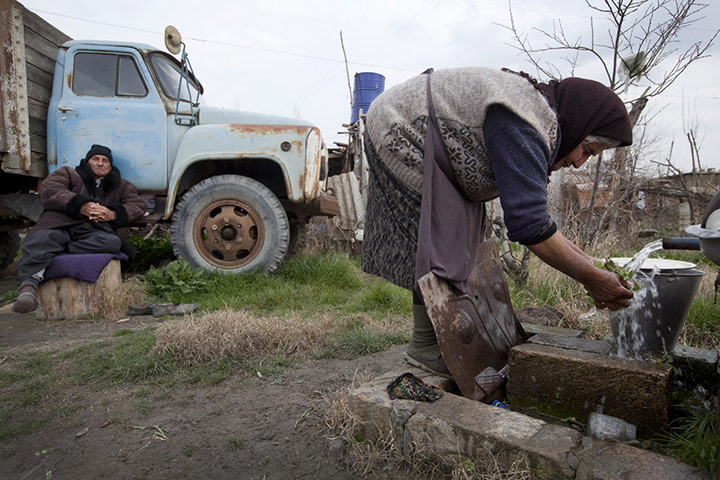
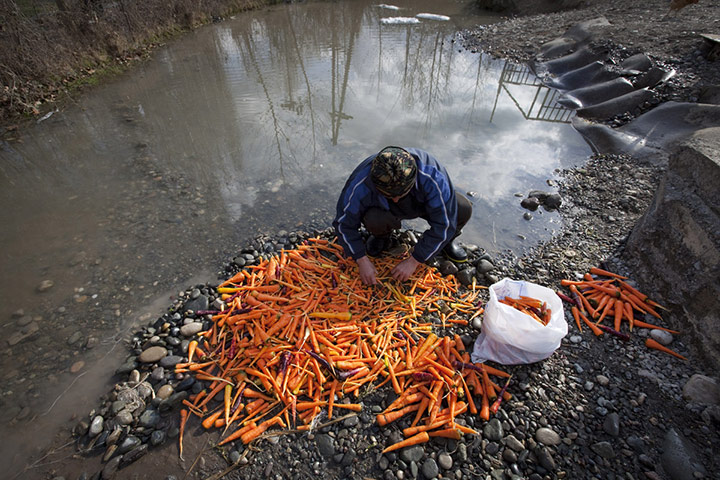
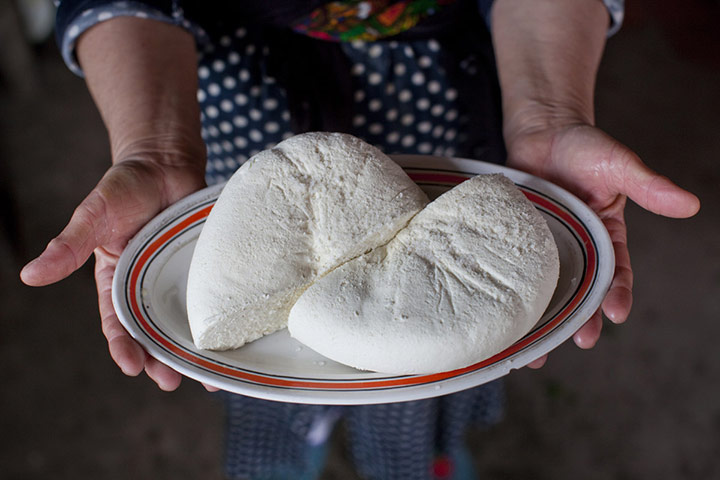
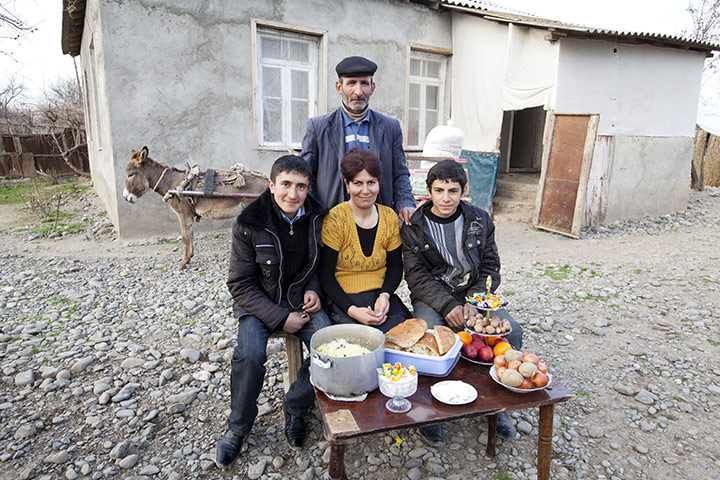
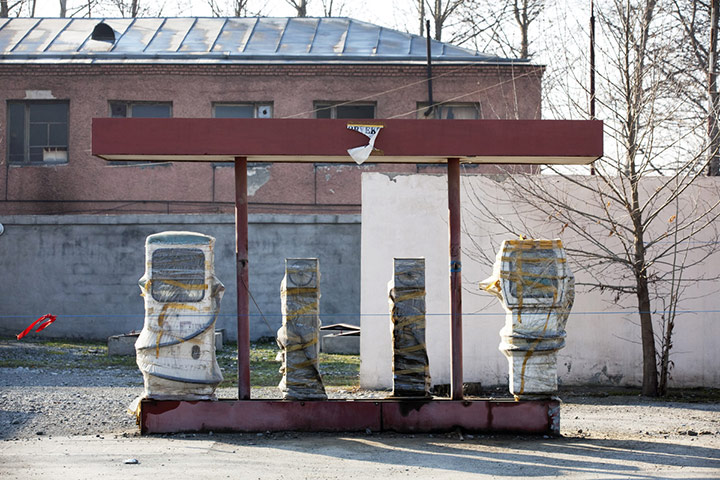
Street vendors selling fresh meat by the side of the Barda-Dordyol road. Open-air butchers' shops do not meet sanitary requirements and are seasonal. Meat prices have increased dramatically in less than a year, 36% for mutton and 13% for beef Photograph: David Levene/OxfamSevinj Ismayilov's husband, Tahir, was born in Boyehmedli village of Agdam in 1963. He is now an internally displaced person after the Nagorno-Karabakh war. Since May 1992, he has been living in a small bungalow with his family: wife Sevinj, 42, and children – Nurane, 16, Ragsane, eight, Ilahe, seven, and Namig, three. Tahir is unemployed, his wife is a housewife. ‘We buy wood to heat our house, now wood is too expensive, so though the weather is still cold at this time of the year, we have already stopped the heating. With no heating, no income and higher food prices, life is getting so hard for our family,' says Tahir. 'Price increases are more frequent these days and more considerable. No one is thinking of the poor, it is impossible for the poor to survive in these conditions'Photograph: David Levene/OxfamIn the Dordyol area, which is predominantly settled by internally displaced people (IDPs) from Agdam, Ismail, 53, and his son, Eldar, 27, are shopowners. ‘We had to face too many obstacles before opening this small shop. There is no financial aid or credits for IDPs, since we are not considered as residents of Barda, so we had to borrow money at higher interest from other people. Many people in the area do not have money to pay for food. Being an IDP myself I understand them and very often get payments only at the end of the month or even a couple of months later. But, of course, I cannot do it all the time, since I run the risk of going bankrupt. At this point, I have more outstanding debts than my income,’ says IsmailPhotograph: David Levene/OxfamNigar Mammadova, 51, shows chicken feed. Nigar and her family fled Gulluja village in April 1994. Her late husband stayed in Agdam to protect the city, and the rest of the family left hastily by truck under fire. The next day, Nigar heard her husband had died. She is a single mother of two. Nigar and her children lived in a tent in Ereb, an IDP settlement, for 12 years. Now she is living in Dordyol IDP settlement in a house provided by the government in 2006. She works as a teacher at a local IDP school for eight hours a week, and receives a very small salary. 'The income I receive from teaching is not enough even for our heating costs, let alone food. My son and I have to do several different jobs to pay to feed our family. We do not have animals as their feed is very expensive, its price went up by 80% in one year, so I had to reduce my poultry to 10. But keeping hens is necessary for my grandson - at least we don't pay for eggs and meat' Photograph: David Levene/OxfamFour women, Shukufa Mammadova, Sevda Gguliyeva, Zargul Abilova and Latafat Aslanova baking bread by train carriages and bungalows near Dordyol/Kocherli train station. Around 70 IDP families live in bungalows around Dordyol settlement. These bungalows have existed since 1993, when there were over 2,000 people living in these conditions. The number has substantially decreased. But no official statistics exist. There is no drinking water, gas or sanitation in these shacks. They bake bread together every other dayPhotograph: David Levene/OxfamYeman Mammadova and Mahammad Mammadov. Mahammad is sleeping out under the winter sun, while Shukufa is washing salad at the settlement near Dordyol/Kocherli train station Photograph: David Levene/OxfamGasimbeyli village in Barda is one of the villages where Oxfam has rehabilitated sub-artesian wells. For many years the well was out of order and the village population did not have the funds to repair it. According to Siyavush Aliyev from the local water users union, there are over 1,000 people in this village – about 70% benefit from the well. 'I do not have a permanent job, as there is a problem with employment in the village. My only income is farming. I cultivate mainly carrots, also tomatoes, radish, peppers, potatoes and beans in my garden area,' says GaraPhotograph: David Levene/OxfamNuride Mammadova, from Kelenterly, lives with her family of five, including her husband, Talib Abdullayev, 53, their son, Seymur, 22, and their daughters, Nargiz, 18, and Gunel, 15. Nuride and Talat have been living in their current house since 1987, when they married. Their son Seymur was diagnosed with autism when he was a child. The family's income is 80 AZN a month. 'The main problems are unaffordable basic food products and lack of gas supply. For the last couple of years the price for food products has been increasing substantially, it's impossible to buy even basic food products with our income to keep a family,' says NuridePhotograph: David Levene/OxfamRosa Abbasova displays the cheese she has just made at her home in Kenterli village. Kelenterli is 10km from Barda town and is a relatively large village. Most of the people in the village are living in poverty, with low incomes and agricultural productivity and limited market accessPhotograph: David Levene/OxfamMirza Bakhishov, 47, and his family pose with a week's worth of food outside their home in Shahveller village. Mirza, 47, was born and bred in this village, in this house. He has been engaged in agriculture and animal husbandry all his life. He and his wife, Zarkhara, 37, and two sons, Khasay, 18 and Elchin, 15, own a small amount of land. Zarkhara produces 1 hectare of alfalfa, which he uses for his animals. He also cultivates a small area of cotton and wheat on the other hectare as well as parsley in his garden. He has two cows, two buffaloes, a calf, a donkey, some sheep, six ducks and two chickens. 'Our small cattle and poultry is everything for us. All our income and livelihood depends on them. The main problems for us are agricultural water and irrigation of our crops'Photograph: David Levene/David LeveneDisused petrol pumps outside what used to be the main site of an old Soviet bus station in BardaPhotograph: David Levene/Oxfam
Sign up to read this article
Read news from 100's of titles, curated specifically for you.