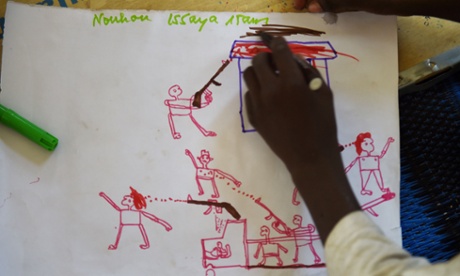
A year after the abduction of schoolgirls in the Nigerian town of Chibok, a report has shown the impact of escalating violence on children in the region. Unicef says fighting between Boko Haram, military forces and civilian self-defence groups in north-eastern Nigeria has forced around 800,000 children to flee their homes.
Calls to stop Boko Haram emerged when we asked readers to share their hopes for Nigeria after electing a new president. You can read their responses, which also included a call to end corruption.
As crises continue in Syria and Yemen, we heard from aid workers on the ground. Mohammed, an aid worker in Syria, described how he rushed back to the city of Idlib to ensure the safety of his family. In Yemen, Valerie Pierre wrote from a health clinic in the city of Aden that had seen heavy fighting and air strikes. “We are on lockdown inside the hospital,” she said. You can also read the latest from community worker Isaac Bayoh, who described how the Ebola outbreak had affected Easter celebrations.
Elsewhere on the site
- $73bn more needed every year for social development goals, says ODI
- Sudan: ‘The election will not change anything’
- Kenya criticised for closure of money transfer firms following Garissa attack
- Afghanistan: US watchdog criticises aid scheme for women’s rights
- Ebola: media ‘overlooked Africa’s role in combating crisis’
- Women from Sierra Leone ‘sold like slaves’ into domestic work in Kuwait
Opinion
Jonathan Glennie warns that governments must be held accountable for the pledges they make on financing the sustainable development goals.
Also on the SDGs, Nouria Brikci argues why the health goal must tackle inequity head on if it’s to succeed.
In Kenya, justice was finally served for a 16-year-old girl who was gang-raped and left for dead in 2013. Legal consultant Kimberly Brown explains the importance of the sentencing, and why it represents a breakthrough for women’s rights in the country.
And Niamani Mutima, Shira Gitomer, Sarah Hobson argue for more funding for local women’s groups fighting Ebola.
Multimedia
Video: Sophie Christiansen meets disabled children in northern Rwanda
Podcast: Women’s human rights defenders under threat
What you said: top reader comment
On the piece Sophie Christiansen finds heartbreak and hope among Rwanda’s disabled children, ssentongo wrote:
A very good assessment of the problems faced by children with disabilities in all of sub-Saharan Africa, and, in a sense, all over the world. One factor overlooked but also important is the lack of, or the cost of, wheelchairs and transportation. Some ordinary schools would accept these children but it is so difficult to get the children there. Well-meaning people, organisations and countries donate used or obsolete wheelchairs but for the most part these wheelchairs do not stand up to rural Africa and soon break down. Then the wheelchairs become a source of frustration.
Highlight from the blogosphere
Global Voices: As Ebola is contained, what’s next for Sierra Leone?
And finally …
Poverty matters will return in two weeks with another roundup of the latest news and comment. In the meantime, keep up to date on the Global Development website. Follow @gdndevelopment and the team – @swajones, @LizFordGuardian, @MarkC_Anderson and @CarlaOkai – on Twitter, and join Guardian Global Development on Facebook.