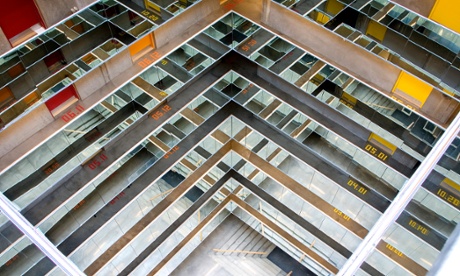
Imagine a residential home as a laboratory, equipped with sensors to monitor and analyse all aspects of activity: energy and water consumption, indoor climate, humidity, CO2, and much more around the clock.
The Grundfos dormitory is just that – a home laboratory, located in the university city of Aarhus, Denmark. The 12-storey building is the first of its kind, consisting of 159 apartments occupied by more than 200 students.
The building is equipped with 1,800 sensors to help provide knowledge about how to optimise and minimise water and energy consumption.
Motivation for minimising consumption
A total of 10 sensors in each apartment measure the temperature, the level of CO2 and relative humidity, while other sensors detect electricity consumption, amount of heat from radiators, and the pressure and flow of both cold and warm water.
As a whole, the block of flats is equipped with a general measuring technique to record outside temperature, wind and the solar level.
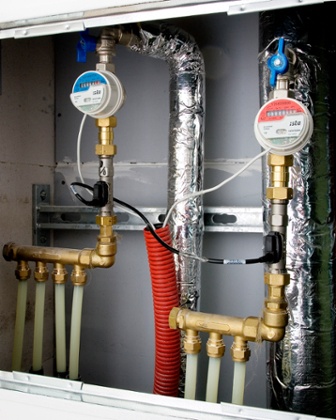
A Danish construction company, Sjælsø (today Raundahl & Moesby A/S), worked closely with Grundfos to install the many sensors and other equipment.
“The initiatives that Grundfos is implementing here will help identify significant saving opportunities. What I think this project can deliver is information,” says business unit manager Carsten Raundahl, “The thing is nobody has really done this before. That is what I think is really exciting about the project.”
Taken into use in the autumn of 2012, the Grundfos dormitory was designed to engage residents through the use of technology. The information gathered from the sensors will then be used to motivate and engage residents in minimising consumption.
“I think that we will experience a few “aha” moments with the Grundfos dormitory when we find out where consumption of energy and water originates,” Raundahl says.
He adds that his company finds the Grundfos dormitory project interesting because it involves taking a step further in investigating ways of serving energy.
His colleague, senior construction manager Per Falstie Jensen, adds: “Opportunities to further reduce passive energy consumption of buildings are limited today.”
Influencing consumption patterns
Jensen says the project would make a difference if it could change general consumption behaviour.
“The Grundfos dormitory will produce a statistical basis for energy consumption, based on real people living in the building, and then show how that energy consumption can be influenced,” he says.
He is eager to know the results from the dormitory project in the hope of implementing the idea elsewhere.
Content on this page is paid for and provided by Grundfos, sponsor of the water hub