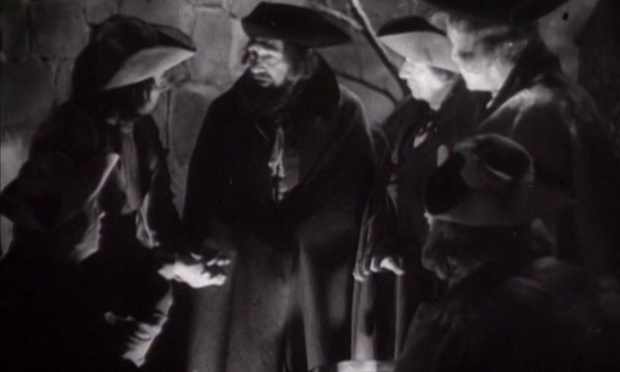
1761
Sixteen weavers in the Ayrshire village of Fenwick together set up "The Society of Weavers in Finnick", arguably the first co-operative organisation of the industrial age. (The 250th birthday celebrations took place three years ago.) Photograph: National Co-operative Archive/www.archive.coop
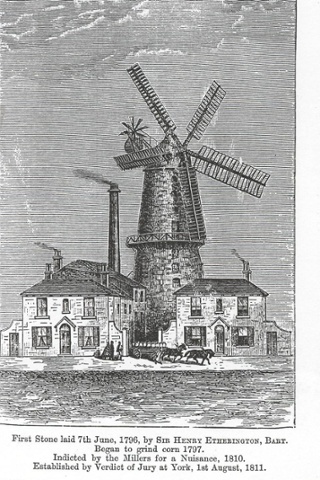
The "anti-mill" flour mill in Hull, one of several early English co-operative ventures, is set up by local people angry at the high prices charged by commercial millers. It carries on operating for a century. Photograph: National Co-operative Archive/www.archive.coop
1831
The heyday of the Owenite co-operative movement in Britain sees the first significant national co-operative congress (held in Manchester, where else?) as well as discussions about a national wholesale operation. Several hundred local co-op societies are established around this time, though many are shortlived. Robert Owen, the mill owner from 1800-1825 at New Lanark on the river Clyde (now a Unesco heritage site), is the figurehead of what becomes a strongly working-class movement. (Owen's statue is to be found today beside the Co-op Bank head office in Manchester.)
Opening of Harmony Hall, a "back-to-the-land' Owenite co-operative community (one of several) in Hampshire. It lasts until 1846.
1844
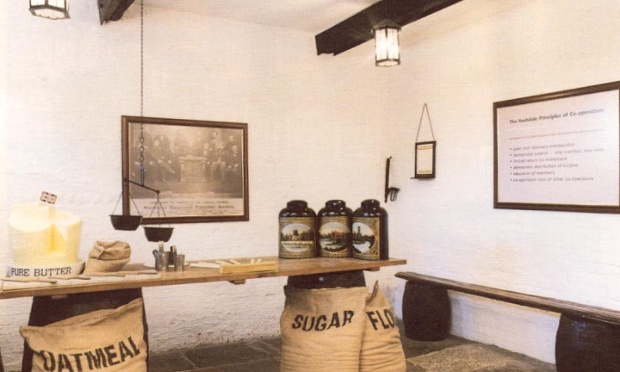
The year that the Equitable Pioneers co-operative society in Rochdale is formed has to be included in our list, of course. The opening of the Pioneers' original shop in December 1844 in Toad Lane, Rochdale becomes accepted worldwide as the start of the modern co-op movement. (Rochdale itself has recently been designated the official international capital of co-operation, and Toad Lane is now a museum.)The Pioneers help popularise the concept of profits being returned to members in proportion to the purchases they make – the famous divi. Both men and women are welcomed as members. Photograph: National Co-operative Archive/www.archive.coop
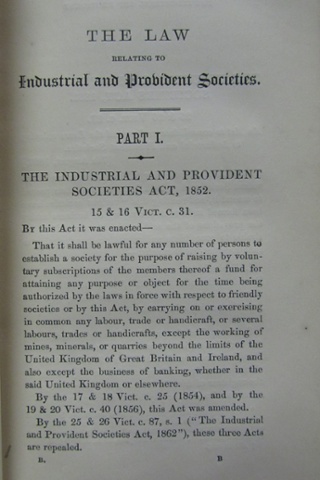
The first specific legislation for co-operatives, the Industrial and Provident Societies Act, is passed. (We're still stuck with that name today.) Photograph: National Co-operative Archive/www.archive.coop
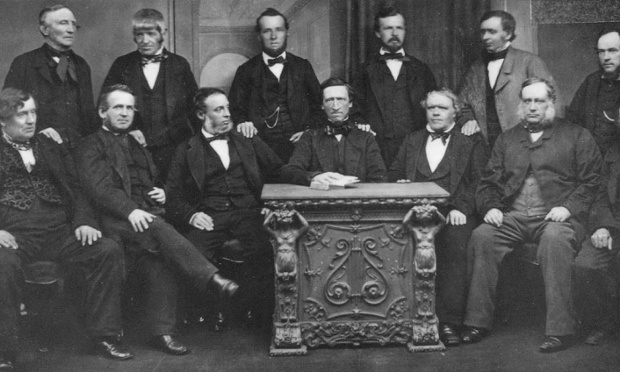
Co-operative societies inspired by the Rochdale example blossom particularly across Yorkshire and Lancashire in the years after 1844, and it is the northern societies who are primarily responsible for the creation of "the Wholesale" in 1863. The Co-operative Wholesale Society develops into a giant trading operation with its own factories and global supply chains, as well as its CWS Bank (later the Co-operative Bank). The Scottish Wholesale Society operates separately until the 1970s. Photograph: National Co-operative Archive/www.archive.coop
The Co-operative Insurance Company is created. It eventually becomes part of CWS and, ultimately, of the Co-operative Group. Now in the process of being sold off.
1869
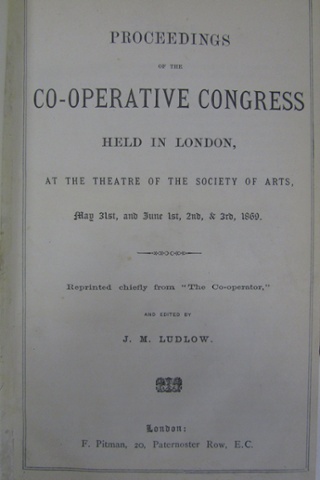
The first "modern" co-operative Congress is held in London (Manchester's turn comes a year later). This Congress is also taken as the occasion for the founding of what is to become the main democratic federation of UK cooperatives, the Co-operative Union (now Co-operatives UK). Photograph: National Co-operative Archive/www.archive.coop
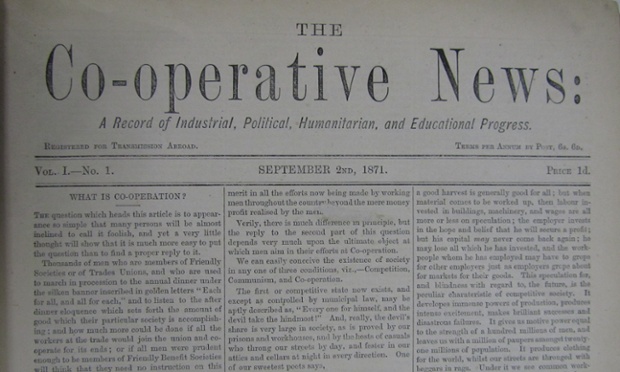
First issue of Co-operative News, still the movement's regular newspaper, appears.
1883
An article in Co-operative News prompts the formation of the Co-operative Women's Guild. The guild goes on to play an important role in a wide range of social issues, including women's suffrage, maternity rights and campaigning for peace. The co-operative movement, always been much more than simply a business venture, over the years played an important part in social and cultural life, particularly in working-class districts. Photograph: National Co-operative Archive/www.archive.coop
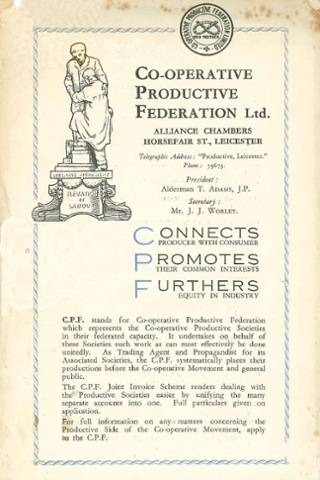
The growing number of producer co-ops create their own self-help organisation, the Co-operative Productive Federation. Two years later, the Co-operative Congress resolves to establish a body to promote producer co-ops. But splits between consumer and producer co-ops run deep and there is much argument about whether co-op workers merit their own share of the profits. Photograph: National Co-operative Archive/www.archive.coop
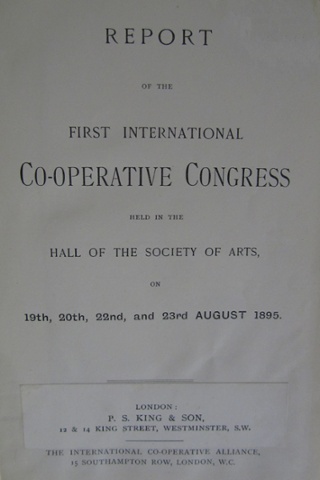
The British co-operative movement, internationalist in inclination from the start (delegates from Germany and Norway were at the first 1869 Congress, for example), plays a strong part in the creation of the International Co-operative Alliance. British influence continues today: the ICA's current president, Pauline Green has been instrumental in rebuilding the ICA as a credible global organisation.
1925
Britain's co-operative youth organisation The Woodcraft Folk is set up, as an (indirect) split from the increasingly militaristically-minded Scout movement. Photograph: National Co-operative Archive/www.archive.coop

During the 1970s, a new generation of political activists increasingly look for co-operative solutions through the development of workers' co-operatives, particularly in wholefoods, bookselling and graphic design and printing. In 1975, northern wholefood co-ops first discuss the formation of a wholesale operation (it is to become Suma, today one of Britain's most successful workers' co-ops)
1976
The Labour government passes the Industrial Common Ownership Act, creating a capital fund for common ownership co-operatives. Photograph: Katherine Rose
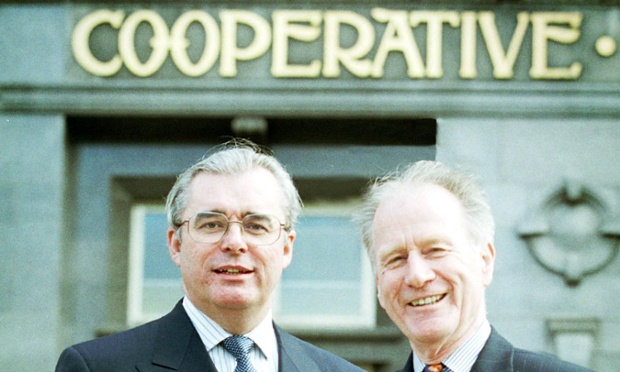
Andrew Regan attempts an unsuccessful "carpet-bagging" exercise to take over and demutualise the CWS. The CWS manages to survive, but the crisis leads directly to the establishment of the 2000-1 Co-operative Commission and the merger of CWS and the Co-operative Retail Services society into the Co-operative Group. The attempt to rebuild the movement also sees the creation of Co-operatives UK, bringing together consumer and worker co-operatives for the first time in almost a century. Photograph: PA

The Co-operative Group merges with Britannia Building Society, to create what it calls a new "super mutual". In hindsight, it's not such a great idea.
2014
We'll have to see whether 2014 is to be a landmark year for British co-operators. It's the year for picking up the pieces after the year before and the aftershocks from the Co-operative Bank capital crisis will be felt for some time. Watch out for proposals to reform the Co-operative Group's management and corporate governance structures in the summer.Photograph: Christopher Furlong/Getty Images
For more information on Co-ops, please visit our hub or join the Social Enterprise Network