The highs and lows of 15 years of climate talks - in pictures
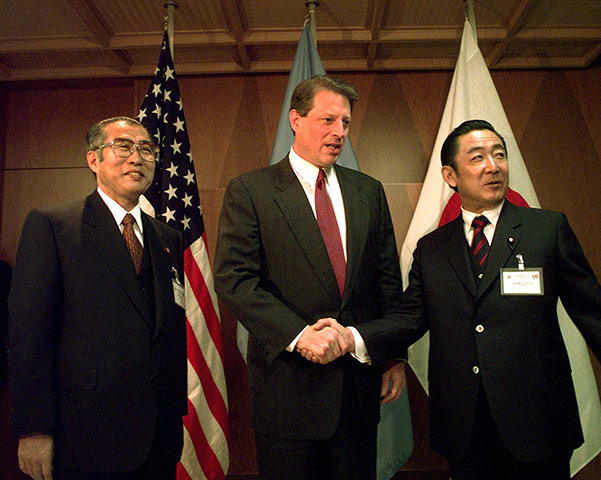
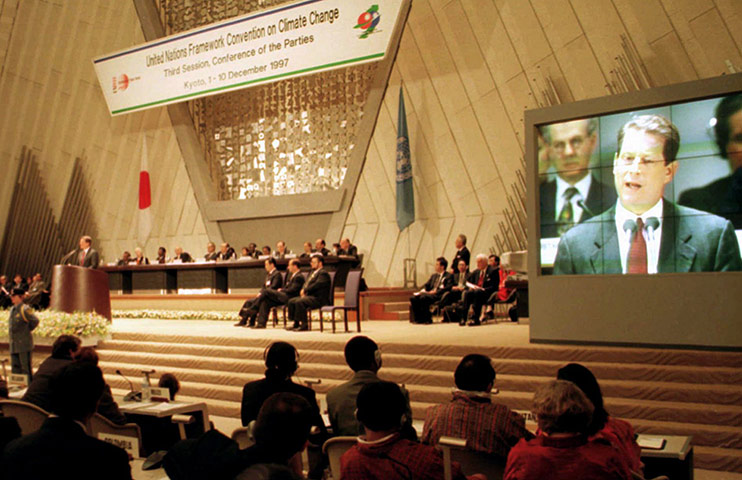
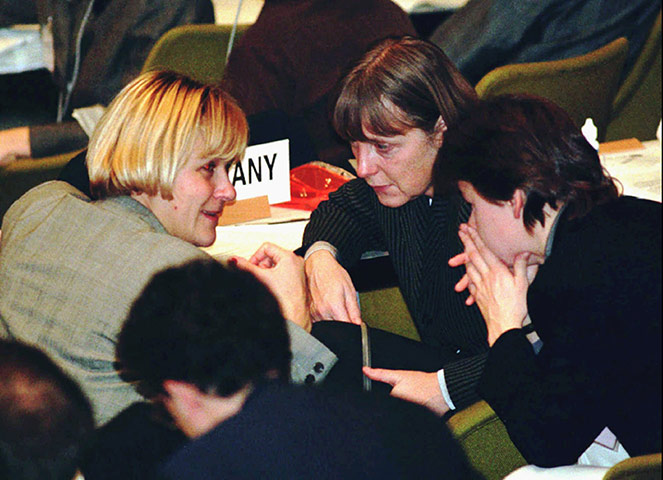
December 8, 1997: The then US vice-president, Al Gore (centre), shaking hands with former Japanese prime minister Ryutaro Hashimoto (right), as former Japanese foreign minister Keizo Obuchi looks on prior to their talks in Kyoto, western Japan. The Kyoto protocol, the world's only binding climate agreement, expires at the end of 2012Photograph: Katsumi Kasahara/APGore delivers an opening speech at the ministerial conference of the United Nations Framework Convention on Climate Change (UNFCC) in Kyoto, western Japan, December 8, 1997. Two decades ago, at the 1992 Earth summit in Rio de Janeiro, countries joined an international treaty, UNFCC, to co-operatively consider what to do against global temperature increases and the resulting climate change, and to cope with its impacts. The highest body of this UNFCC is the conference of the Parties (COP), which comprises representatives from nearly 200 countries and meets once a year Photograph: Katsumi Kasahara/APEnvironment ministers Dominique Voynet, left, of France, Angela Merkel, centre, of Germany, talk with an unidentified delegate as they wait for a session to begin in Kyoto, December 11, 1997. The world's nations bickered through the night before reaching a historic agreement to reduce fuel emissions of industrial countriesPhotograph: Katsumi Kasahara/AP Photo
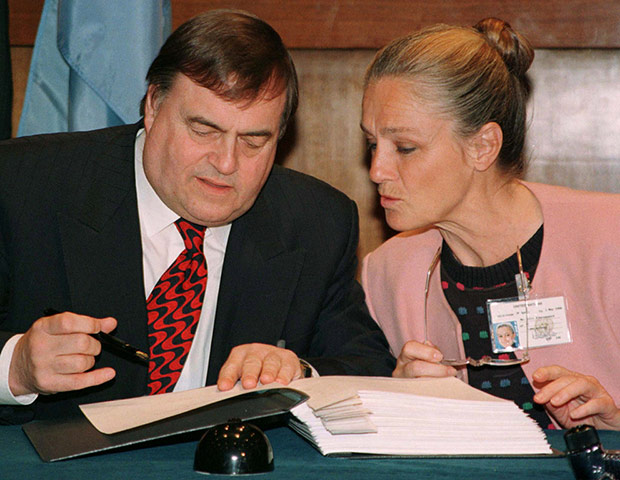
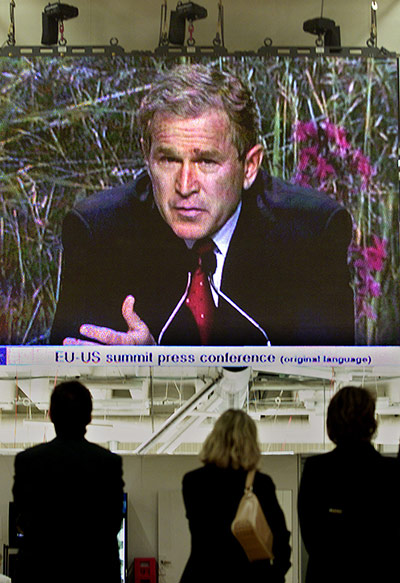
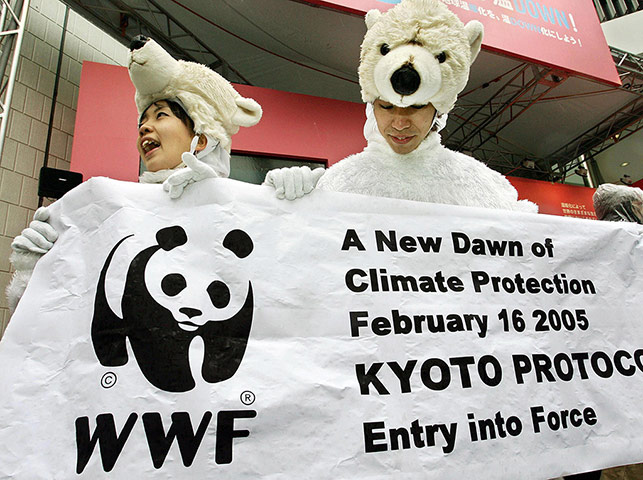
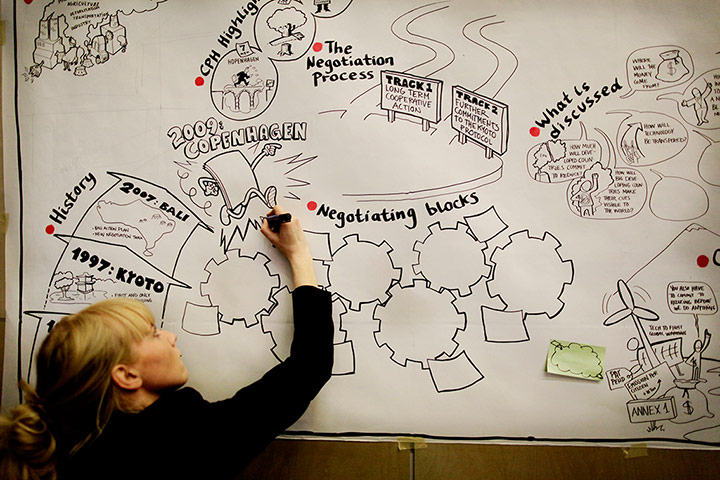
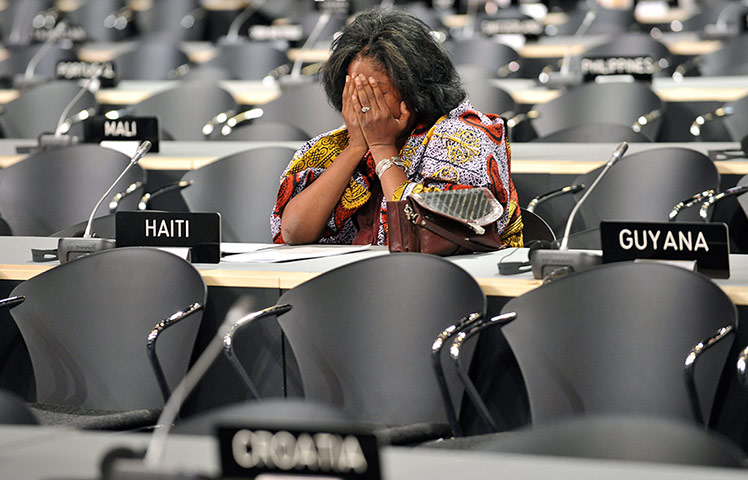
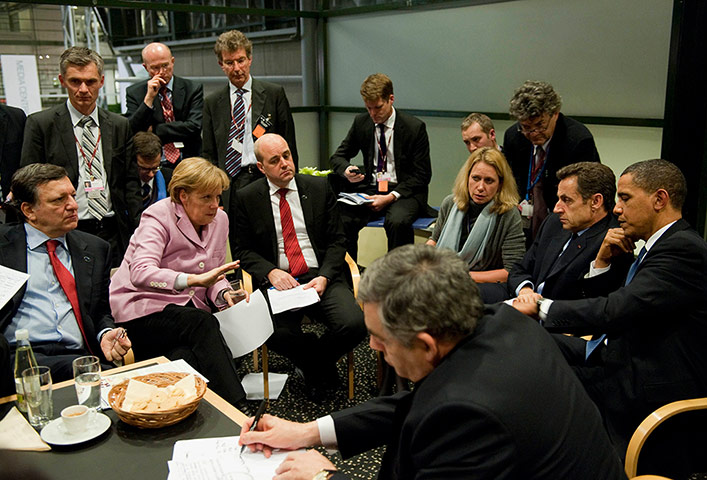
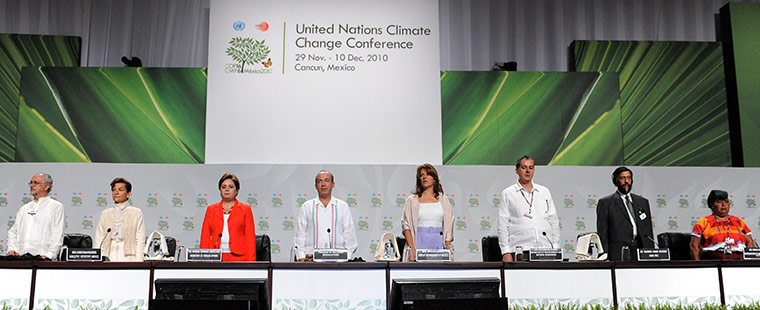
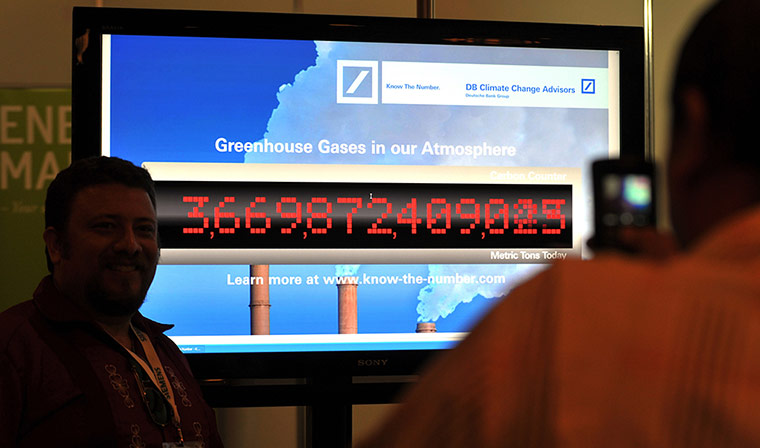
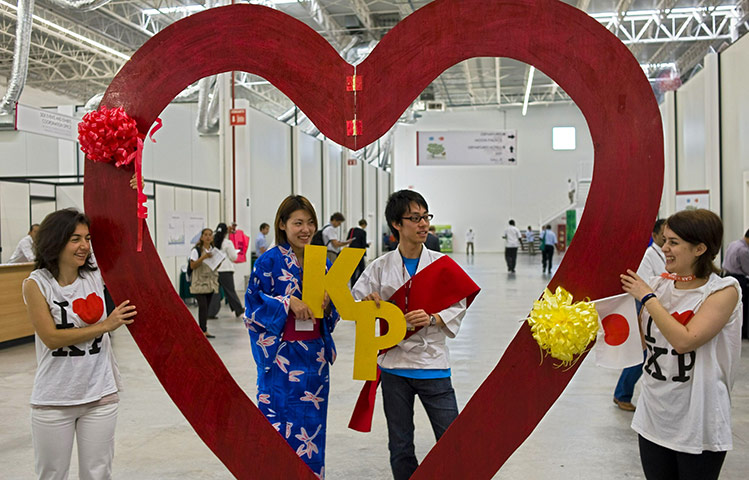
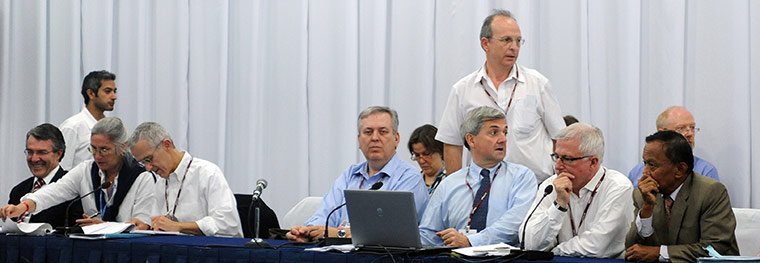
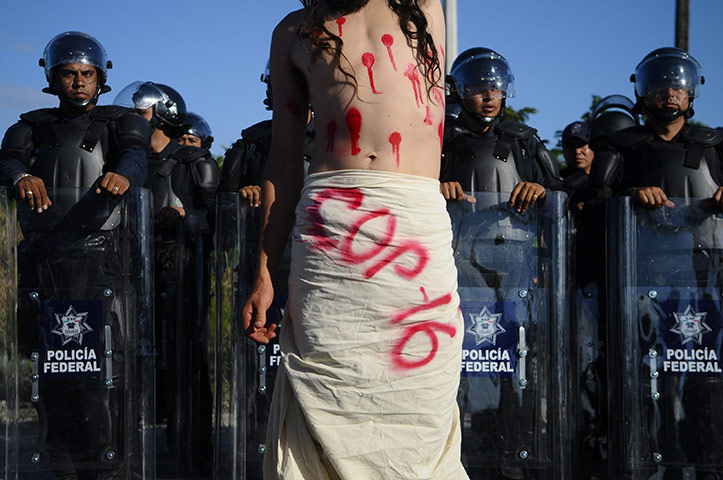
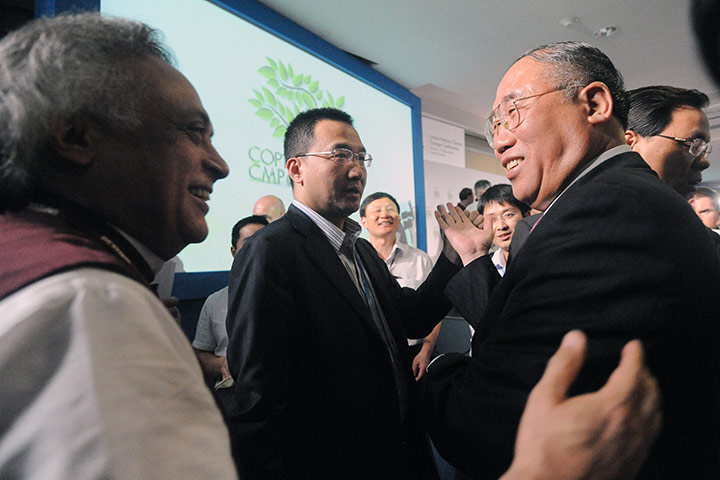
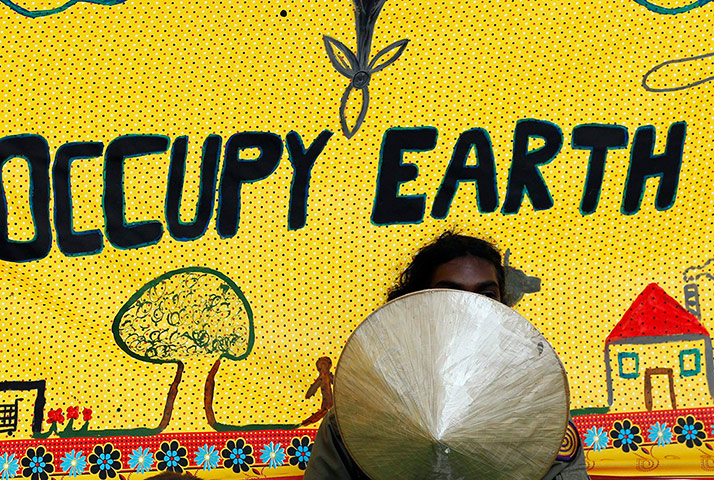
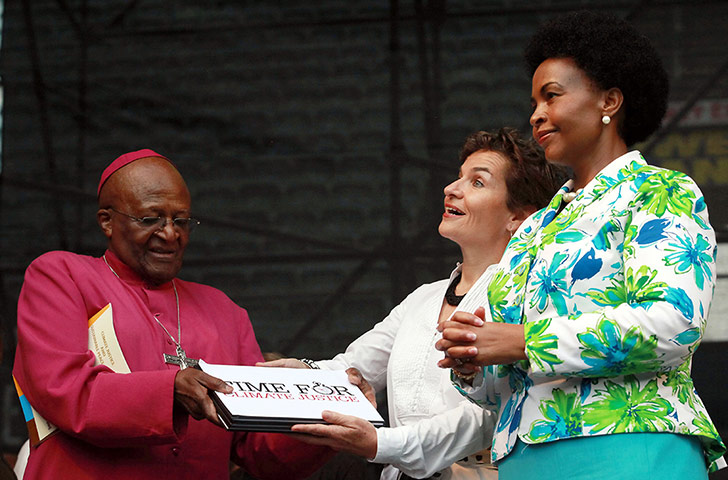
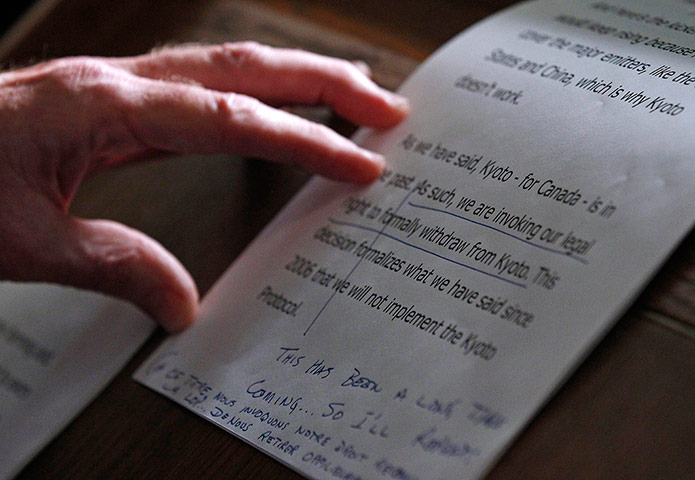
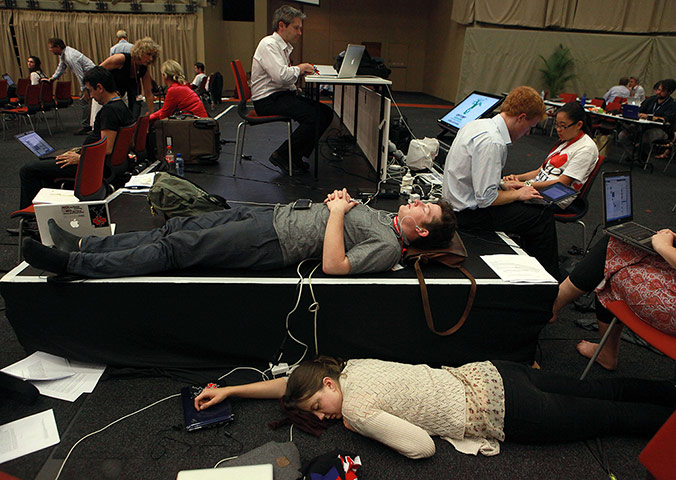
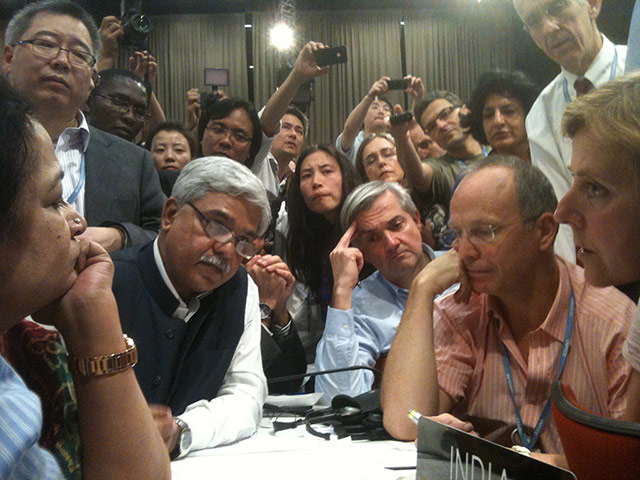
Then British deputy prime minister John Prescott (left) signs the Kyoto treaty on climate change after Denmark's Jytte Ritt Bjerregaard, the European Union environment commissioner, at the United Nations in New York on 29 April 1998, on behalf of the European UnionPhotograph: ReutersThen US president George Bush is seen on a giant screen in the media centre of an EU-US summit in Gothenburg, Sweden, 14 June 2001. Bush was meeting European leaders to discuss the 1997 Kyoto protocol, which was signed by former vice-president Al Gore on behalf of the US, but never ratified by the Senate. In late March 2001, Bush announced that the US would withdraw from the Kyoto protocol, and later in June said that instead of committing to the protocol standards, it would combat global warming in other waysPhotograph: Wolfram Steinberg/APActivists clad in polar bear outfits hold a banner in the Ginza shopping district of Tokyo, 16 February 2005, to celebrate the Kyoto protocol, which took effect that day with the support of 141 nationsPhotograph: TORU YAMANAKA/AFPUNFCCC executive secretary Yvo de Boer (left) breaks down in tears next to UN secretary-general, Ban Ki-moon (centre) and Indonesian president, Susilo Bambang Yudhoyono (right) during the 2007 climate talks in Nusa Dua, Bali, Indonesia. Ban Ki-moon expressed his disappointment about the lack of progress and urged delegates to quickly approve a compromise plan. After almost a fortnight at the Bali negotiations in December, as talks hit their umpteenth buffer, de Boer had to be led away from the chamber in tears, and became known as the 'crying Dutchman'Photograph: Mast Irham/EPAA woman works on a visual update with reflections, comments and explanations set up in the Bella centre at the UN climate summit in Copenhagen, Denmark, 14 December 2009. The split between the developing and developed world became sharper as ministers of the world's nations started to arrive for a crucial second week of climate talksPhotograph: Anja Niedringhaus/APA Haitian delegate rests before the second-day session begins in Copenhagen. The talks descended into disarray after developing countries reacted furiously to leaked documents showing that world leaders would be asked to sign an agreement that hands more power to rich countries and sidelines the UN's role in all future climate change negotiationsPhotograph: Attila Kisbenedek/AFP/Getty ImagesBehind-the-scenes negotiations between world leaders at the Copenhagen climate summit on 18 December. The German chancellor Angela Merkel (left, in pink) negotiates with the president of the European commission, Jose Manuel Barroso (left), Sweden's prime minister and standing president of the European Council, Fredrik Reinfeldt, (right, in red tie), French president Nicolas Sarkozy (third from right), US president Barack Obama (second from right) and British prime minister Gordon Brown (front, right). A leaked recording later revealed bad-tempered exchanges and clear frustrations from Europeans at what they saw as intransigence by the ChinesePhotograph: Pool/Getty Images29 November, 2010: Delegates stand for the national anthem of Mexico at the opening ceremony of the Cancún talks. Left-right: Mario Molina, Nobel laureate in chemistry; UNFCCC executive secretary Christiana Figueres; COP president and Mexico foreign minister Patricia Espinosa; Mexican president Felipe de Jesús Calderón Hinojosa; his wife, Margarita Zavala; Juan Rafael Elvira Quesada, Mexican secretary of environment and natural resources; IPCC chair RajendraPachauri; Simona Gomez Lopez, representative of indigenous Mexican people Photograph: IIDSA visitor is pictured next to a screen showing a counter constantly updating the greenhouse gases in the Earth's atmosphere at the 2010 climate talks in Cancún, Mexico. The talks in were in danger of collapse after many Latin American countries said that they would leave if a crucial negotiating document did not continue to commit rich countries to emissions cuts under the Kyoto protocolPhotograph: Cris Bouroncle/AFPCampaigners call on Japan to remain committed to the Kyoto protocol, at the Cancún talks. Bickering over the fate of the Kyoto protocol cast a cloud over talks on future climate action, with Japan putting its foot down and refusing to extend the treaty named for its ancient capitalPhotograph: Omar Torres/AFP/Getty ImagesInformal consultations including US climate negotiator Todd Stern (fourth from the left) and Chris Huhne, the UK energy and climate change secretary. The UN climate talks in Cancún were delicately balanced between a positive outcome and a 'car crash' because of the divide between rich and poor countries over the future of the Kyoto protocol, Huhne said at the timePhotograph: IISDMembers of environmental groups take part in a protest march in Cancún Photograph: Roberto Escobar/EPA/EPAThen Indian minister of environment and forests, Jairam Ramesh (left), and Chinese minister and China's chief climate change official, Xie Zhenhua (right). Developing countries must step up with concrete plans to cut carbon emissions to break the deadlock in beleaguered UN climate talks, China's top climate change official told the Guardian ahead of 2011's talks in DurbanPhotograph: IISDA protester in front of a banner outside climate talks venue in Durban, November 28, 2011Photograph: SIPHIWE SIBEKO/ReutersArchbishop Desmond Tutu (left) hands over a Climate Justice Diary to the COP chair, Christina Figueres (centre) and South African international relations minister, Maite Nkoane-Mashabane (right) during a Climate Justice rally ahead of the Durban talksPhotograph: Rajesh Jantilal/AFPEnvironment minister Peter Kent's statement announcing Canada will formally withdraw from the Kyoto protocol on climate change, 12 December 2011Photograph: Chris Wattie/ReutersTired delegates are seen working till into the early hours of the morning on the final day of negotiations of the COP17 climate talks in Durban. At last year's summit, a deal was salvaged after marathon talksPhotograph: Rajesh Jantilal/AFP/Getty ImagesThe key moment in the talks when EU climate chief Connie Hedegaard went head-to-head with the Indian and the Chinese ministers, with Chris Huhne, the British negotiator in the background. Negotiators agreed to start work on a new climate deal that would have legal force and, crucially, require both developed and developing countries to cut their carbon emissions. The terms now need to be agreed by 2015 and come into effect from 2020 Photograph: Kristian Ruby
Sign up to read this article
Read news from 100's of titles, curated specifically for you.