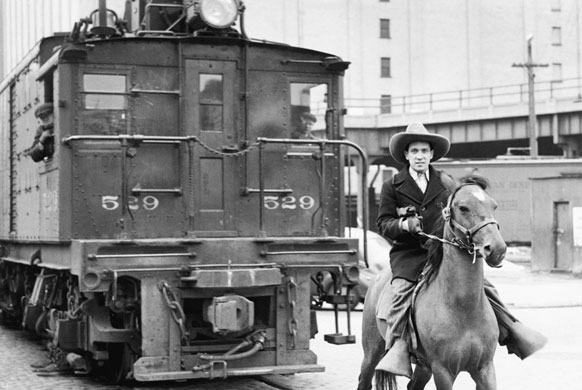
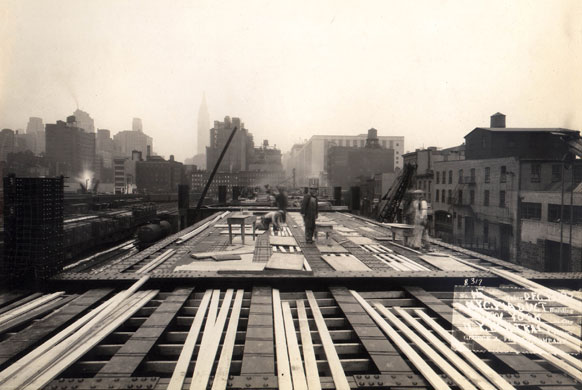
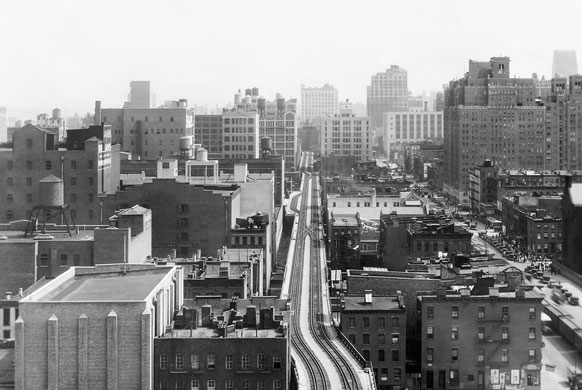
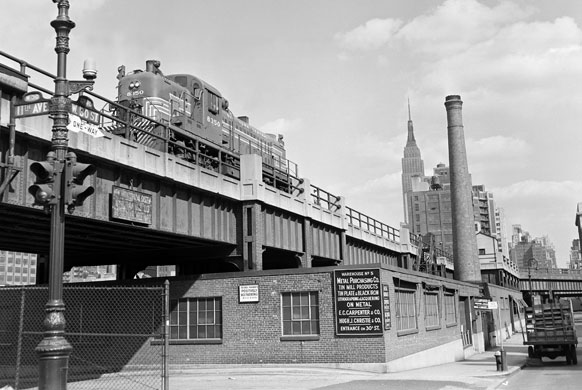
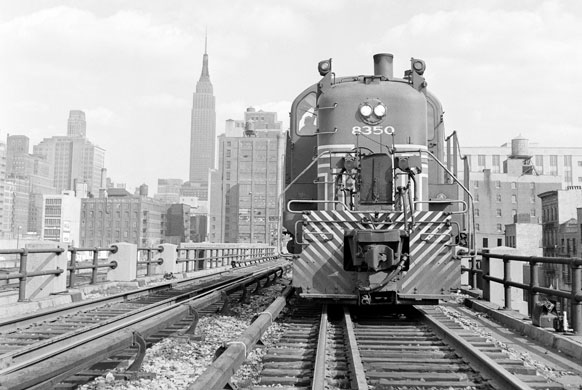
Before the High Line was built in the early 1930s, the railway tracks down the middle of New York's 10th Avenue were so dangerous the road was nicknamed 'Death Avenue'. This picture shows the so-called 'West Side Cowboy', whose job it was to ride in front of the trains waving a red flag to keep pedestrians from being run overPhotograph: James Shaughnessy/Friends of the High LineThe High Line stretched a mile and a half alongside the Hudson river, from Chelsea to the West Side rail yards near the Empire State BuildingPhotograph: archiveofindustry.comThe High Line in 1932Photograph: Chris Payne/archiveofindustry.com
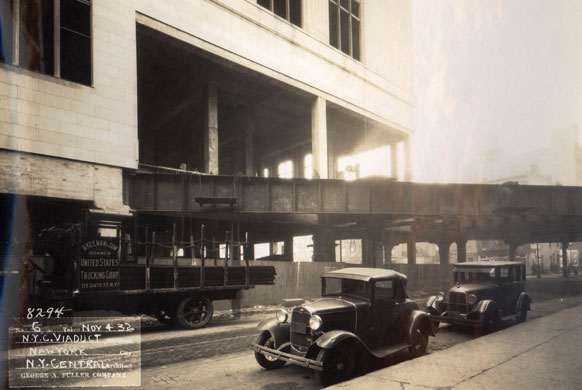
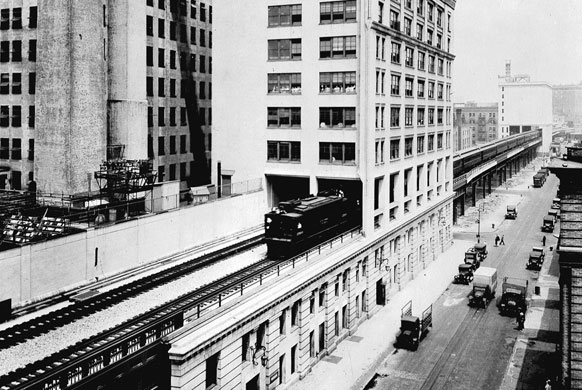
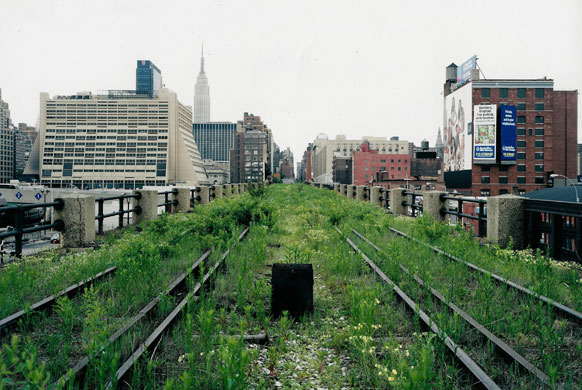
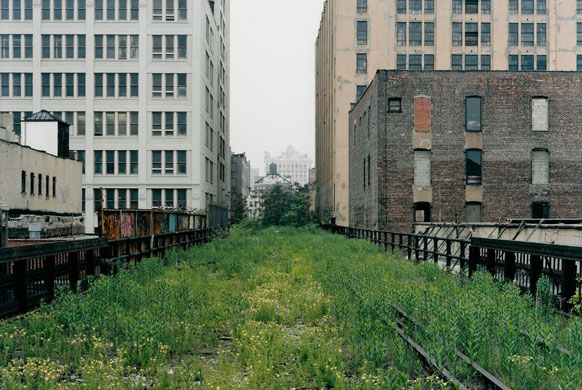
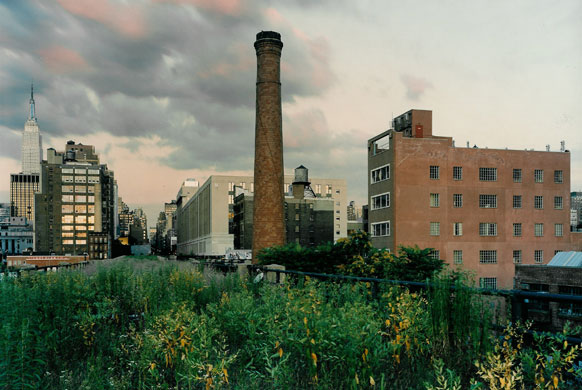
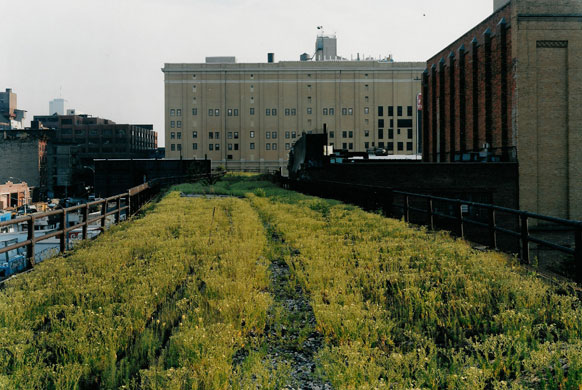
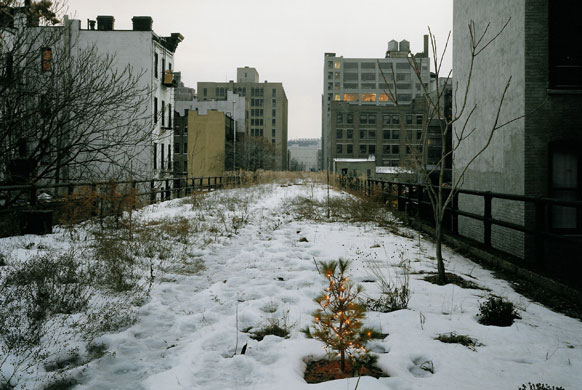
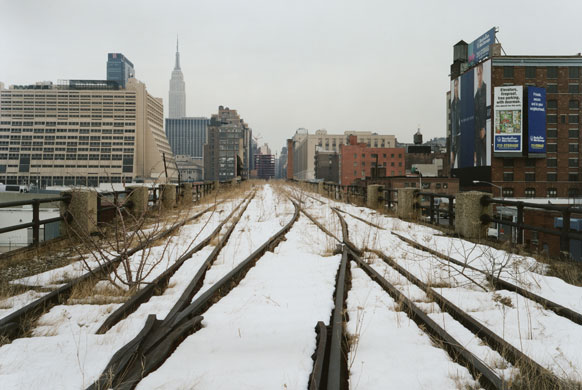
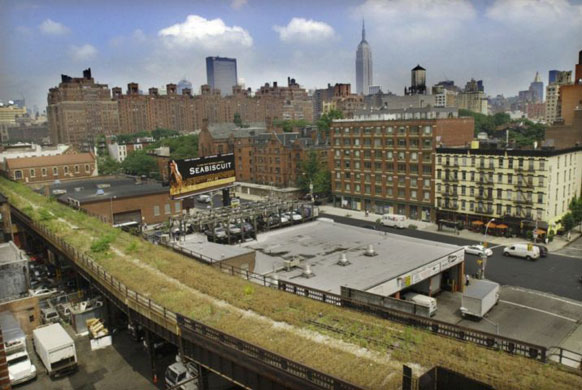
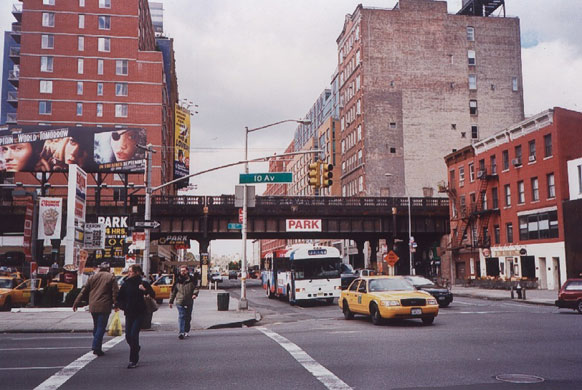
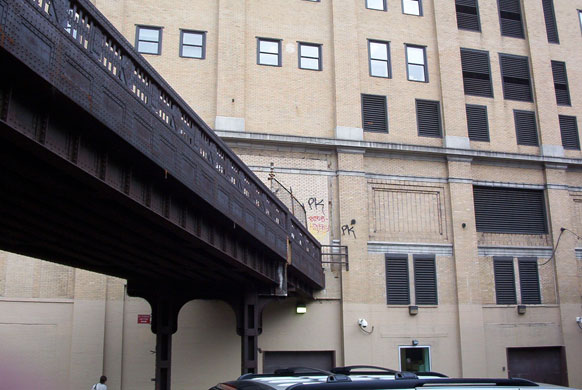
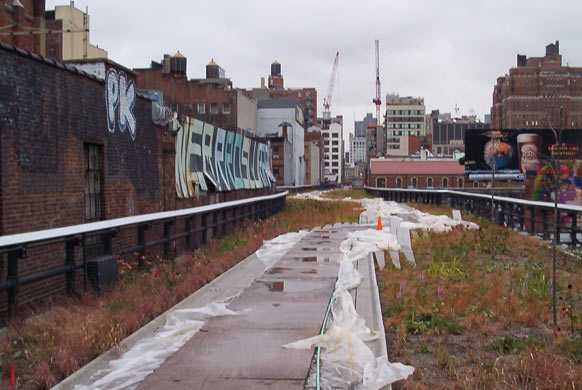
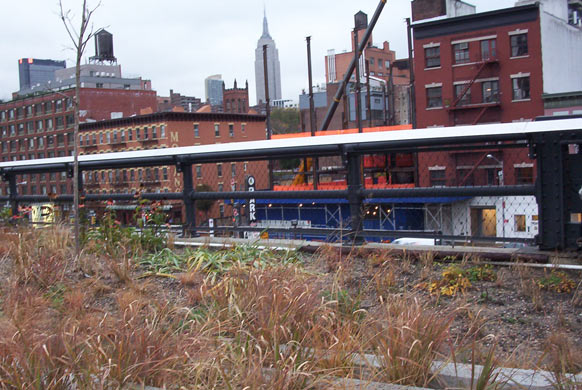
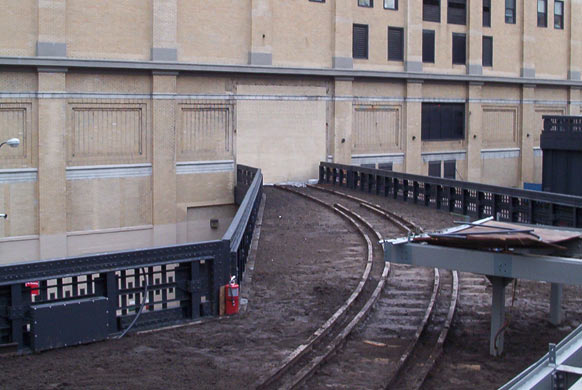
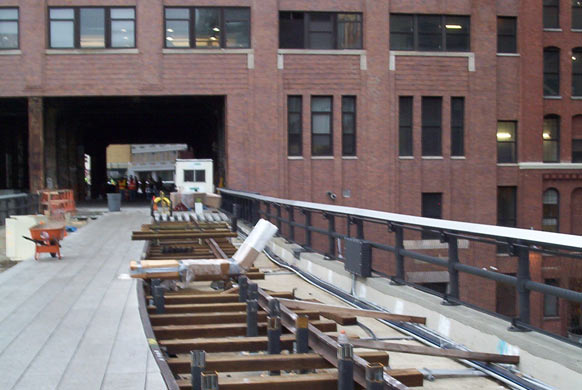
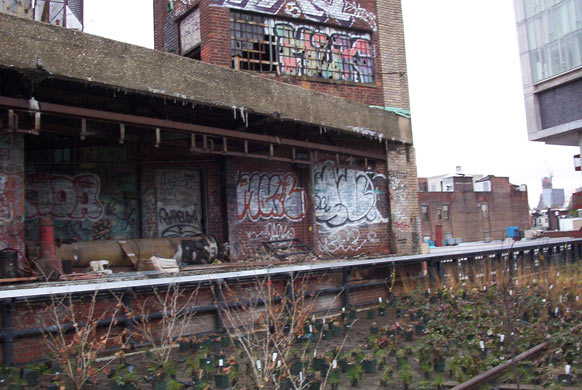
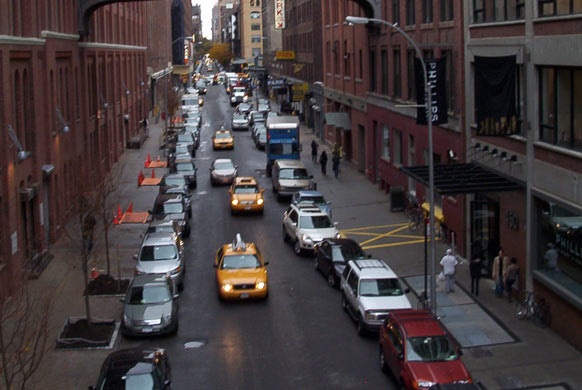
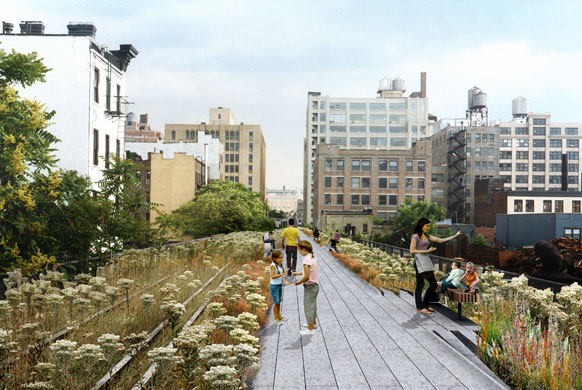
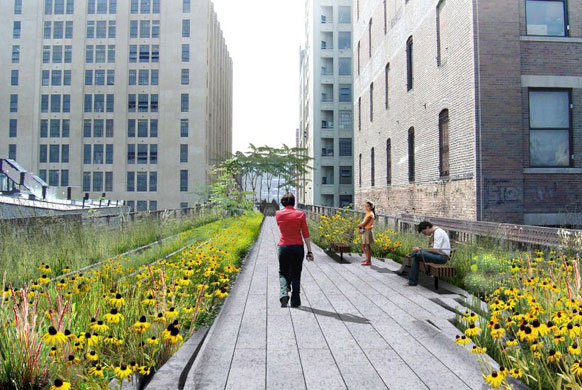
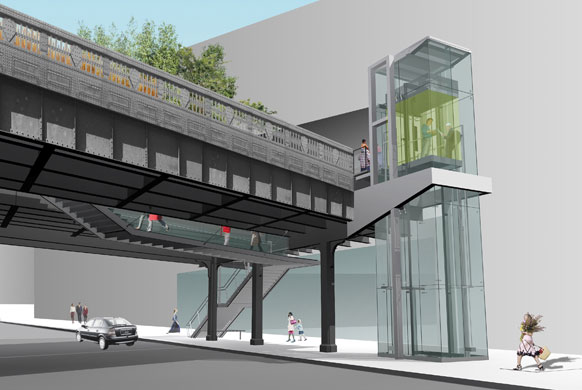
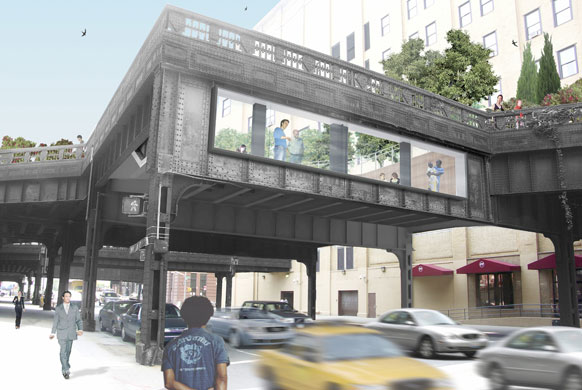
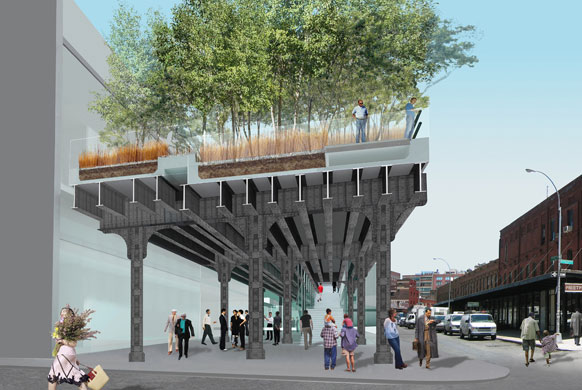
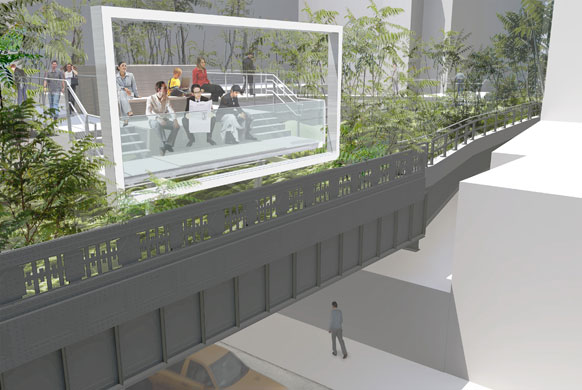
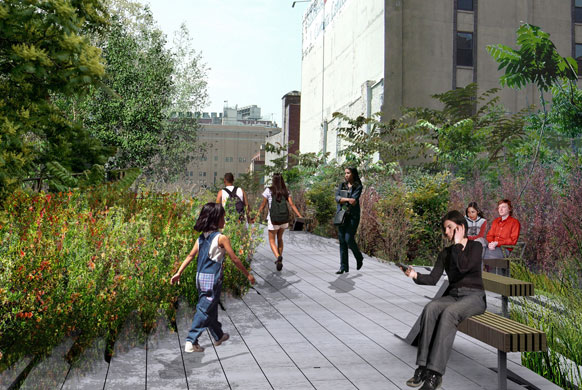
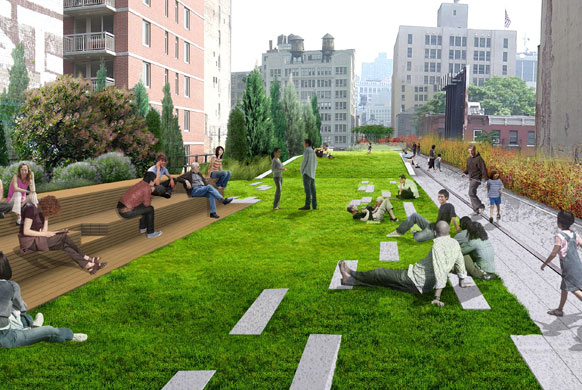
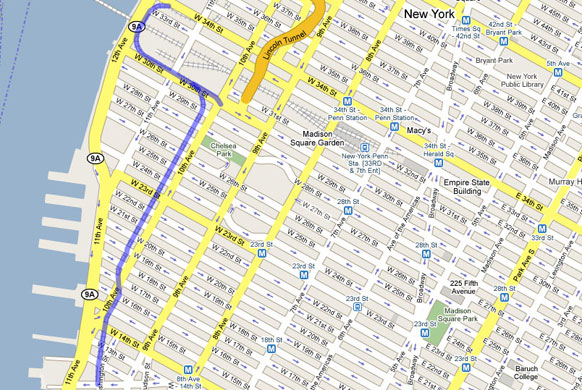
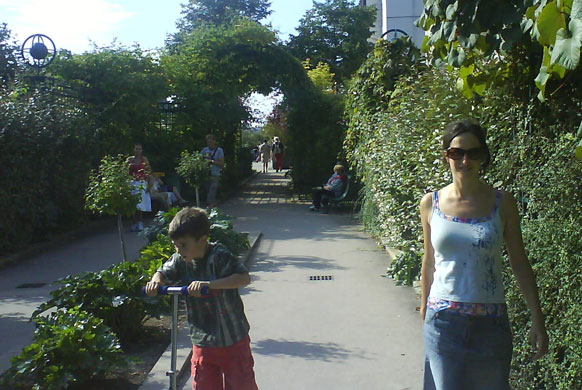
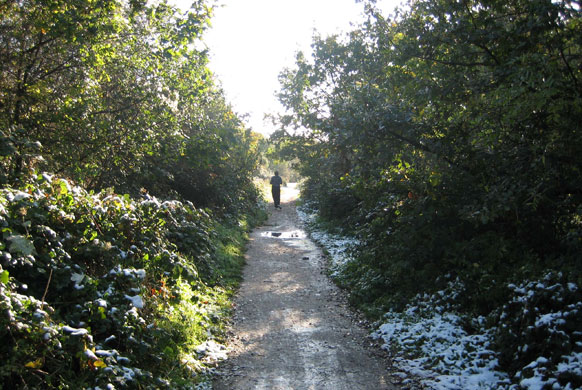
The High Line in 1934. The tracks cut through buildings so freight trains could drop off goods to warehousesPhotograph: George A Fuller/Friends of the High LineThe High Line in 1934Photograph: Friends of the High LineThe line in 1953. In the background is the Empire State BuildingPhotograph: Friends of the High LineA train on the High Line in 1953. As the freight industry switched from rail to road, use of the High Line declined. Part of it was pulled down in the 1960s, and the last train ran in 1980Photograph: Friends of the High LineFriends of the High Line was formed in 1999 to save the tracks and transform them into a 'park in the sky'. In 2000 the group commissioned Joel Sternfield to take a series of pictures of the wilderness that had grown up there since the route fell into disusePhotograph: Joel Sternfield/Friends of the High Line'It’s green! It’s a railroad! It’s rural! Where am I?' Sternfield saidPhotograph: Joel Sternfield/Friends of the High LineAlan Weisman describes the scene in his recent book The World Without Us: 'Since trains stopped running there in 1980, the inevitable ailanthus trees have been joined by a thickening ground cover of onion grass and fuzzy lamb’s ear, accented by strands of goldenrod. In some places, the track emerges from the second storeys of warehouses it once serviced into elevated lanes of wild crocuses, irises, evening primrose, asters, and Queen Anne’s lace'Photograph: Joel Sternfield/Friends of the High LineJoshua David, one of the founders of Friends of the High Line, remembers his first visit to the disused tracks: 'It was extremely exciting. We went up through one of the old factory buildings. I remember stepping out on to the tracks, and there’s an incredible 13-block-long stretch immediately: this incredible vista of wild grasses and flowers. It took my breath away'Photograph: Joel Sternfield/Friends of the High LineSternfield has collected his photographs in a book called Walking the High LinePhotograph: Joel Sternfield/Friends of the High LineSnow on the High LinePhotograph: Joel Sternfield/Friends of the High LineA bird's eye view of the line in 2003Photograph: Bebeto Matthews/APThe High Line crossing West 23rd Street in Chelsea in 2003Photograph: Paul Owen/guardian.co.ukThe High Line in 2005. The entrances where the line ran directly into buildings were often bricked up once the line became derelictPhotograph: Glyn Huelin/guardian.co.ukThe High Line at the time of writing, November 2008. The outlines of the concrete path that will form the backbone of the new park, and the plant life that will surround it, are already visiblePhotograph: Zoe Marks/guardian.co.ukThe Empire State Building from the High LinePhotograph: Zoe Marks/guardian.co.ukIn some places where the trains used to go into buildings, the tracks have been put back in place to show visitors how the line once workedPhotograph: Zoe Marks/guardian.co.ukIn other places, the tracks, and those using the park, will go right through private buildings that surround the linePhotograph: Zoe Marks/guardian.co.ukA former station platform on the High Line where goods were unloaded for warehouses below. Still visible are the metal meat-hooks used when unloading meat from carriagesPhotograph: Zoe Marks/guardian.co.ukThe view from the High Line over West 15th StreetPhotograph: Zoe Marks/guardian.co.ukHow the High Line will look: this picture shows a straight walkway running alongside the railway tracks, surrounded by a landscape of native species that once grew spontaneously on the line and new species that ensure bloom throughout the growing seasonPhotograph: Field Operations and Diller Scofidio + Renfro. Courtesy of the City of New YorkThe first phase of the project should be finished next spring. Here stairs rise from the 14th Street pavement, supplemented by an elevator, bringing visitors up between the High Line's massive steel beams, while their legs and feet can be seen from the street belowPhotograph: Field Operations and Diller Scofidio + Renfro. Courtesy of the City of New YorkHere steel is cut away and replaced by glass, providing a view up 10th Avenue, and revealing High Line visitors to those on street levelPhotograph: Field Operations and Diller Scofidio + Renfro. Courtesy of the City of New YorkThis picture shows the corner of Gansevoort Street and Washington Street in the Meatpacking District, the High Line's southern terminus. This will be the site of a major access point and street-level plazaPhotograph: Field Operations and Diller Scofidio + Renfro. Courtesy of the City of New YorkThis picture shows the point where a spur of the flyover's metal walkway will bring visitors to a view over 26th Street. A viewing frame recalls the billboards that were once attached to the High LinePhotograph: Field Operations and Diller Scofidio + Renfro. Courtesy of the City of New YorkThe High Line begins to narrow in Chelsea, with denser foliagePhotograph: Field Operations and Diller Scofidio + Renfro. Courtesy of the City of New YorkThis picture shows the point where the High Line's only lawn 'peels up' at 23rd Street, where the line widens, providing crosstown views of the Manhattan skyline and the Hudson river. There will also be a stepped seating area herePhotograph: Field Operations and Diller Scofidio + Renfro. Courtesy of the City of New YorkThe route of the line, as shown on Google MapsPhotograph: GoogleThe Promenade Plantée in Paris, another former elevated train line now converted into a parkPhotograph: Paul Owen/guardian.co.ukThe Parkland Walk in north London, also a former train linePhotograph: Jo Blason/guardian.co.uk
Sign up to read this article
Read news from 100’s of titles, curated specifically for you.