
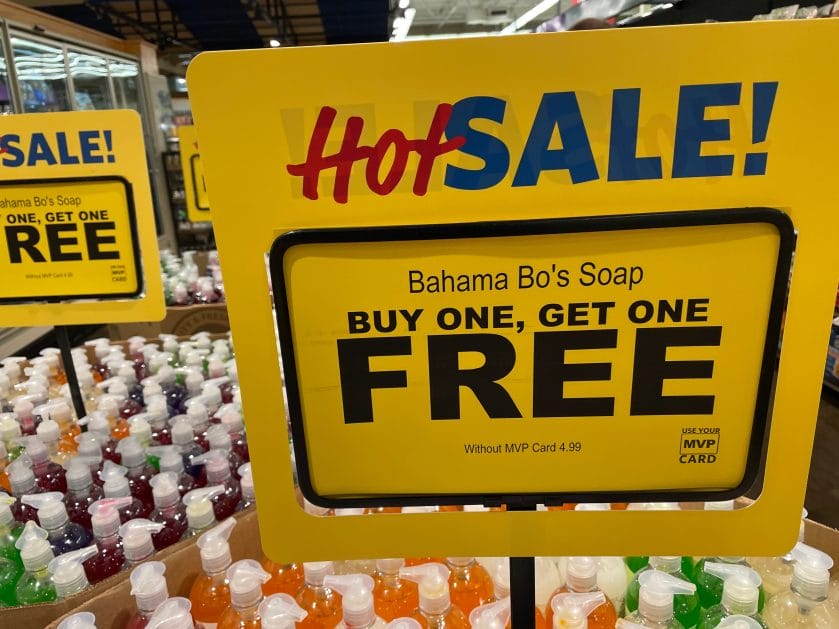
Of all the bright yellow tags in the grocery aisle, none trigger the dopamine center of the brain quite like “Buy One, Get One Free” (BOGO). It feels like a victory—a loophole where you are getting something for nothing. However, for the budget-conscious shopper, BOGO deals are often a mathematical trap designed to increase your average basket size rather than save you money. While there are legitimate instances where these sales offer value, they frequently serve as a mechanism to offload excess inventory while forcing you to overspend on items you did not intend to buy.
The “Full Price” Requirement
The fundamental trick of the BOGO deal is that to get the free item, you must pay the full, undiscounted retail price for the first item. You cannot stack a BOGO deal with a sale price. Often, the base price of the item is inflated during the promotion weeks to cover the cost of the “free” unit. If a box of cereal is normally $4 but is marked up to $6 for the BOGO sale, you are effectively paying $3 per box. While that is a discount, it is often not as deep as a standard “50% off” sale, and it forces you to buy two units to realize any savings.
The Consumption Trap
BOGO deals artificially inflate your household consumption. If you buy two bags of chips because they were “free,” you are likely to eat them twice as fast. Having excess inventory in the pantry creates a psychological permission structure that allows consumption beyond usual levels. “We have plenty, so I’ll have another bowl.” This means you end up back at the store just as quickly as if you had bought one, nullifying the financial benefit. You spent more money to consume more calories, leaving your wallet and your waistline worse off.
Perishable Peril

The strategy becomes particularly dangerous with perishable goods. A BOGO deal on strawberries or salad greens is only a deal if you can eat both containers before they rot. If you throw away the second “free” container because it turned to mush, you effectively paid full price for the one you ate, but you undertook the hassle of storing and disposing of the second one. Retailers love BOGO on perishables because it transfers the waste cost from their dumpster to yours.
The “Half-Price” Rule
In some grocery chains, particularly in the South (like Publix or Winn-Dixie), a BOGO deal actually rings up as each item being half price. You can buy just one item and get the 50% discount. However, in many other regions and at stores like Target or CVS, you must buy two to trigger the deal. Knowing your specific store’s policy is crucial. If you are forced to buy two when you only need one, you are tying up cash flow in inventory that could have been used for other essentials.
When BOGO Works
This is not to say you should strictly avoid these sales. They are excellent for non-perishable staples that you use consistently, such as toothpaste, pasta, or laundry detergent. The key is to view the BOGO tag with skepticism rather than excitement. Ask yourself: “Would I buy this today if it were simply 50% off?” If the answer is yes, proceed. If the answer is “I’m only buying it because the second one is free,” leave it on the shelf.
What to Read Next
Why “BOGO” Might Be the Most Misleading Term in Retail
6 Ways BOGO Deals Can Deceive You (And How to Calculate True Value)
The Ultimate Guide to BOGO Shopping: How to Get Freebies and Save Big
The post The Hidden Cost of “Buy One, Get One Free” Deals appeared first on Grocery Coupon Guide.