The leader of a team that treats COVID-19 patients in their homes in the Hunter Region has urged people to get vaccinated.
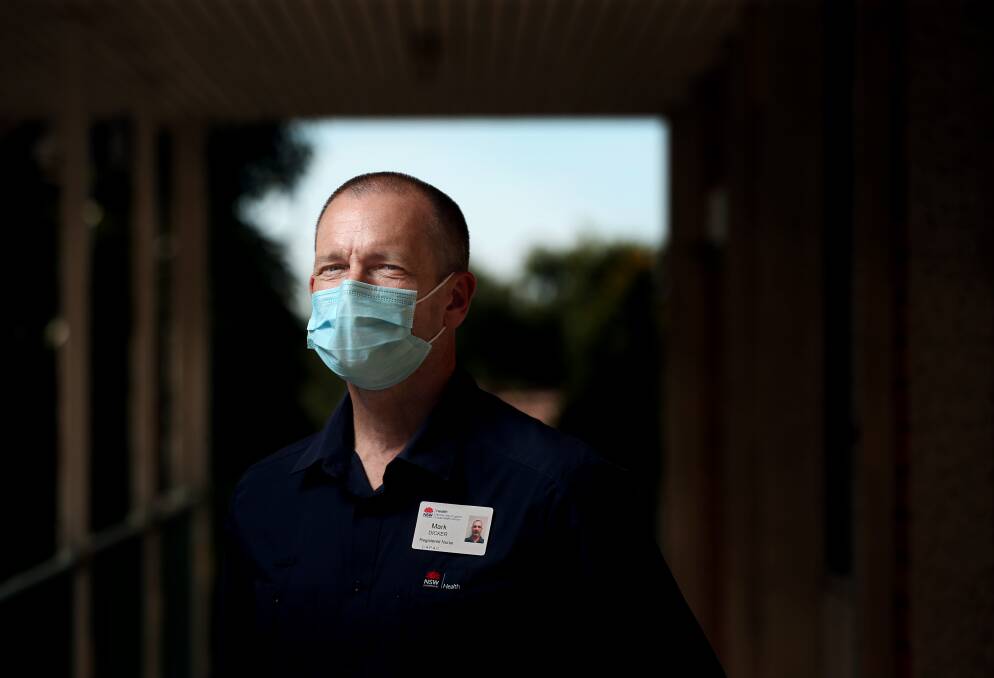
Mark Dicker is head of Hunter New England Health's mobile swab team, which cares for COVID patients in their homes and tests close contacts.
"Whenever anybody gets the chance and it's their turn to get the vaccination, definitely go and get it. It's the quickest way out of lockdown," Mr Dicker said.
"Those few people who have concerns about the vaccine should talk to their GP."
Mr Dicker also urged people to steer clear of misinformation on social media.
"The thing we're seeing now is it's becoming a virus of the unvaccinated," he said.
"We're not seeing the elderly so much. We're seeing the younger people that haven't had the chance to get their vaccine. It's the people that happen to have underlying chronic disease in their 30s and 40s. They're critical and some of them are dying."
Mr Dicker's team makes the phone calls to positive cases and checks on their welfare. The staff do house visits and test those who can't get to drive-through swab sites or clinics.
"That might be because they don't have a car or a licence, or they're physically unable to get there," he said.
The team also tests close contacts of COVID cases.
When somebody tests positive and reports concerning symptoms, team members check on them.
"We get dressed up in PPE and assess them at their home. We give them an oximeter and thermometer to check their vital observations," he said.
"We run though the symptoms and make sure they're good enough to stay at home. Or, if they look like they're deteriorating, we organise the hospital transport with the ambulance."
Patients who contract COVID can have no symptoms, but "most people get some sort of symptom and feel generally lousy".
"It's quite common to have lethargy, to be a bit short of breath. They might have a few sweats overnight and run a temperature. Some people get almost all the symptoms and they are really crook."
In the first week of having COVID, symptoms are generally mild.
"Come the second week, people can become really unwell. They struggle, they sleep a lot, they can't eat, they're nauseated. Some are vomiting, some have diarrhea.
"Of course you get those few people who need to go to hospital. Then there's those who need intensive care and ventilators. Of course, we know some people don't make it out."
Some people with COVID "get very concerned".
"Most people have a lot of questions. We're lucky enough that we have a great team," he said.
"I'm confident we can manage this situation in our community. Overwhelmingly, I just feel really proud of the team because they're really invested in the wellbeing of their community."
Aside from vaccination, he said the most important thing was for people with symptoms to get tested.
"Most people are wearing the masks, using the QR codes, washing their hands. All those things we can all do add up and mean we are far less likely to become COVID-positive. There is definitely light at the end of the tunnel. Come the new year, people will be pretty happy with their newfound freedom."
The staff that go into houses to swab and treat COVID patients rely on PPE [personal protective equipment] and their skills as clinicians to make sure they don't become positive, too.
"I've been nursing for 30 years, so I'm used to using a lot of PPE previously in hospitals or the community," Mr Dicker said.
"I'm pretty happy to put all that stuff on and I'm very confident in how I use it. But, of course, as soon as you've found out you've swabbed somebody that has turned out to be positive, you can get a little bit paranoid.
"If you wake up the next morning and have a bit of an itchy throat or a runny nose, you start second-guessing yourself."
In these situations, staff get tested.
"We test each other every third day as a rule anyway. So we're testing ourselves all the time," he said.
When not working, it's important for frontline staff to have a break from the pandemic.
"For me, it's nice to go home and talk to your friends and family about something else. I like to go for a run and I surf. It's those physical things," he said.
He watches the footy on TV and follows the Knights.
"As soon as you're back at work, it's go, go, go," he said.
In COVID-19 news today: Friday, September 10
-
NSW records 1542 COVID-19 cases, 9 deaths
- John Barilaro says Hunter won't escape COVID-19 lockdown until NSW hits 70% vaccination in mid-October
- Gladys Berejiklian reveals what living with COVID looks like
- Gladys Berejiklian releases 'road map' rules for vaccinated people after COVID lockdown
- Hunter workers now eligible for COVID-19 test and isolate payments