Heat pumps are often described as “fit and forget” technology, but that doesn’t mean how you use them is irrelevant. In fact, some of the biggest differences in heat pump running costs can stem from your everyday habits. For example, how high you set the thermostat, whether you keep switching the system on and off, when you heat your hot water, and how often you override the controls can all make a difference to what a heat pump costs to run.
The trick to cutting your running costs is to stop treating a heat pump like a gas boiler. We tend to use boilers in short, hot bursts. It fires up, sends very hot water around your home and heats rooms quickly. But a heat pump works differently. It usually runs at lower temperatures for longer periods, gently maintaining warmth rather than racing to recover a cold house. Used well, that can make it an efficient way to heat your home. But used badly, it can feel expensive, sluggish or both.
So, what daily habits can help keep heat pump running costs down?
Keep the temperature steady
The first rule of heat pump ownership is that “low and slow” usually beats “off and on.”
Many of us are used to putting the heating on for a couple of hours in the morning, turning it off during the day, then blasting it again in the evening. With a heat pump, that approach is less efficient, because the system has to work harder to bring the home back up to temperature.
Instead, heat pumps perform best when they are allowed to maintain a steady background temperature. That doesn’t mean every room needs to be tropical all day, but it does mean avoiding big temperature swings where possible.
If you’re going out for a short period, for example, it may be better to turn the target temperature down slightly rather than switching the heating off completely. Overnight, a gentle setback can also be more sensible than letting the house get too cold and asking the system to recover quickly in the morning.
The Energy Saving Trust advises that keeping a heat pump on for extended periods can help it run efficiently, while Octopus Energy also notes that heat pumps work best when kept at a fairly steady temperature.
Find your lowest comfortable thermostat setting
The next habit is good advice for whatever home heating system you may have: don’t set the thermostat higher than you need.
For many households, a setting of around 19C or 20C will feel comfortable, although this will vary depending on the home, the people living in it and the weather. Raising the thermostat can make a noticeable difference to your running costs because the heat pump has to keep working until the room reaches the target.
There’s also a common misconception that turning the thermostat up will heat the home faster. In most cases, it won’t. It simply tells the system to keep heating until it reaches a higher temperature.
A better approach is to experiment gradually. Try lowering the setpoint by half a degree or one degree and see whether the home still feels comfortable. If it does, that small adjustment could reduce how long the heat pump needs to run.
The aim isn’t to sit in a cold home, but to find the lowest comfortable setting and avoid paying for extra heat that you don’t really need.
Don’t fight the controls
Modern heat pumps are designed to adjust to the weather. Many systems use weather compensation, which changes the flow temperature depending on how cold it is outside.
On a mild day, a heat pump may only need to send relatively warm water around the system, but on a freezing day, it will likely need to work harder. This is normal, and it’s one of the reasons heat pumps can run efficiently when properly set up.
Problems can start when homeowners constantly override the controls. If the house feels slightly cool, it’s tempting to push the thermostat up sharply or use the boost settings. But frequent manual changes can stop the system from settling into an efficient rhythm.
If your home is consistently too hot or too cold, it may be that the heating curve, flow temperature or room settings need adjusting. This is where it can be worth speaking to your installer or energy supplier, especially if your heat pump was recently installed and you’re still learning how it behaves.
Lower the flow temperature where possible
Flow temperature is one of the most important heat pump settings, but it’s also one of the least understood.
Put simply, it is the temperature of the water sent from the heat pump to your radiators or underfloor heating. The lower this temperature can be while still keeping your home warm, the more efficiently the heat pump can usually operate.
That’s why heat pumps work particularly well with underfloor heating or larger radiators, which can heat rooms effectively without needing extremely hot water. But radiators can still work with heat pumps, provided the system has been designed properly.
This isn't to suggest that every homeowner should start changing their technical settings at random. If the flow temperature is too low, your home may not get warm enough. If it’s too high, the system may use more electricity than necessary. The sweet spot is finding the lowest setting that keeps your home comfortable.
If you’re unsure, ask your installer or supplier to explain the flow temperature your system has been commissioned to use, and whether it can be reduced without affecting comfort.
Time your hot water carefully
Heating your home is only one part of the equation. Hot water can also affect a heat pump’s running costs, especially in homes with a cylinder.
A good habit is to match hot water heating to your household’s routine. If everyone showers in the morning, it may not make sense to keep topping up the cylinder throughout the day. If you’re on a smart tariff, it may also be cheaper to heat water during lower-cost periods.
Some systems include scheduled hot water cycles, boost functions and Legionella protection (an automated cycle during which the temperature is raised to eliminate Legionella bacteria) settings. These shouldn't be ignored, but they also should not be set in a way that heats more water than you need.
As with flow temperature, it’s worth being cautious. Don’t reduce cylinder temperatures below safe levels or interfere with safety settings without professional advice. But do check whether your hot water schedule matches how your household actually uses water.
Use smart tariffs to your advantage
Because heat pumps run on electricity, the price you pay per unit will directly affect your running costs. That’s where smart tariffs can make a real difference.
Some tariffs offer cheaper electricity at certain times of day. If your heat pump controls allow it, you may be able to pre-heat your home slightly or heat your hot water during cheaper periods, then reduce demand during more expensive peak times.
This won’t work the same way for every household. Savings depend on the tariff, the level of insulation, the size of your heat pump, your hot water demand and how flexible your routine is. But for homes that can shift some heating or hot water use into cheaper windows, it can be one of the most useful running-cost habits.
Octopus, for example, advises customers on its Cosy Octopus tariff to make use of cheaper “dip” periods for heating and hot water, while reducing demand during more expensive periods.
Help heat move around the home
Some of the most effective habits have nothing to do with technology at all.
Avoid blocking radiators with sofas, curtains or drying clothes. Keep internal doors closed or open depending on how your heating zones are designed. Use thermostatic radiator valves sensibly, aiming for the lowest setting that keeps each room comfortable rather than turning every valve to maximum.
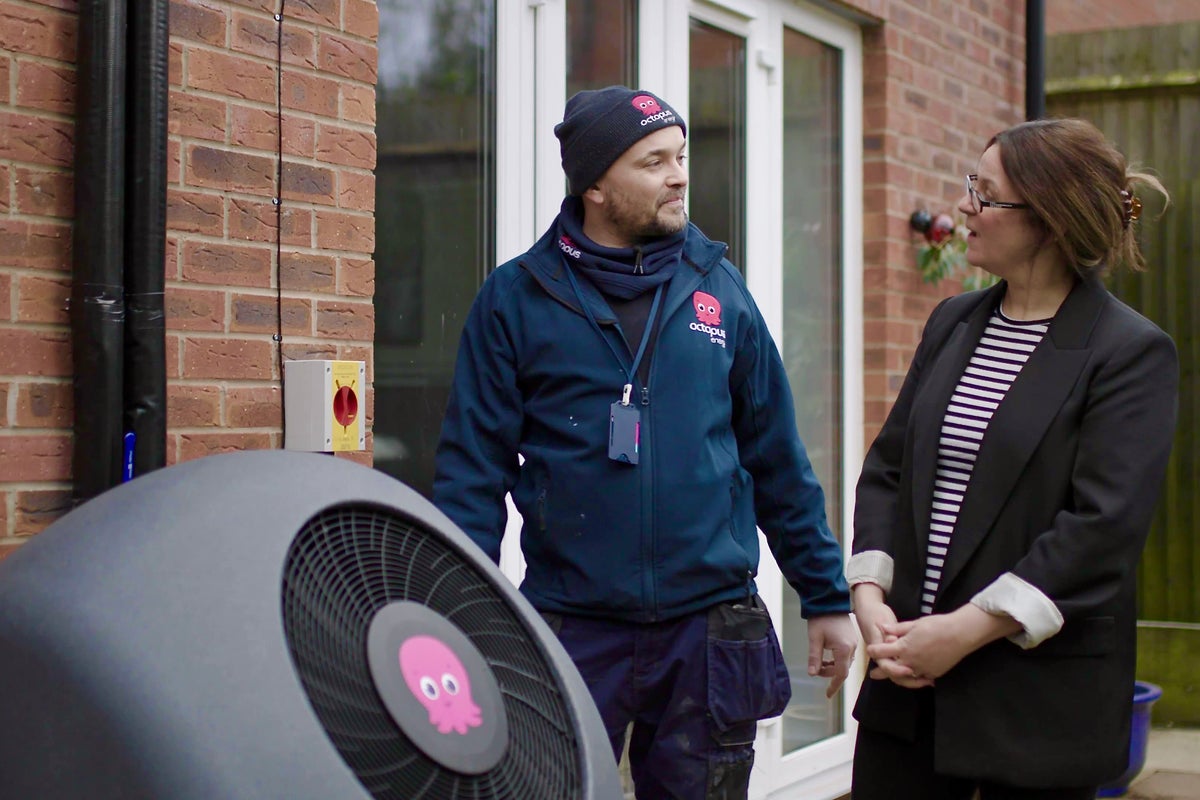
You should also keep the outdoor unit clear. Leaves, snow, bins, bikes and garden furniture can all restrict airflow, making the unit work harder than it needs to. A quick visual check every so often, especially in autumn and winter, is a simple habit to get into that can help your system do its job efficiently.
Track trends, not one cold day
Even an efficient heat pump will use more electricity when the weather gets colder. A high-usage day in January doesn't automatically mean your system is faulty.
What matters more is the pattern. If your bills are consistently higher than expected, rooms aren’t reaching the right temperature, the immersion heater is being used frequently or you keep needing to boost the system, something may need checking.
That could be a settings issue. It could be a problem with the controls. It could be that your home needs better insulation or that the system wasn't commissioned as well as it should have been.
The best habit is to pay attention without panicking. Look at your usage over weeks and months, not just during a cold snap. And if the system never seems to settle, ask for help rather than simply turning everything up.
A heat pump is a robust and efficient system; it shouldn’t need constant babysitting. But it does reward a different way of thinking: steady heat, sensible settings and a little trust in the controls. Get those habits right, and you give your system the best chance of keeping your home comfortable without pushing running costs higher than they need to be.