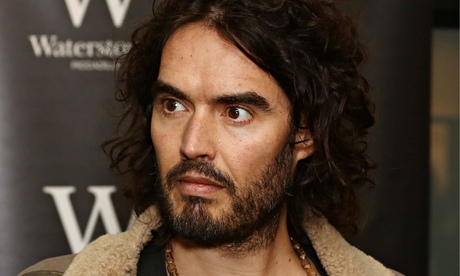
Complaints about the number of column inches devoted to a particular subject in the Guardian form a sizeable chunk of the readers’ editor’s postbag. Some readers are driven to fury by the – apparent – number of pages given over to Russell Brand while others bemoan the lack of articles about women’s sport. Too much London-centric coverage is a regular grievance; some feel the Green party doesn’t get the space it deserves.
The readers’ editor, when considering such concerns and comments, will sometimes send a “column inches” request along to the Guardian library. This is an analysis of how many stories there were on a topic plus the amount of space – the column inches – it occupied, sometimes in comparison with other publications.
Column inches may be the universal catch-all term for print coverage but the precise definition is that a column inch is one inch of space in a column of a newspaper. A rough estimate is that it equals 30 to 35 words.
Armed with a ruler and calculator, it’s a straightforward, if laborious, job of measuring the columns and multiplying by 30/35.
Since the advent of text databases, the “column inch” job has become the word count search. A search is run on a phrase such as “royal baby”, and the results will reveal the number of mentions or total number of words on the subject.
Care must be taken with the search construction, though. Keywords should be selected to capture all the permutations of a story, as well as the various spellings used by different newspapers. The search is usually restricted to the headline and lead paragraph so as to include only relevant pieces and to avoid random mentions; to ensure accuracy, a fixed time period across all titles being investigated must be established.
But the printed paper is just one platform for Guardian journalism. From the myriad blogs, interactive graphics, picture galleries and film, theguardian.com publishes plenty of content that doesn’t appear in print.
The coverage calculator employed for the website is a tally of the tags. Each piece of content on the site is assigned tags – keywords that make it visible and findable. Thus, it is a simple case of running a search that counts the number of tags on a topic.
For a comparison with other publishers (shock waves once ran around the Guardian when it was revealed that it had published more on Celebrity Big Brother than any other national newspaper), there is Journalisted, a tool designed by the Media Standards Trust, the charity set up to foster high standards in the news. Here, an algorithm searches the websites of 21 UK news outlets, delivering coverage statistics and numbers of articles written by individual journalists.
However, while good for giving an overall picture of coverage, these are crude tools when it comes to measuring balance and fairness: numbers don’t reflect the power of the words. For example, a Guardian leader urging Scots to vote no during the referendum campaign drew more criticism than the vast number of articles published.
Editors on the paper don’t usually monitor column inches scientifically but they keep them in mind when preparing news pages.
Will Woodward, editor of G1, the main news section of the Guardian, said: “We do consider how much we are playing particular stories, and particular angles – both in terms of length of story and projection in the paper. Evidently more people are likely to pay attention to the front page than stories in mid-run.”
However, he added: “From time to time we think about whether we can rebalance our coverage over time by giving air to voices that may have lost out in the initial phase of reporting about a story. Every story with a significant dispute in it should acknowledge that dispute and give space to the other side, but some stories go through phases where one voice is louder than others.”
It may well be that a reader’s perception of too many or too few column inches occurs during these “phases”. Analysis over several months would probably show more even coverage. Ultimately, though, Woodward said editors have to make decisions based on the events of the day: “At its best the paper makes clear choices about what we think is the most important news of the day; but it also acknowledges that that is not the only news.”