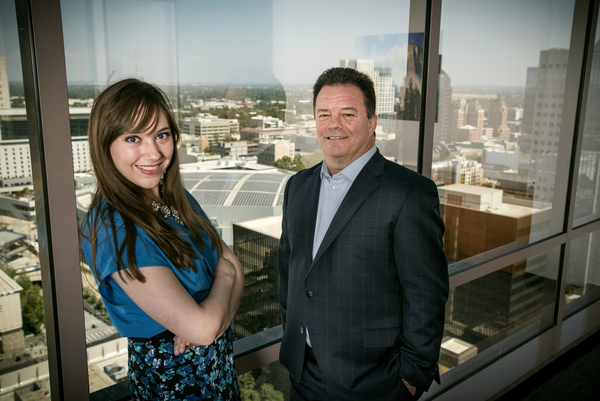
Cynthia Carrillo knows the numbers.
30: The number of meetings she might do in a month with startups and venture capitalists.
3: The average number of times she has to talk to someone to persuade them to visit Sacramento.
200: The number of companies she'd like to persuade over 10 years to relocate from the San Francisco Bay Area to California's capital.
And 6, the number that shows how much further she has to go. That's the number of San Francisco and Silicon Valley tech firms that have made the move.
Carrillo is the Bay Area regional director of the Greater Sacramento Economic Council. At any other point in time, an attempt to get techies to build companies in a sleepy city better known as a pit stop on the way to Tahoe than a tech hub may have seemed like a joke. But as the Bay Area's cost of living soars, leading to an exodus of workers seeking a more affordable quality of life, Carrillo's nonprofit says now is the time to strike.
"More than 200,000 people leave the Bay Area every year," said Barry Broome, head of the economic council. "We need to catch it. Even if only 10 percent of those people come to Sacramento, it changes our economy."
For more than 20 years, the Bay Area has been a tractor beam for some of Sacramento's brightest graduates. Fresh out of UC Davis or Cal State Sacramento, engineers made a beeline for Mountain View and Menlo Park, homes to Google and Facebook, respectively. Seeking funding, startup founders headed for Sand Hill Road. Even those who stay feel the draw of the Bay Area: Last year, 119,000 people in Sacramento got their W-2 from the Bay Area.
For those in the Bay Area, Sacramento _ just 80 miles up Interstate 80 _ is seen as a quiet government town surrounded by cow pastures. Sacramentans used to wear that as a badge of pride. Who wanted to be in San Francisco with its housing crisis and tremendous wealth disparity, anyway?
Then, in 2008, the financial crisis devastated Sacramento's economy.
"And it awakened the idea," said Broome, "that the status quo isn't something that's going to take us further."