
If you’re a fan of whammy bar-abusing blues-rock instrumentalists like Jeff Beck and Michael Lee Firkins, you’ll love Pure, the new album from Prague-born, Hamburg-based guitarist Marcus Deml.
Its nine tracks benefit from a smorgasbord of six-string brilliance, crossing through a variety of sounds, styles and techniques without ever abandoning its own prevailing sense of identity.
Opening track Budapest transports you into the heart of one of Europe’s cultural cornerstones, a place where tradition stands shoulder-to-shoulder with cosmopolitanism and modern innovation. You get the sense that Deml’s soaring Strat lines are every bit as poetic as the city that inspired the music.
Elsewhere, the screaming vintage shred of Persecución is reminiscent of Yngwie Malmsteen, Ritchie Blackmore and Gary Moore all rolled into one, while Rise of the King has an otherworldly quality that isn’t a million miles away from Steve Vai at his most melodic.
All of which marks it out as a late candidate for one of the most breathtaking instrumental releases you’ll hear in 2025.
“I think music should evoke a feeling and a mood and make you forget everything else,” Demi says. “I like to take the listener on a trip; for example, to the amazing city of Budapest. I’d say the third solo in Persecución is my favorite moment on the album.”
It doesn’t take long to perceive that Pure could only have been born in the mind of a well-rounded musician – the kind of person who takes inspiration from all manner of locales, physical and musical.
“I got really into the harmonic content of Satie and Debussy,” says Deml. “As far as guitar players, I analyzed their note choices and their rhythmic placement. I’ve checked out Carlton’s method of superimposing triads. I’ve analyzed the chords of Holdsworth and his legato technique, Morse’s compositional methods, Malmsteen’s picking and B.B. King’s note placement, to name a few.
“As a kid, I learned Gary Moore and Hendrix stuff by ear. It made me realize that your ears are the most important superpower.”
He says bending has been his biggest fascination from a young age. Almost everything he’s ever played has involved some form of the technique, from small half-steps to dramatic perfect fourths.
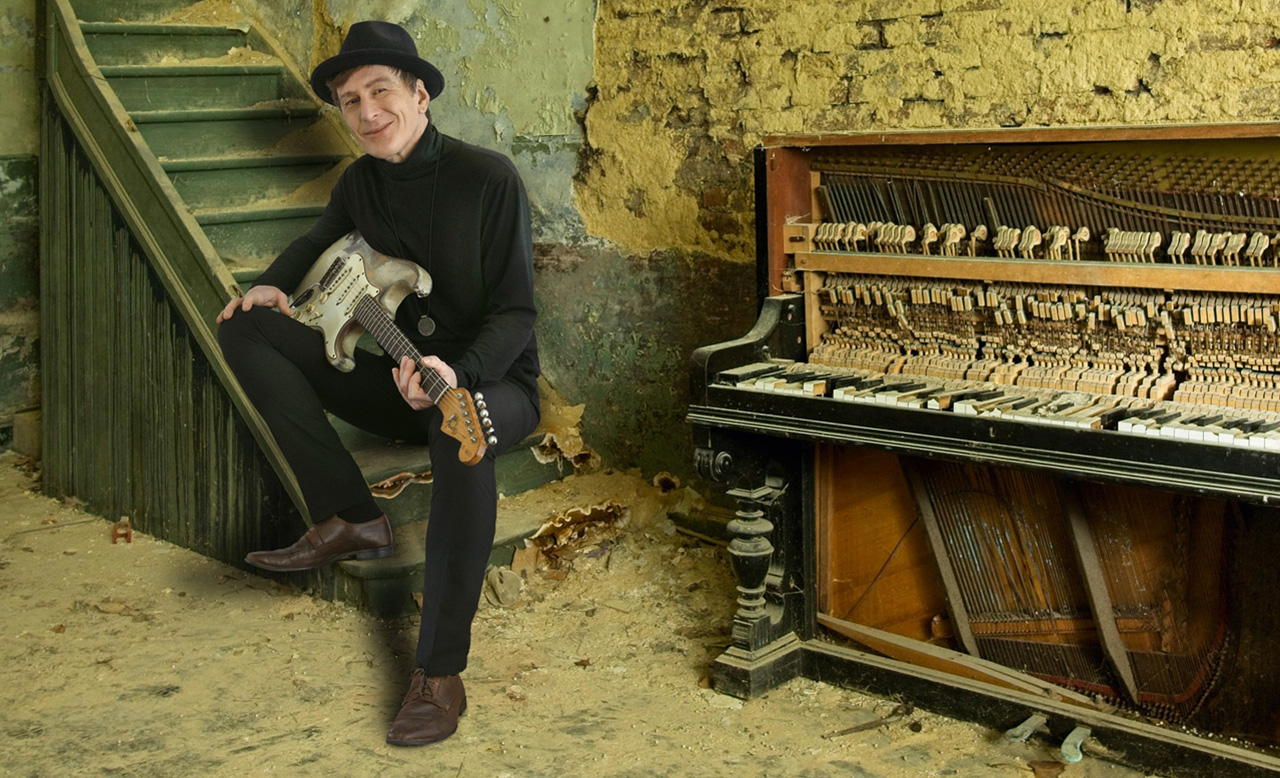
Deml continued developing his chops at the Guitar Institute of Technology in Los Angeles during the golden age of shred. Fellow students at the time included John Frusciante, Russ Parrish (better known as Satchel to Steel Panther fans) and Shane Theriot, under the game-changing guidance of teachers like Paul Gilbert, Scott Henderson, Frank Gambale, Larry Carlton and Jennifer Batten.
Demi says the focus was purely on music explaining that every day involved 10 to 12 hours of playing, practicing, rehearsing, eating and breathing guitar – with no distractions whatsoever.
I used my black vintage RI, the guitar I learned to play on. It’s not worth much, but I’ve played it at thousands of concerts and hundreds of recording sessions
“I learned that if you want to play something that seems unreachable, you have to work at it with the right method. If you can’t achieve it, you haven’t practiced enough, or you’ve practiced with the wrong method. I still live by these standards.”
He’s worked with everyone from Toto singer Bobby Kimball, ’80s hard rockers Kingdom Come, Canadian prog band Saga and German superstar Nena to drum hero Carmine Appice, legendary producer Randy Jackson, Phil Collins’ son Simon and Rick Astley. He’s also been active in bands like Errorhead, The Blue Poets and Earth Nation.
“Being a session and touring player was a life education,” he says. “I’ve done at least 500 albums in just about all kinds of music. But I’ve realized I want to write and play my own music. Pure would never have happened if I’d carried on as a session guitarist.”
Ask Deml about the recipe for the spine-tingling sounds on the record, and he’ll start off by explaining how seriously he takes these matters, describing tone as his religion. Whether he’s listening or playing, if the sound isn’t good, he’s simply not interested.
“I’m mostly a vintage Strat guy,” he says. “I used my white 1963 Strat and a black vintage reissue from ’87, which is the guitar I learned to play on. It’s not worth much, but I’ve played it at thousands of concerts and hundreds of recording sessions.
“The amps were mostly non-master Marshalls like a Super Lead and Super Bass. The clean tones came from custom amps made by the late, great Nils Thomsen.”
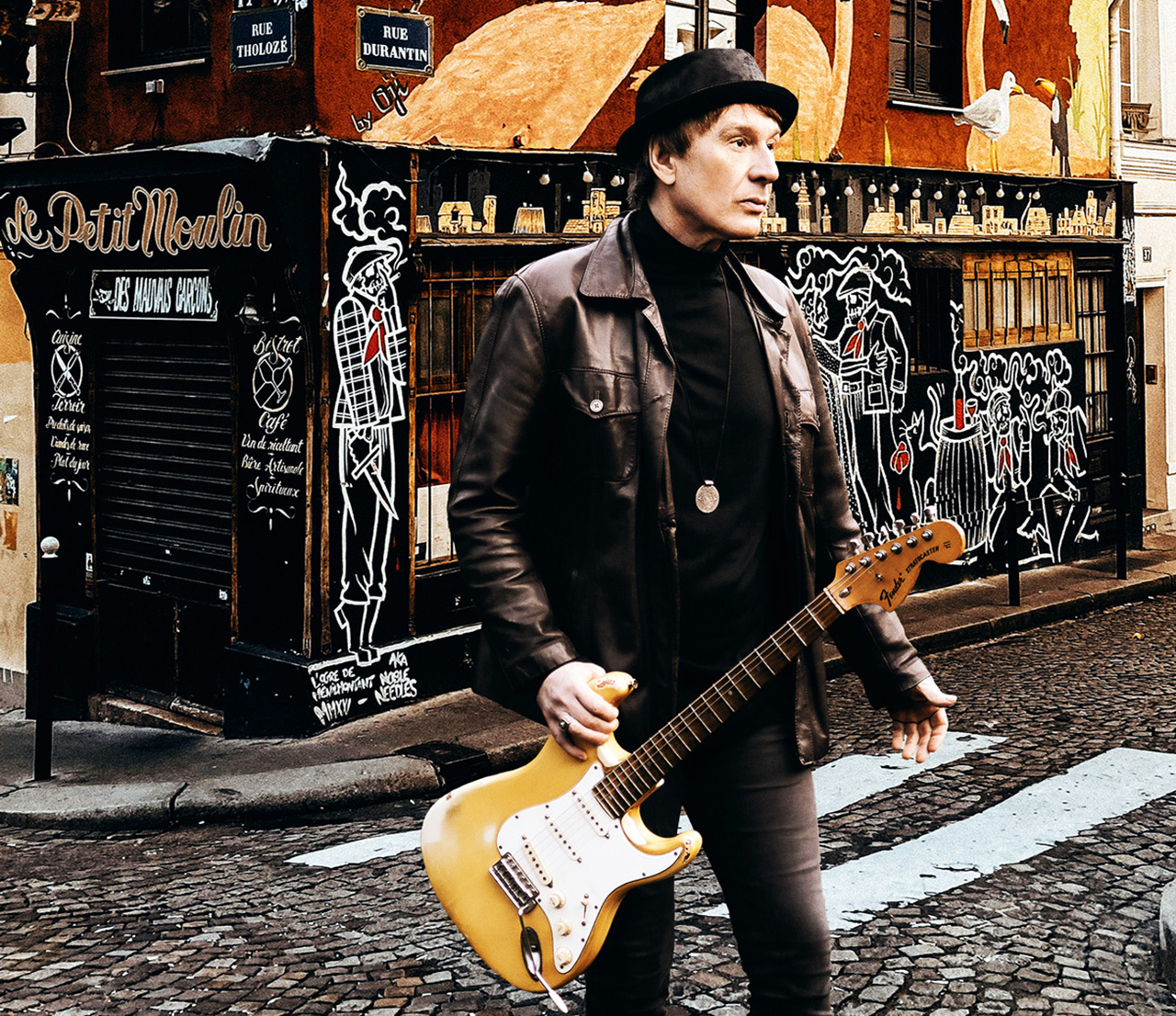
In between the guitars and amps were his signature Angry Gorilla distortion, which he says is “a high gain pedal inspired the preamp of my Tube Thomsen signature amp.” Also present was his Sweet Elephant overdrive – “a cross between a Klon and a TS9 with more gain, less compression and a different EQ curve” – not to mention his signature pickup sets.
“I wanted to do a few tracks with my ’56 Les Paul or my ’66 335, but I just feel more at home with a Strat,” he says. “My style is non-intellectual. Even though I know theory and I’ve studied music, I never think about technique or impressing other guitar players. Otherwise I’d still be practicing!”
- Pure and Demi’s signature gear can be ordered from his Triple Coil Music website.