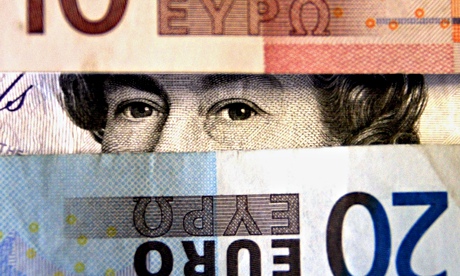
In 2010, with the Euro-crisis deepening, stagnation entrenched and unemployment still to peak, David Cameron boasted that Britain was “out of the danger zone”. Four years on, with unemployment tumbling, growth resurgent and wages finally picking up, prime minister Pangloss has made way for prime minister Jeremiah. The “red warning lights” on the dashboard are, Mr Cameron wrote in Monday’s Guardian, flashing again.
Six months before he faces the country, Mr Cameron is no disinterested voice. A leader who once vowed to “let sunshine win the day” has very particular reasons for now pointing to dark clouds. The economy, on which the Conservatives are more trusted than Labour, has been losing salience in the polls, while a troubled health service, on which the opposition enjoys the advantage, edges towards centre-stage. In these circumstances, bad news suits the Tories better than no news on the economic front. They have also learned the obvious lessons of 2007-08, when Gordon Brown’s initial reluctance to concede things were as bad as they turned out proved a tactical mistake.
Politicians are more concerned to orchestrate than elucidate in any debate, but it doesn’t follow that they are always wrong. The dangers to planetary prosperity that Mr Cameron points to are all real. Most, however, are perennial. The world never bounced back with concerted vigour after 2008, and during the long semi-slump since, it has been possible at every stage to complain about “stalled” trade talks, uncertainties in up-and-coming economies and “conflict in the Middle East”. Indeed, in respect of the last, the PM should count his lucky stars that – unlike so many past panics in the region – the Islamic State threat has so far proved compatible with a sustained slide in the oil price. Japan skidded back into recession on Monday, a concern for sure, but something that happens so frequently that it’s a headline that has lost the power to shock.
The one danger that Mr Cameron is right to suggest is becoming more clear and present is the eurozone, which could soon sink into Japanese-style deflation. The euro’s last brush with catastrophe ended in 2012, when an unstated grand bargain fell into place. Europe’s north agreed to sign bailout cheques, the south swallowed more austerity, and Frankfurt agreed to magic up whatever currency was required to prevent bank runs driving any country out of the club. The feared death spiral, sucking in overdrawn governments and bank vaults stuffed with their debts, receded. But the underlying disease, of woefully inadequate demand, was never addressed. Instead of being shaken up and set on new foundations, banks were shored up incrementally. Interest rates were long kept a touch higher than in Britain and the US, with nothing resembling quantitative easing making it on to the menu until very recently, hopelessly late in the day. And obsessive fiscal conservatism was left unchallenged, hardening into the self-defeating dogma that now threatens to sink the currency union.
This upside-down view of deficits as the cause rather than the consequence of economic weakness leaves all European attention squandered on shaving fractions of percentage points off the Italian and the French deficits. Even though Beppe Grillo’s Five Star Movement is now embracing a return to the lira, and the chauvinist Marine Le Pen is an increasingly plausible candidate for the Élysée, no let-up is countenanced. The single currency could end up smashed against a brick wall of popular resistance.
If Mr Cameron has correctly identified the gravest threat to British prosperity here, he draws the wrong lessons from it when he proclaims the triumph of austerity at home. The aggressive deficit-cutting of the coalition’s first flush was associated with stagnation, but, as economist Jonathan Portes points out, recent retrenchment has come at a more measured pace than in Europe, and recovery has begun. Indeed, there is at least the chance that the UK deficit could actually rise this year. Borrowing may be puffed up by vulnerable domestic sectors, such as housing, as well as by pre-election tax cuts, and – yes – also by chill winds from abroad. These winds are whipped up, though, not by any want of retrenchment but by an unbending adhesion to the austerity dogma.