The fourth anniversary of the outbreak of Syria’s civil war is marked only by a deepening sense of hopelessness. No resolution to the conflict is in sight. The UN is denounced by a group of NGOs who condemn the failure of the security council as an actor in the region. Syria is a huge part of what is the world’s worst refugee crisis since the end of the second world war. More than 130,000 have died. Nearly 7 million men, women and children have fled their homes but remain within the country. Fighting means humanitarian aid reaches only a small proportion of those who need it. Most Syrians have lost their jobs. They and their families are reduced to poverty.
But for the 4 million who are living in camps in the neighbouring countries of Jordan, Lebanon and Turkey, conditions are often worse. In the freezing Middle Eastern winter, there is not even enough money for international agencies to feed everyone who needs it, let alone to provide education and healthcare. Surely, the bleaker the politics of the crisis, the more important a generous, international humanitarian relief effort.
Here Britain can be proud of its contribution. At nearly £800m, the UK tops the donors’ league table. That is invaluable support to the majority of refugees who want to stay close to their country, ready to go home as soon as they possibly can. But there is a minority who cannot cope in camps. For them, resettlement is the best option. Germany has provided 30,000 places. Norway and Sweden have taken 2,500 each. In January 2014, Britain announced its own scheme to help the most vulnerable – victims of torture or rape, or suffering severe ill-health. So far, the scheme has helped exactly 143 people. That is a national embarrassment.
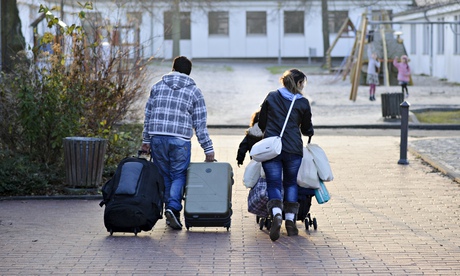
On Thursday the UN refugee agency raised a second aspect of the Syrian humanitarian crisis – the 200,000 Syrians who have arrived in Europe overland or by sea. These refugees place a heavy burden on the hard-pressed southern European countries – Greece and Italy, Hungary and Bulgaria – where they arrive. Because of the convention that says asylum applications must be made in the first safe country, they cannot move on. The UNHCR wants all of Europe to share the responsibility more fairly by introducing a system of relocation from south to north. That means France, Ireland and in particular the UK should play a much bigger role: Oxfam calculates that on a pro-rata basis, the UK should be prepared to offer places to up to 10,000 Syrians. Such a gesture would send an important signal of support to Syria’s neighbours as they struggle to support their refugee populations without alienating their own citizens. It would tell Syrians themselves that they were not forgotten. And it would be a symbol of European solidarity.
It is also a moral obligation, one that Britain has recognised for more than 50 years. The corrosive nature of the discourse about migration fostered by Nigel Farage and Ukip – at it again in a Channel 4 interview with talk of a Muslim fifth column – cannot be allowed to stop Britain playing its part in an international effort to help at least some of the victims of Syria’s war.