Nothing that happened in British politics in 2014 remotely compared in importance with the Scottish independence referendum. Even so, few could have predicted, or did predict, the way that the 18 September vote would end up making itself felt in the months that have followed. The result of the referendum, when it came, was statistically clear enough – a decisive 55%-45% rejection of a separate Scotland. But the referendum was the end of nothing, not least because of David Cameron’s truly shocking response.
The referendum was not simply about Scotland’s formal relationship with the rest of the UK. It also articulated Scotland’s particular form of discomfort with the evolving politics of the UK – a discomfort felt in other ways outside Scotland too. As such, the referendum was a stress test both for the UK as a political entity, and its party system. Britain has come close to failing both these tests, which is why Scottish politics since 18 September remains almost as charged and radically volatile as before the vote – with huge potential effects.
The Guardian’s end of year ICM poll in Scotland confirms this in the most dramatic fashion. Nearly four months after the referendum, the main party that was defeated on 18 September, the Scottish National party, is riding higher than ever, while the parties whose cause was victorious are in various degrees of eclipse. The chief loser is Labour, which has now joined the Conservatives and the Liberal Democrats as parties that have been unable to resist the appeal of nationalism, in general, and the SNP in particular. On a uniform swing across Scotland based on these results, Labour would collapse from 41 Scottish seats at Westminster to a mere 10. By corollary, the SNP would surge from the current six MPs to 45. Incredible though this may seem, it may nevertheless understate the exact degree of Labour’s Scottish predicament and of the SNP’s potential hegemony. If Scotland’s seats are divided into four types with common characteristics, the SNP’s success looks to be even greater, with Labour reduced not from 41 to 10 MPs but from 41 to three.
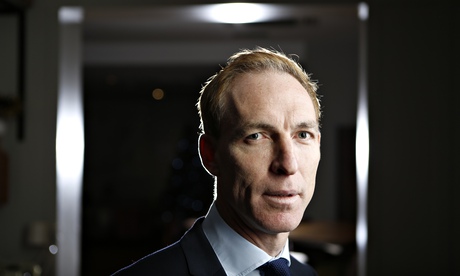
If nothing else, this poll – and there have been others with comparable results – underscores the immense scale of the task facing Labour as it attempts to refocus after 18 September. Labour has chosen an able new leader in Jim Murphy, who has been energy incarnate since he was elected. Yet the realities that face Mr Murphy and his party are huge. And there are only four months to go to the election where this will be put to the test. Unless things change, the SNP will continue to win a positive hearing in all circumstances, while Labour struggles to be listened to at all.
There are several reasons for this. One stands out, however. Labour is being punished by Scottish voters for having campaigned with the Conservatives and Liberal Democrats against independence. Its former voters in the west of Scotland and other onetime heartlands believe that Labour has abandoned them and their interests, while believing the SNP’s converse claim to have embraced them. Neither of these claims actually stands up to forensic examination in the light of day: on many points, Labour’s prospectus remains more redistributive than that of the SNP. But this view is nonetheless the mood of the moment.
That’s because the SNP is deemed to speak for Scotland while Labour is deemed to have sold its soul to Westminster. As the poll shows, voters take the SNP line on most things, including Trident renewal. Even more seriously, in the short-term, voters believe that the Smith commission’s proposals on fresh powers – the so-called “vow” – are a letdown and not, as Labour claims and dispassionate analysis confirms, a big devolutionary package. In Scotland, the lack of confidence in “London-based” politics trumps everything. The taint of the Tories disables Labour’s counter-claims. Dismiss it as unfair and even irrational if you wish. But it is a political reality. That reality currently stands between Labour and a possible return to power in next year’s general election. It may also even imply that, in spite of the referendum, the UK’s days as a nation state are once again severely numbered. Scotland overshadowed everything else in 2014. It may do so again in 2015.