The Roman Catholic church is by some measures the largest and most genuinely global of all international organisations, but its diversity policy could use some work. This is not a matter of doctrine: the pope will always be Catholic, obviously. Nor is there any realistic prospect of women being elevated to positions of formal power over celibate men in the hierarchy, although we hope and believe that in a few centuries Catholicism will develop so that women can be so elevated. In the meantime, though, there is a considerable bias within the pool of available Catholic, male, ordained talent. The countries with greatest number of Catholics are under-represented at the highest level, among the cardinals who elect the pope. Europe still supplies nearly half the cardinals, although Catholic Christianity here has been hollowed out for decades.
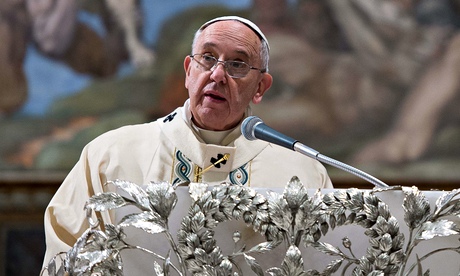
Successive popes have worked to change this balance, but slowly, and generally losing ground to the institutional inertia of the Vatican. Pope Francis has struck with typical energy in his appointment of 15 new voting cardinals. Just as typically, he has shifted away from conservatives without moving into the camp of western progressives.
Cardinals matter because they are among the most important links between their home churches and Rome, but most of all because they elect the next pope from among themselves and so determine the direction of policy for years to come. The pope’s power to nominate them is comparable to the US president’s power to nominate Supreme Court justices in its subtle and long-term effects. Pope Francis has shaken up the system by making two rounds of appointments in successive years, faster than has been usual. Both the men he has appointed and those he has overlooked are shocking, though only insiders will be properly shocked by the latter. Many rich and prestigious cities, whose archbishops would expect to be cardinals by right, are no longer represented at this level in Rome, among them Los Angeles, Venice, Chicago and Philadelphia. In this light, the award of a red hat to Cardinal Vincent Nichols of Westminster last year was an honour more remarkable than it seems. There is no longer a clear track to the top of the church through the old churches.
Instead, the pope has moved decisively south and east in his choices. Only one new cardinal speaks English as his first language, five are native Spanish speakers, but the remarkable ones come from languages that are hardly global. There are men from Tonga, Cape Verde, Burma, Thailand and Vietnam. One of the two Italian cardinals comes from a poor and unfashionable diocese in Sicily that has had to bear the brunt of the refugee migration across the Mediterranean. Pope Francis has also shown a preference for bishops who have been elected by their peers to run the bishops conferences in their own countries. This is not just a shift towards to the south, and the future of Christianity. It is another part of his attempts to move power out of the Vatican and into the church around the world. This is fraught with danger: democracy could tear the church apart. But it is the only way forward and we wish him well.