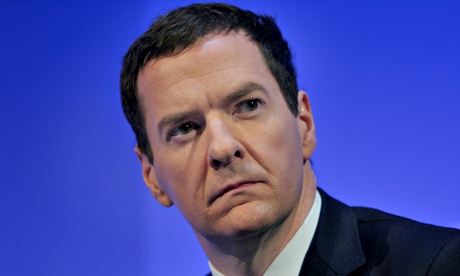
There may once have been a serious economic purpose behind this week’s autumn statement, but it’s hard to discern nowadays amid the Treasury’s hallmark spinning and pitch-rolling. This will be an exercise in holding Labour’s feet to the fire – an extra £2bn a year for the NHS, more money for roads – and then, in the most blatant piece of electioneering, George Osborne will propose binding the next government to eliminate Britain’s structural budget deficit by 2017/18. This is the kind of futile point-scoring that explains why parliament is held in such low regard.
At the very least, such a proposal would take some sort of parliamentary resolution. If he really means to enshrine prudence in statute, a clause in a finance bill would also be required. But what could such a clause say? The Fiscal Responsibility Act 2010 provides the obvious template. This law stipulated that the Treasury had to report on whether it would hit specific fiscal targets, and – in a feeble rider – “if not, why not”.
This rather pathetic attempt by Alistair Darling to use the statute book to burnish Labour claims to prudence was fairly ridiculed by Mr Osborne in opposition, and repealed by him in office. The chancellor then seemed to understand that saying something would happen was no guarantee that it would, and – one would think – every experience that he has had since would have underlined this insight.
After all, he initially pledged to reduce the structural current deficit to zero over this parliament, and to be reducing the overall debt by next year too. He is on course to do neither. A headline overdraft he said he would cut to £40bn this year is running at around £90bn instead. On his own yardsticks, he has fallen spectacularly short.
There are events beyond his control, such as the Eurozone crisis, plus the more recent decline in global energy prices and UK property transactions, that are preventing the current pick-up in GDP from translating into the sort of recovery in revenues which the Treasury sorely needs.
But for all his mistakes Mr Osborne was surely right to face up to these inconvenient truths and accept that the deficit would take longer to pay off – instead of pretending that nothing had changed and sticking with the original timetable, at the cost of driving the economy into the ditch. Why, then, is he now plotting to throw away (or pretending to throw away) the very flexibility that has proved so valuable?
Vince Cable, for one, sees this is a confected vote to put Labour into an awkward bind. Eds Balls and Miliband will have to chose between alienating their supporters by swallowing Osborneite austerity, and appearing soft on the deficit with swing voters. This is clever only in the pejorative sense. If the law proved to have any bite, it could see the chancellor surrender valuable freedom. If, as is more likely, it has no effect, it will simply fuel that dangerous sense in the country that parliament is no longer a place for solving serious problems, but a self-serving palace entirely consumed with its own silly games.