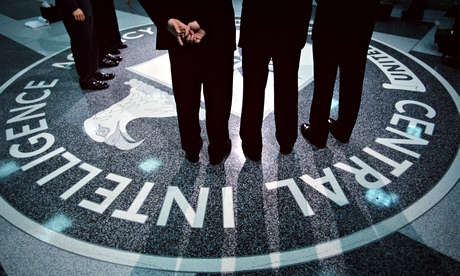
A week ago today, the US senate published its report into America’s use of torture on detainees after the 9/11 attacks. The report has major international implications, not just US ones. From the British perspective, one aspect festers above all others. The report deals with plots affecting Britain. It digs into operations in which the UK cooperated with the US and its allies. It therefore revives a series of unanswered questions about the UK’s own precise knowledge of and role in the various plots and operations it describes. The key question is whether Britain was complicit in any operations that involved torture and, if so, in what exact ways.
Those events remain a grey area. Deeply disturbing allegations have still not been answered. Part of the reason is because the Gibson inquiry, set up by David Cameron in 2010, had to be wound up in 2013 before it could provide a full account. However, British democracy still urgently needs to get to the truth. The main reason is that only the truth will suffice. But there is a political reason too. Until these questions are resolved, and if necessary are pursued in the courts, it is harder to lay suspicions to rest and prove that a page has been finally turned on any contamination of British justice by the Bush-Cheney era in America. Until that happens, the risk remains, in extreme cases, that it will feed an appetite for indefensible acts of terror and violence of the sort which paralysed Sydney over the past 24 hours.
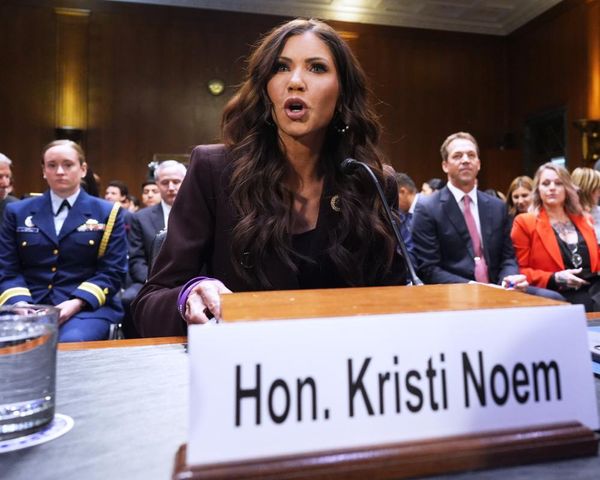
Yesterday the home secretary was quizzed by the home affairs select committee on the Feinstein report. She did a professional job, as she always does, but it was not enough. Theresa May said some things that were right. She was clear that torture is abhorrent and wrong. She insisted that the coalition has laid out stronger, clearer and more public guidance to security and intelligence officials about how they should act if they have suspicions that torture was being used by others. These are important.
But Mrs May did not sound as if her instinctive response to Feinstein was indignation about its contents. She seemed unperturbed that it revealed things that so badly tarnish Britain’s, as well as America’s reputation for justice. As most home secretaries do, she seemed more ministerial than parliamentarian, more concerned to defend the agencies from criticism than to hold them to account. She said the agencies “will look to cooperate” with parliament’s intelligence and security committee, which has picked up the issues left hanging by Gibson. And she insisted that the ISC is the appropriate body to pursue them.
What she did not say, however, was what she should have said at the outset She should have said it is urgently important to get to the bottom of the matter once and for all. Instead she was complacent to claim that the ISC is the UK’s equivalent to the committee chaired by Senator Feinstein. True, the ISC has some enhanced powers and its report into the Lee Rigby case showed a new awareness of the need for transparency. But the committee remains an uneasy compromise between government and parliament. It lacks the authority and resources of the senate. If the ISC truly possessed the senate committee’s authority, Mrs May would have instantly said that the agencies should cooperate, not that they should “look to” do so.
Here is what should now happen. The ISC should request the senate to supply the relevant sections of the full, unredacted report as soon as possible, and before Senator Feinstein comes to London in the new year, as the home affairs committee has invited her to do. The ISC should then confer with other parliamentary committees, Sir Peter Gibson and others, and decide whether the necessary and final investigation is best entrusted to the committee itself or to a revived Gibson process, as some have suggested. The test there is simple: effectiveness. It may be that a judge would carry more authority. But, in principle, there is much to be said for parliament genuinely asserting the same authority that the senate has done. But the goal must be to get the truth out there. The facts remain mired in suspicion. The overriding national interest is to tell the truth and then draw a line, one way or the other, under an approach which continues to do Britain’s reputation nothing but harm. Parliament must get on with it.