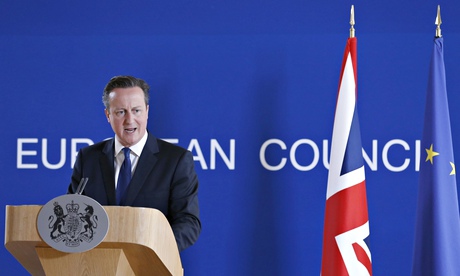
Only the most obsessive British Eurosceptic would argue that our membership of the European Union is the most pressing issue facing Britain or Europe today. That reality was carved into the arguments at Thursday’s EU summit in Brussels, where Europe’s leaders rightly gave the lion’s share of their attention to migration across the Mediterranean and to Greece’s financial bailout terms rather than to Britain’s grievances – which got a mere 10 minutes of their time.
On Friday the hierarchy of issues was dramatised still further by terrible events in Lyon and Tunisia, which put every country in Europe, especially France, on renewed alert over jihadist terror. Seen against the backdrop of genuine priorities, Britain’s neuralgic obsession with EU processes inevitably runs the risk of seeming self-obsessed, solipsistic and lacking in real moral seriousness.
Since David Cameron is far from stupid, it is a fair bet that he went to Brussels knowing this. The latest evidence, in the shape of a leaked diplomatic note on his recent EU charm offensive, confirms it. Mr Cameron now has an electoral mandate to hold a referendum on the UK’s membership of the EU, but his “firm aim” in that vote is to keep Britain in, the note reveals. This is absolutely the correct priority. However, everything else must now flow from it, both in negotiation in the EU and in the political argument at home. The prime minister will give himself the best chance of achieving his goal by engagement and reasoning, not by posturing and playing to the UK Eurosceptic gallery. That hasn’t been the case in the past. It has to be now.
The leaked note confirms Mr Cameron has boiled his reform demands down to four key headings – sovereignty and political union, competitiveness and the single market, fairness between eurozone and non-eurozone member states, and migration. These are all real issues. But Mr Cameron must continue to be “positive and low key” (his words, according to the note) in the way he negotiates about them. After all, as the Queen herself made clear in some very carefully chosen words in Berlin this week, there are much bigger things at stake in the European Union. Divisions in our continent – a continent of which, as the Queen said, Britain is part – have done lethal damage. Despite its faults, the EU is a huge achievement that we must preserve.
Much of what Mr Cameron wants under his four headings looks diplomatically achievable. Before the referendum campaign starts, there will be a package of so-called reforms to put to voters. Whether this will pass muster politically is something else. It is now clear there will be no EU treaty change before the referendum and, in all likelihood, not afterwards either. Voters will in effect be asked to vote to stay in the existing EU, with a prospectus of future changes negotiated by Mr Cameron but not yet brought into effect. Mr Cameron intends to campaign on the risks of EU exit, we now learn. But the referendum itself is a risk to UK and European interests.
In the end, however, Mr Cameron is dealing with a Conservative party containing many people who are indeed obsessive Eurosceptics. They want to quit the EU under almost every circumstance. The modest demands and positive approach designed to keep the UK in the EU is not what they want at all. To them, Britain’s EU grievances really are more important than migrants in southern Europe, the Greek crisis, the jihadist threat or anything else at all. Mr Cameron may indeed be steering a sensible diplomatic course. But he has to say the same thing as clearly to his party in public as to his partners in private. In the past, he has said different things to different audiences. Not any more.