Amber Rudd had to resign as home secretary on Sunday night for two reasons: first, because she deceived MPs about her own immigration policy and, second, because the Guardian exposed the deception. In the end, her own words brought her down. Ms Rudd denied that she had a target for removing illegal migrants under the “hostile environment” policy. However, this newspaper was then able to show, from internal Home Office documents, that this was untrue. Last week Ms Rudd said she knew nothing about these targets. The documents showed she had a policy target of 12,800 enforced returns in 2017-18 and had told the prime minister in 2017 that she wanted a 10% increase in migrant removals. Once the scale of her misleading answers became clear, she had to go.
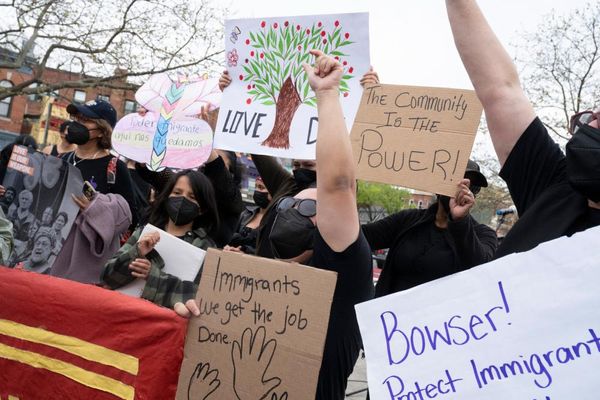
This was a textbook example of the press holding government to account and a classic illustration of the importance of that effort. But it is not just Ms Rudd who was exposed by it. It was also the policy itself. The wish to expel an arbitrary level of illegal migrants managed to catch hundreds of legal arrivals – notably the Windrush-era migrants who arrived without modern papers – in the net. That should not have happened and it must cease.
The new home secretary, Sajid Javid, must therefore change the policy as a priority. He made an effective start in the Commons on Monday, with a pledge to do “whatever it takes” to give justice and security to the Windrush cases. But he faces practical obligations too, including a comprehensive support and compensation programme for the Windrush families. He must also end a target culture that may encourage a culture of disbelief among officials. And he must provide a new adjudication system, with checks and balances, for handling cases, in order to reduce injustices. These are large challenges, but they are also a big opportunity to press the reset button.
Targets are not wrong in principle. They can be useful tools for measuring the quantity and quality of delivery. But targets must also be fair, credible and should be understood and explained in the public interest. The hostile environment targets were none of these things. They were indiscriminate, unachievable and riddled with too much injustice and fear.
Ms Rudd’s approach to them was cynical. She adopted fierce targets because that was the line of least resistance, politically speaking. It allowed her to prove her support for their ultimate author Theresa May, whom she rightly supported against the recklessness of the dogmatic Brexiters. But she also seemed a reluctant believer, unable and unwilling to make the case for them. In the end she was caught out saying one thing to one audience and a different thing to another. She should not have followed the policy in the first place – the public can sometimes be much fairer than politicians imagine – and she should not have blamed her officials when it all went wrong.
Ms Rudd is a liberal pro-European Conservative. Her fall has been an object lesson in the perils facing liberal Tories when they allow cheap rightwing rhetoric to outweigh their better and more practical instincts in important areas of public policymaking. The Home Office has increasingly found itself an arena for this dilemma in recent decades. Successive home secretaries of all parties have lapsed into gesture politics and facile toughness rather than thinking calmly, strategically and effectively. They have been encouraged to do this by the tightness of public money in a continuingly low tax age, and by the tendency of political leaders, in the absence of expanding state welfare and spending projects, to try to justify themselves to an anxious public and a febrile press in more authoritarian ways. Yet it simply does not have be this way.
Ms Rudd is the fourth member of Mrs May’s post-election cabinet, and its second senior woman, to go in just over 10 months. The wastage rate is high. It indicates the fragility of the cabinet, the government and the Tory party. It does not bode well for the Tories in the local elections. What it says above all, though, is that this government currently lacks the confidence, ability and shrewdness to generate effective and routinely fair policy delivery, making lives better and strengthening social solidarity. That is the larger task that Mr Javid must undertake if he can.