Wales is not Scotland. Nevertheless, in a general election where the focus on Scotland is so strong, it may be tempting for the unwary to assume that the contests in the two countries can be framed interchangeably as nationalist versus Labour showdowns, with the Conservatives nowhere. But Wales is not a smaller version of Scotland, and the lazy assumption that “for Wales, see Scotland” gets to the heart of the issues facing Wales in this election is simply wrong.
For one big thing, Wales is considerably poorer than both England and Scotland. Average household income in Wales is 14% below England and 9% below Scotland. Yet public spending does not make up for this inequality, since Whitehall’s Barnett formula gives more per head to Scotland than to Wales. For another, the legal, financial and economic connections between Wales and England are greater those between Scotland and England. Importantly, nearly 50% of the population of Wales also lives close to England, regularly crossing the border. Put all this together and the idea that the equivalent fiscal devolution demanded by the SNP (and recently even floated by the Tories) would solve Wales’s problems is for the birds. It would, in fact, make Wales’s problems much worse because the tax base is low.
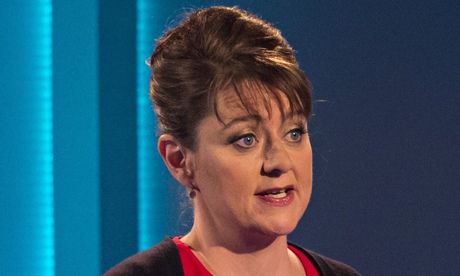
The appearance of the Plaid Cymru leader, Leanne Wood, on last week’s UK-wide televised leaders’ debate, where she deservedly won applause for a doughty duffing of Nigel Farage, should not be allowed to mislead either. Ms Wood is the leader not of the first party in Wales, as her presence in the debate may have implied to some, but of the fourth. The latest Welsh opinion poll shows Labour on 40%, Tories 25%, Ukip 14%, Plaid 11% and the Greens and Liberal Democrats both on 5%. Support for Welsh independence, Plaid’s signature policy, is on a mere 6%. There is nothing to suggest Plaid is about to improve on the three Westminster seats it is defending; it may even lose one.
None of this is to suggest that the constitutional issue is dead in Wales or that it is in any way unimportant. Quite the opposite, in both cases. But nor is it true that what Scotland says it wants today, Wales always says in wants a few years later. Further devolution to Wales is a live issue in Welsh politics, and has more public support than the status quo. The Welsh debate’s more practical focus, and in particular its attention to federalist or quasi-federalist options for Wales within the UK, ought to be followed much more attentively in England, where many of the same issues apply.
In the end, though, the 2015 election in Wales is more focused on economic questions than constitutional ones. The recession has been long and real in all parts of Wales. The big issues are job insecurity, low wages and the reality that the economy is not delivering for too many people. It is, moreover, a contest that Labour is clearly managing to shape and dominate. Wales’s 40 Westminster seats do not get the same attention as Scotland’s 59. But the more traditional political message from the west deserves just as much attention as the nationalist excitement in the north.