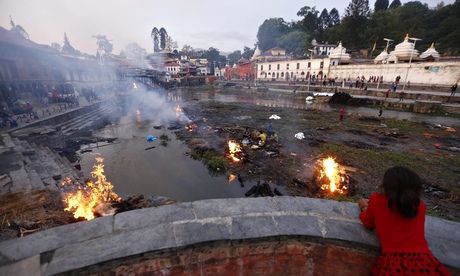
Four days have elapsed since the first tremors of the earthquake rocked Kathmandu and the hundreds of towns and villages that cling to the steep green hillsides of Nepal. The UN now reckons 8 million people could be affected, more than 1 million are hungry, and the most urgent need is for body bags. Readers of some newspapers, however, could be forgiven for imagining that the real story was the fate of the hundred or so western climbers caught up in the avalanches and ice falls that the shock triggered on Everest just as the short climbing season began. Most of these have now been helicoptered out. But help of any kind has yet to reach many of the villages at the epicentre of Saturday’s earthquake.
This callous disproportion between Everest as a playground for a certain kind of privileged westerner and the poverty of their hosts is nothing new. It is less than a year since the climbing season was ended by a strike after the Nepali government, which charges climbers thousands of dollars, offered derisory compensation to the families of 16 sherpas who had died in an avalanche. Nepal is both the 16th poorest country in the world and a Shangri-La of the imagination for the tourists who provide its main income.
In a particularly brutal irony, only a week ago international earthquake specialists gathered in Kathmandu, known to be one of the world’s most vulnerable cities, to discuss earthquake resilience. Resilience is partly about better buildings, and partly about economic and social capacity. Nepal, a country that has had less than 10 years of peace after a decade of civil war and whose constitution is still a work in progress, conspicuously lacks all of the above. That makes the aid effort that is being spearheaded by Nepal’s two neighbours, the regional giants China and India, not only indispensable but extraordinarily difficult. The government’s capacity will be tested to the limit coordinating aid efforts from countries unused to working together. The only international airport is already clogged with relief aid, and distributing it will be an even greater challenge in a region whose physical environment is as hostile as it is beautiful: steep-sided mountain valleys, villages that can only be reached on foot, frequent landslides and mud roads.
As the UK’s Disaster Emergency Committee appeal that was launched this morning emphasises, the priority is for cash. The NGOs already working on the ground need it to support survivors now finding their way to the hastily established camps that provide a little cover against the cold and rain. Since the earthquake struck, Britain, one of Nepal’s biggest aid donors, has topped up this year’s £88m budget – which, among other things, supports disaster resilience programmes – with an extra £15m. It will bring heavy lifting equipment, medical teams and forklift trucks to help get cargo moving. But this is only the beginning of a long and hard road. It will not end even when every last displaced person is back at home. An earthquake lasts only minutes. But in the rubble of the buildings it destroys lie hopes and plans as well as lives. Nepal will need our support for years to come.