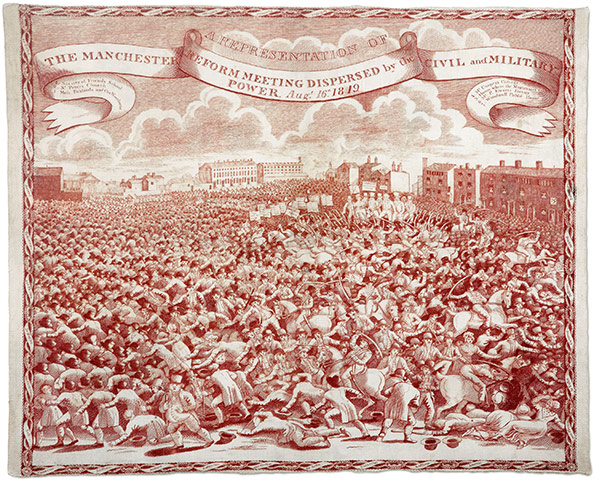
On 16 August 1819, a large political meeting at St Peter's Field, Manchester, in support of parliamentary reform was charged by horseback troops with sabres. 11 people died immediately and others died later [This caption was corrected on 13 May 2011. The original said that troops fired on the crowd.]
Commemorative handkerchief, courtesy of People's History Museum, Manchester Photograph: Guardian
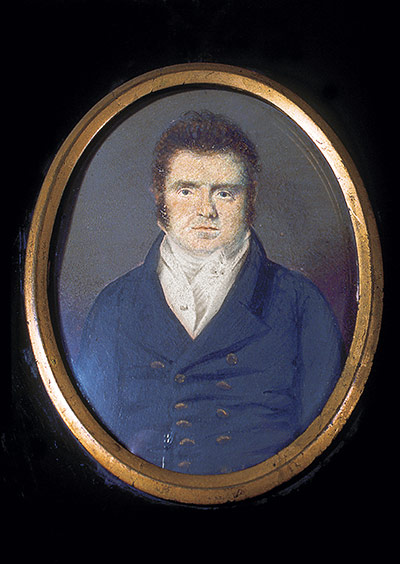
Taylor witnessed the slaughter. He and 11 reformer friends founded the Manchester Guardian with their own capital
Portrait: Taylor (1821), courtesy of John Rylands Library, University of Manchester Photograph: Guardian

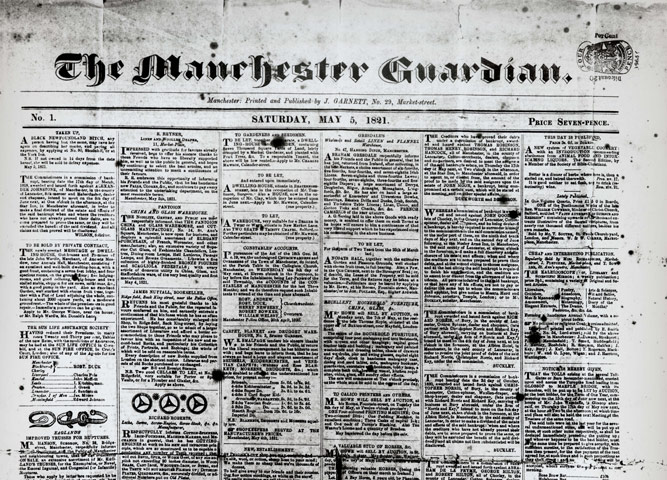
The Guardian began life on 5 May 1821 as a weekly publication comprising just four pages. The price was a steep 7d (seven old pennies). Of that, 4d went to the government in stamp duty Photograph: Guardian
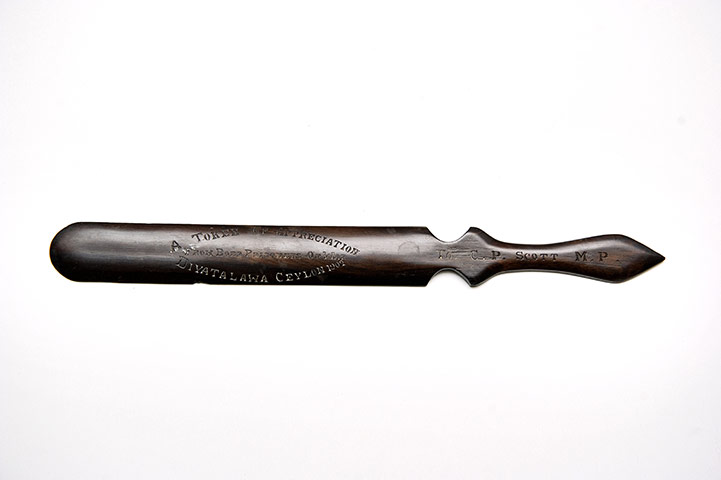
In 1902, to show their gratitude for editor CP Scott's courageous opposition to the Boer war and exposure of British concentration camps, Boer PoWs who had been imprisoned in Ceylon presented him with this wooden newspaper turner Photograph: Sarah Lee for the Guardian
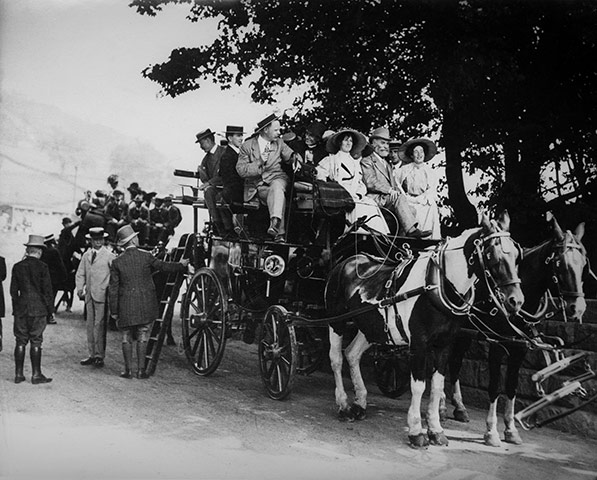
Manchester Guardian staff were a close family, as this evocative photograph of a 1910 trip to the countryside suggests. CP Scott sits proudly atop the first carriage Photograph: Guardian
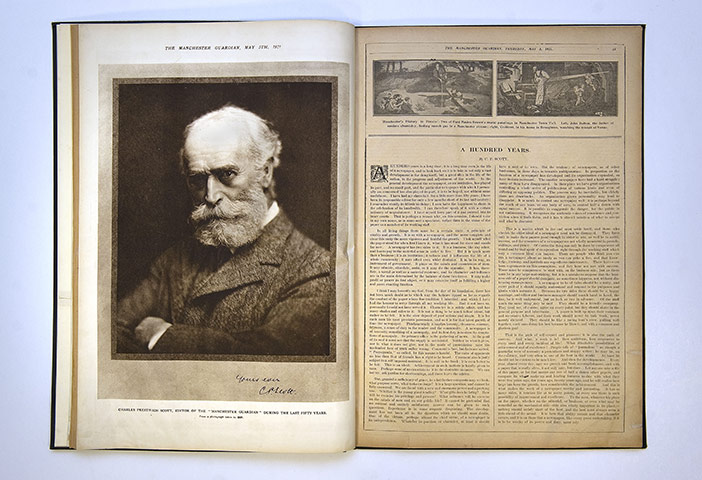
In May 1921, to mark 100 years of the Guardian and CP Scott's 50th year as editor, a special issue was produced to which he contributed an essay saying 'Comment is free, but facts are sacred' – words that still underpin the philosophy of the Guardian Photograph: Sarah Lee for the Guardian
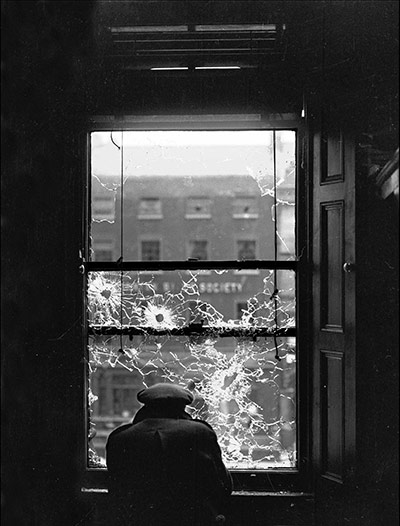
Glass-plate negatives of photographs taken by Doughty during the Irish civil war of the 1920s were recently rediscovered
Photograph: Walter Doughty for the Guardian
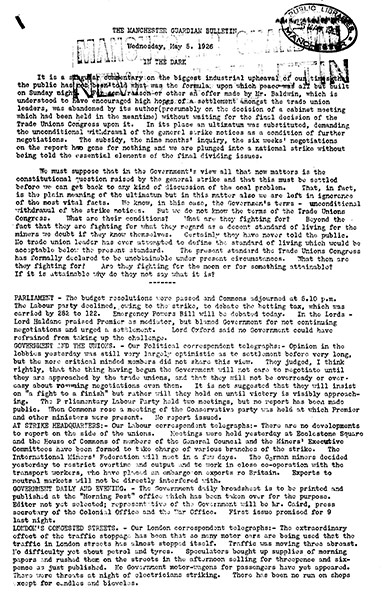
The General Strike of May 1926 disrupted production and distribution of the paper. NUJ members on the paper had considered joining the strike, but in the end decided that getting reliable information out at a time of panic and rumour was vital. At the start of the strike, on 5 May, just a two-page typewritten bulletin was produced; for the following week it was a single printed page Photograph: Guardian
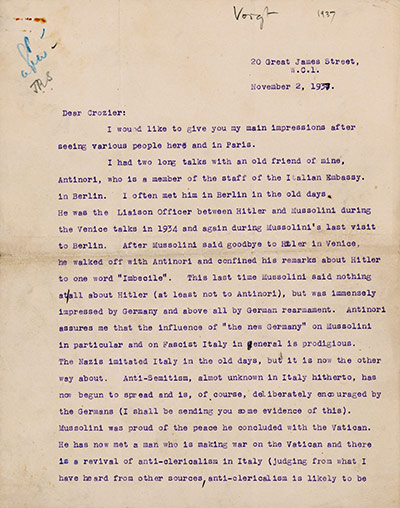
Voigt was the Guardian's correspondent in Germany in the 1920s and was quick to recognise the Nazi danger. In this letter, Voigt briefs the Guardian's editor, William Crozier, on the growing influence of Nazi ideology on Mussolini's Italy Photograph: Guardian
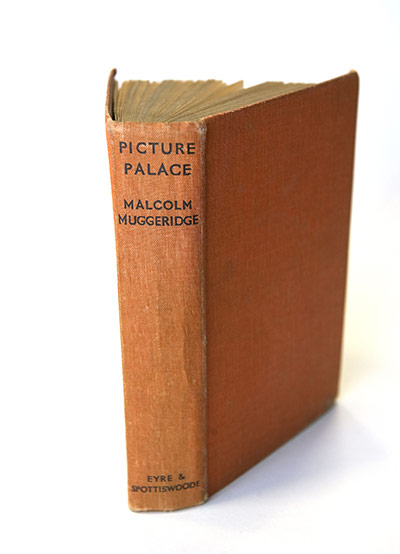
Muggeridge had a brief, brilliant but turbulent few years at the Guardian from 1930, writing leaders and foreign reports. His 1934 novel Picture Palace satirised life at the Guardian – the revered Scott was renamed Old Savoury – and the book had to be withdrawn in 1934 because of the threat of libel actions. It was eventually republished in 1987 Photograph: Sarah Lee for the Guardian
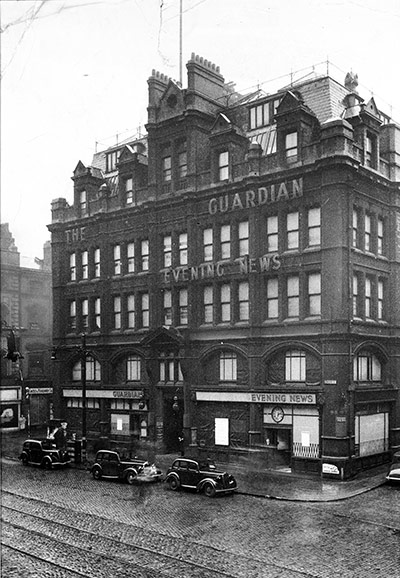
Manchester was a frequent target for German bombers in the second world war. The paper removed the word Manchester from its building in Cross Street because it was thought it might be spotted by German planes as they sought their targets Photograph: Guardian
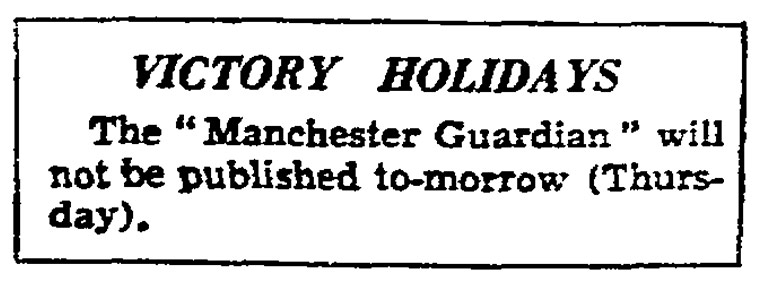
The Guardian celebrated the end of the war with this announcement. Digesting the news and its implications would have to wait for 24 hours Photograph: Guardian
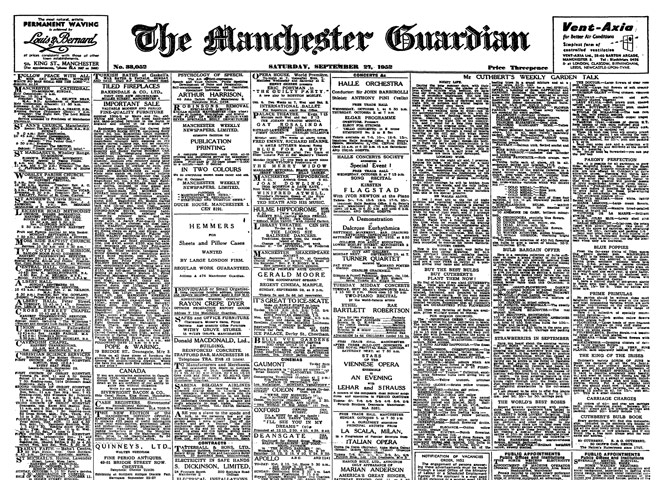
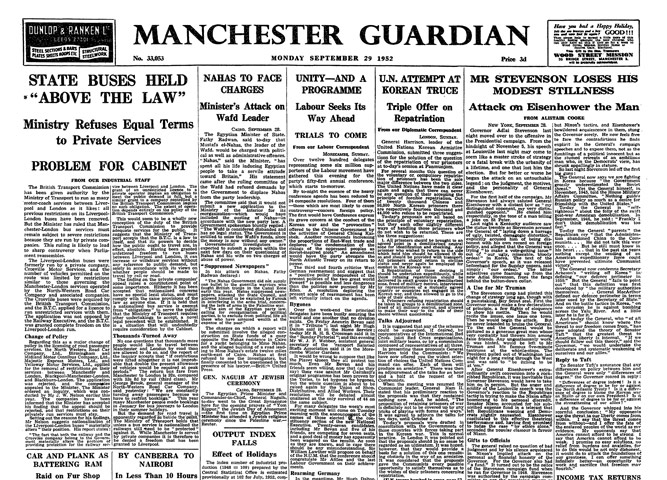
In September 1952 the Guardian put news instead of advertisements on the front page. Editor AP Wadsworth accepted the change reluctantly. 'It's not a thing I like myself,' he wrote Photograph: Guardian
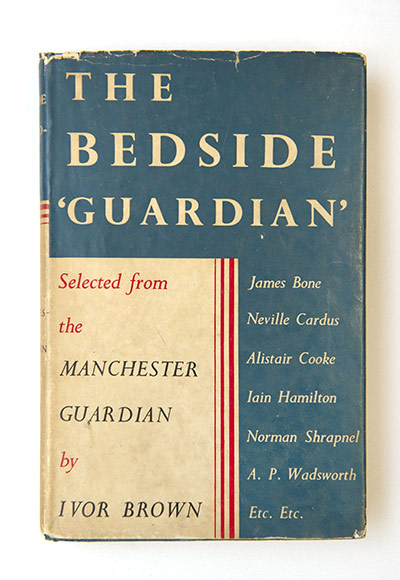
This end-of-year anthology designed for the Christmas-gift market was launched in the autumn of 1952 with an introduction by critic Ivor Brown Photograph: Sarah Lee for the Guardian
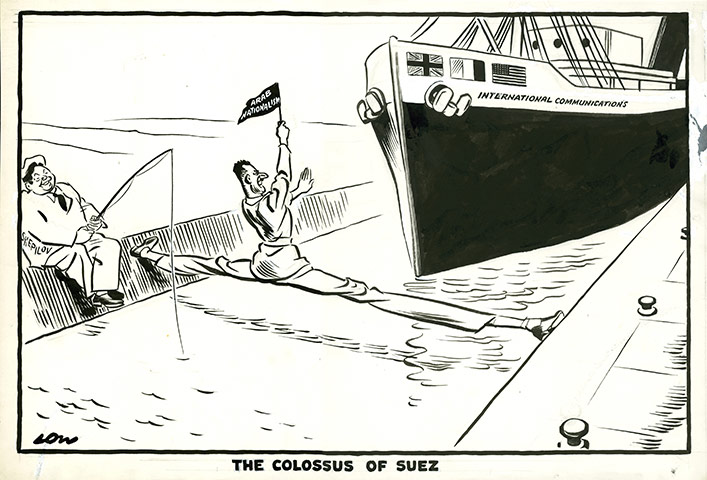
Cartoonist David Low captures Nasser's dangerous gamble in nationalising the Suez Canal. Alastair Hetherington became editor in 1956, just as the crisis began. He was strongly critical of the UK's stance Photograph: Guardian
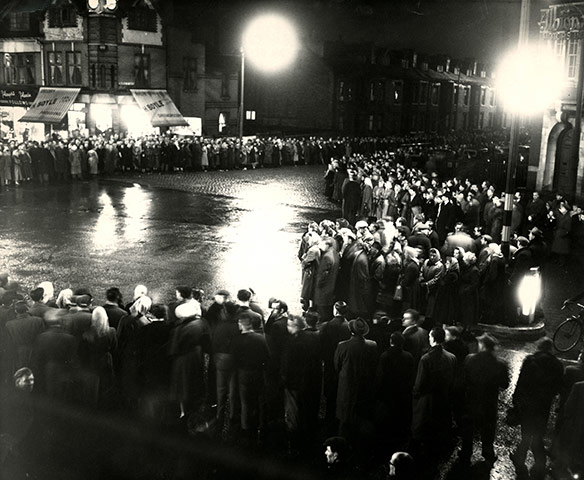
Staff photographer Robert Smithies took this picture close to midnight on 7 February 1958, as crowds at Old Trafford waited in the rain for the cortege of coffins of the victims of the Munich disaster to pass
Photograph: Robert Smithies for the Guardian
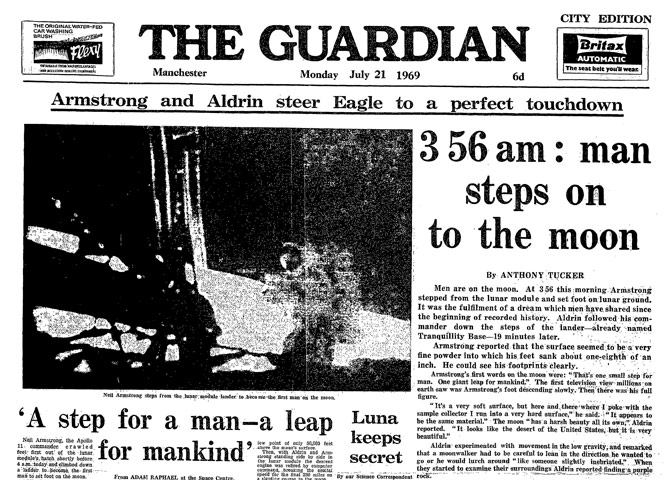
'Men are on the moon. At 3.56 this morning Armstrong stepped from the lunar module and set foot on lunar ground.' The Guardian did a good job of recording man's first steps on the moon in July 1969. There was just one problem: only Manchester got the news; it was too late to update the London edition. The Guardian's giant leap would have to wait for further refinement to its production methods Photograph: Guardian
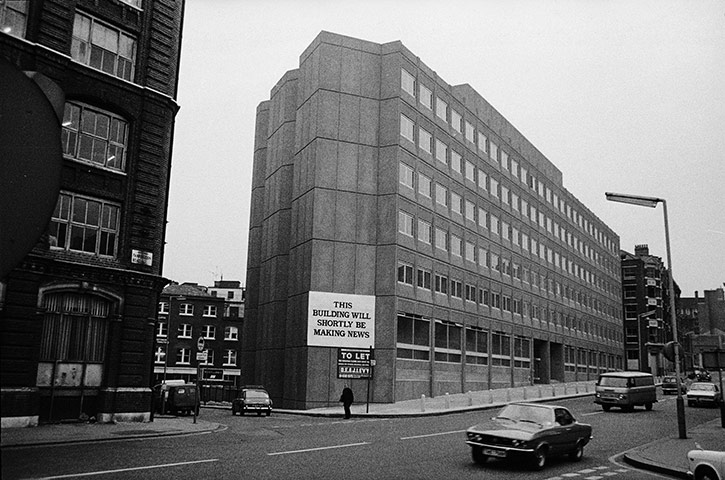
The move in 1976 to offices in Farringdon Road, Clerkenwell heralded a successful period of expansion. More staff relocated from Manchester, completing a transition that had begun in 1959 when 'Manchester' was dropped from the masthead Photograph: Guardian
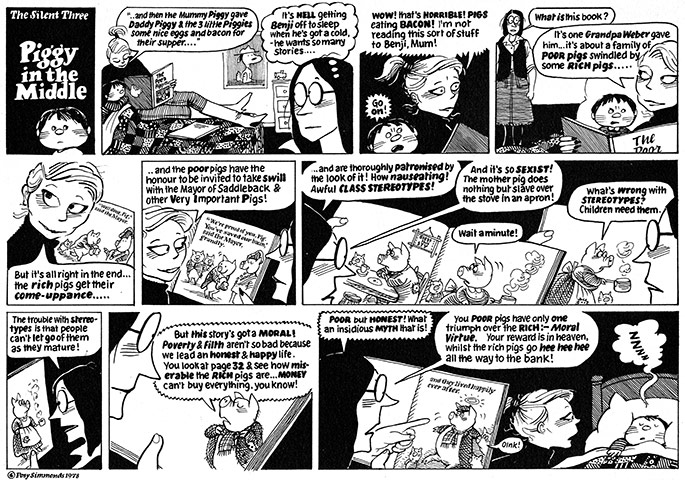
Posy Simmonds' first illustration appeared in the Guardian in 1972, but it was her wonderfully funny and sharply observed Silent Three cartoon strip in the late 70s that won her a wide following Photograph: Posy Simmonds
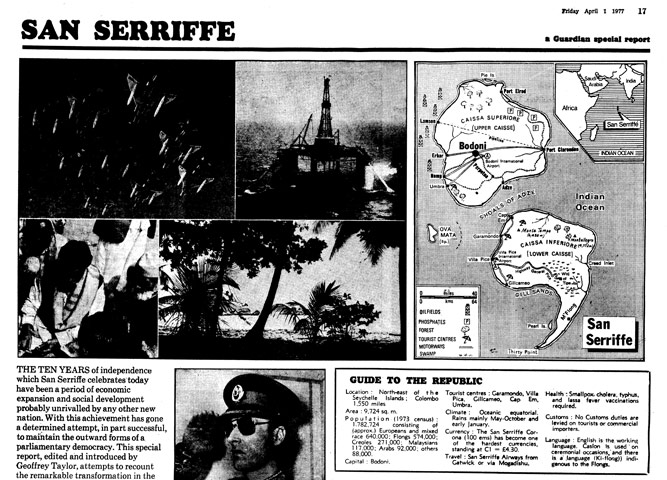
There are April fool jokes and then there is San Serriffe, the seven-page supplement published on 1 April 1977 in the form of a special report covering a little known archipelago of semicolon-shaped islands in the Indian Ocean Photograph: Guardian
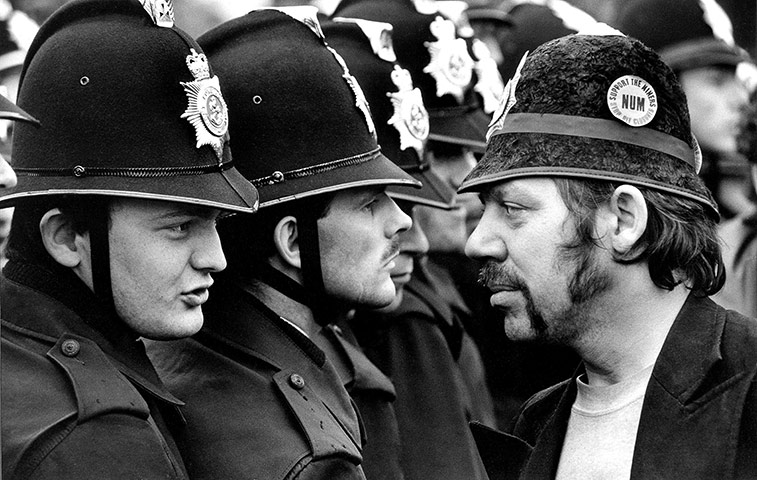
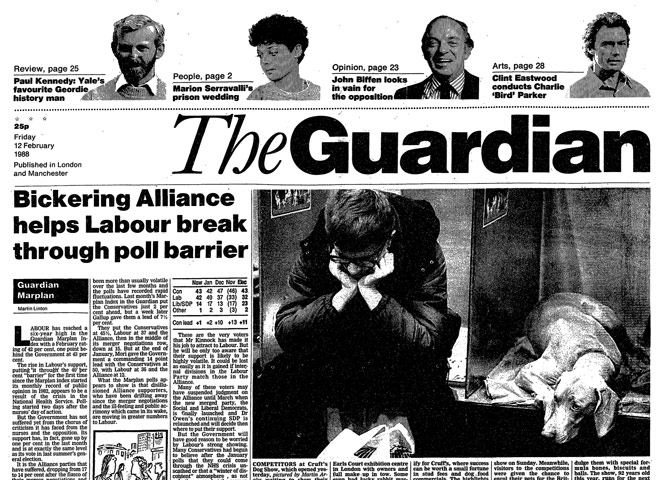
Initially mocked but soon seen as a classic Photograph: Guardian
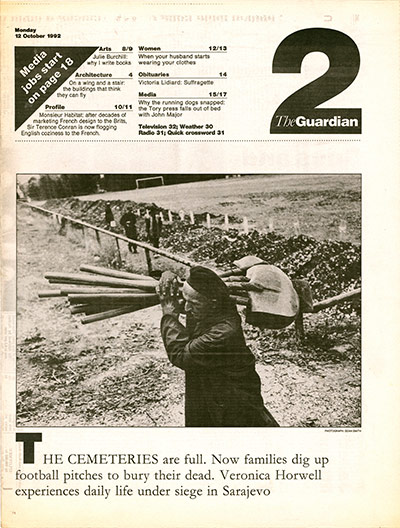
Launched in October 1992, the new tabloid section bolstered the paper's fight with the price-cutting Times and Independent Photograph: Guardian
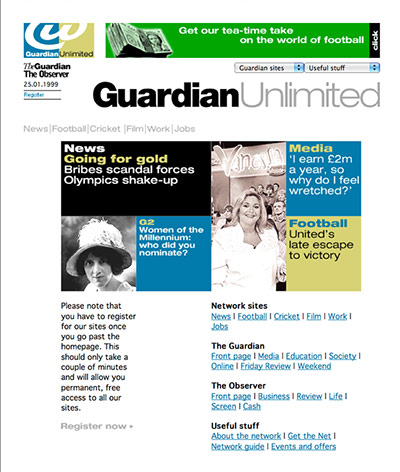
By 2001 GU had more than 2.4 million unique users, making it the most popular UK newspaper website Photograph: Guardian
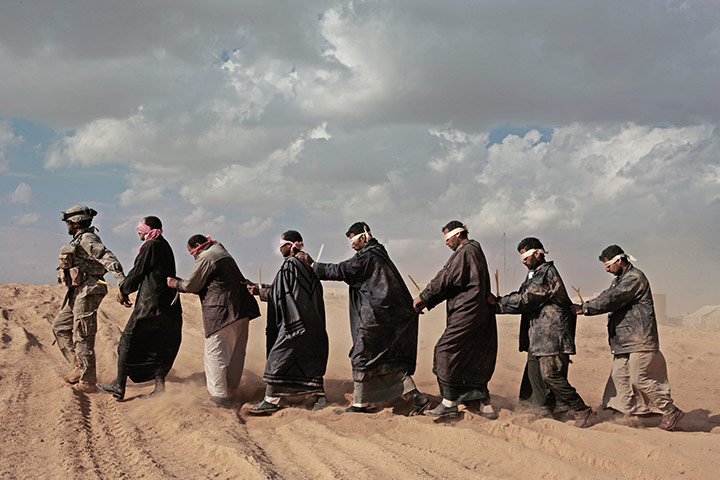
Sean Smith is recognised as one of the UK's leading war photographers. This photograph, of handcuffed Iraqi detainees, was named Photograph of the Year in the 2006 press photographers' awards Photograph: Sean Smith for the Guardian
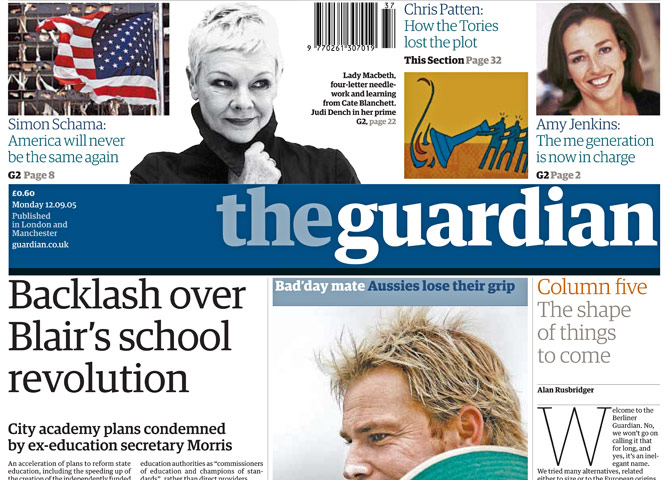
On 12 September 2005, the new Berliner Guardian was launched, with a groundbreaking design by Mark Porter Photograph: Guardian
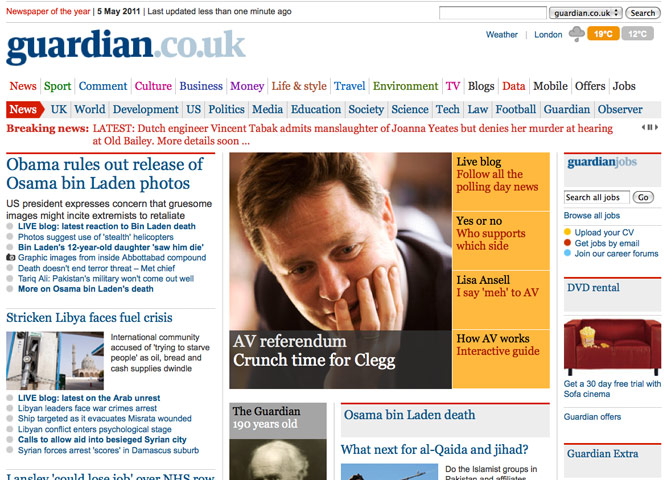
The dramatic news events this week have seen numbers of users reach record levels. It's a long way from the 1,000 weekly subscribers Taylor attracted back in 1821 Photograph: Guardian