THE Hunter's hospitals are going green, with the health district announcing it aims to be carbon and waste neutral by 2030.
A fleet of hybrid cars, solar panels, reusing wastewater and reducing landfill are among the measures the local health district is introducing to meet its "ambitious" 2030 target.
"It is ambitious, but we're going to give it a really good shot," Hunter New England Health chief, Michael DiRienzo said.
"We're giving ourselves 10 years to get there. The response from our staff has been very positive. To some extent, the target has been set by them, asking us to do everything possible to reduce our carbon footprint."
Mr DiRienzo said people often underestimated the impact hospitals and other health services had on the environment.
"We are a significant consumer of electricity," he said.
They plan to install solar panels on the rooftops of most health facilities, including the John Hunter Hospital, which would soon be home to the largest hospital solar panel installation in the country. The $3.2 million solar panel installation would cover 12,000 square metres, or about 85 per cent, of the hospital's roof space.
"That is going to make a huge impact on our carbon footprint and reduce our electricity requirements," Mr DiRienzo said. "We are talking about a building that is nearly a kilometre long, and three storeys - we consume a lot of electricity."
Hospitals and health services were also a "major contributor" to landfill.
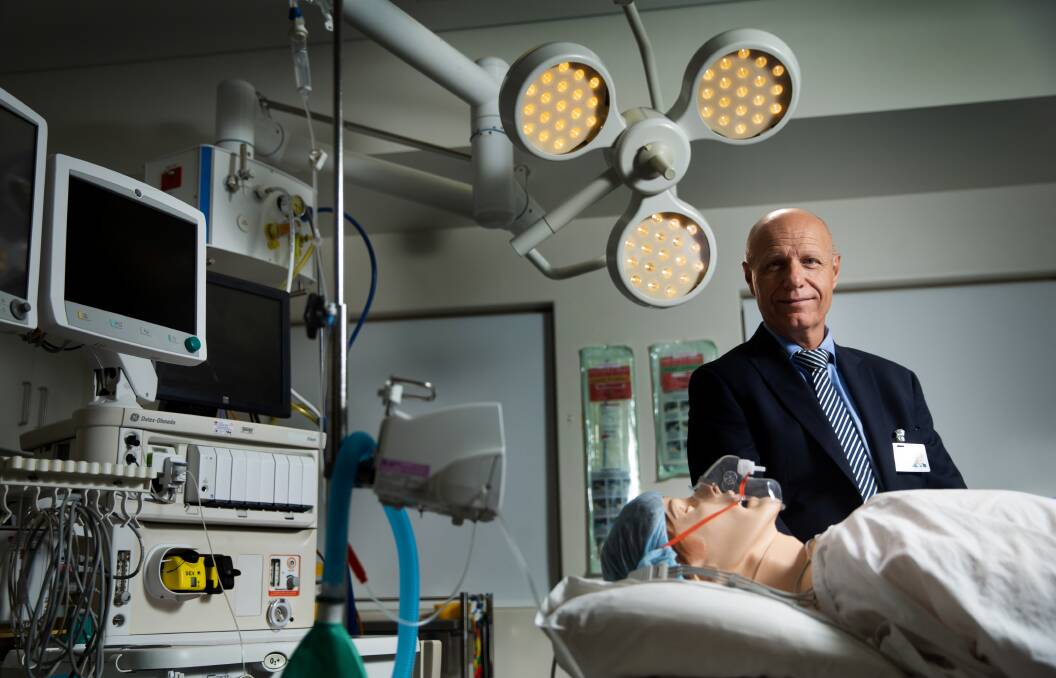
"We are traditionally not a reuse type of institution," he said. "A lot of our current consumables are single-use only - and for good reason. We'll be taking a closer look to see what health-specific waste normally thrown in the rubbish, like oxygen masks, PVC tubing, and clean, single-use plastics used every day in our operating theatres, are appropriate and safe for recycling."
Nearly all of the additional waste coming from the extra masks and PPE associated with COVID-19 was going into landfill.
"I can't see that changing in the short term as we need to be as diligent and as protective as possible with COVID at the moment."
Hunter New England Health plans to reuse the water from the district's 11 renal units after a pilot program at Tamworth Hospital saved 2.5 million litres of water last year.
Prompted by the severity of the recent drought, clean, excess water produced as a by-product of renal dialysis previously went down the drain. Now, that 50,000 litres a week is used to flush hospital toilets.
"Within the next decade, we will be aiming to collect 100 per cent of the rainwater that falls on our hospitals' rooftops," Mr DiRienzo said.
The health service had already begun replacing its fleet of petrol vehicles with hybrids.
"Evenually, it will be an electric vehicle fleet of more than 700 vehicles," Mr DiRienzo said. "Wherever possible, our staff will use video conferencing to reduce unnecessary travel for everyday business, and when they need to drive, it will be cleaner than ever."
Mr DiRienzo said the new initiative, Sustainable Healthcare: Together Towards Zero 2030, was a "giant step" towards clean, green healthcare.
"It's no longer possible to be committed to the health of our community without addressing the health of our environment," he said.
"Work starts today, so we can leave behind a truly healthy legacy, for our generation and many generations to come."
For faster access to the latest Newcastle news download our NEWCASTLE HERALD APP and sign up for breaking news, sport and what's on sent directly to your email.