Get all your news in one place.
100’s of premium titles.
One app.
Start reading
The Guardian - UK
The Guardian - UK
Entertainment
Jim Kay

The Great War - in pictures

Great War: WW1
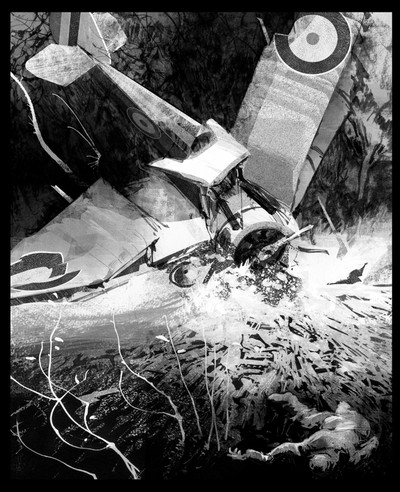
The Sopwith Camel

The first world war was the first conflict in which aircraft played a major role. The Sopwith Camel, introduced in 1917, was Britain’s most successful fighter plane. It shot down 1,294 enemy aircraft – more than any other Allied plane.
Photograph: © 2014 Jim Kay
Great War: Compass
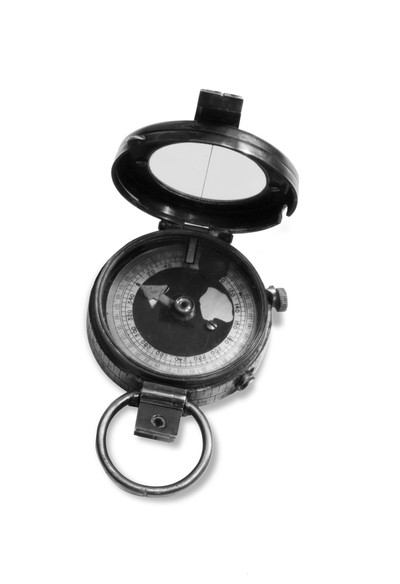
The Compass

AL Kennedy’s short story Another Kind of Missing in The Great War anthology is based on this compass, a 1916 Verners Pattern VII compass, which once belonged to Lieutenant C Birdwood of 3rd Battalion, Devon Regiment. All officers serving in the first world war were expected to carry a compass.
Photograph: © Walker Books
great war: Wave
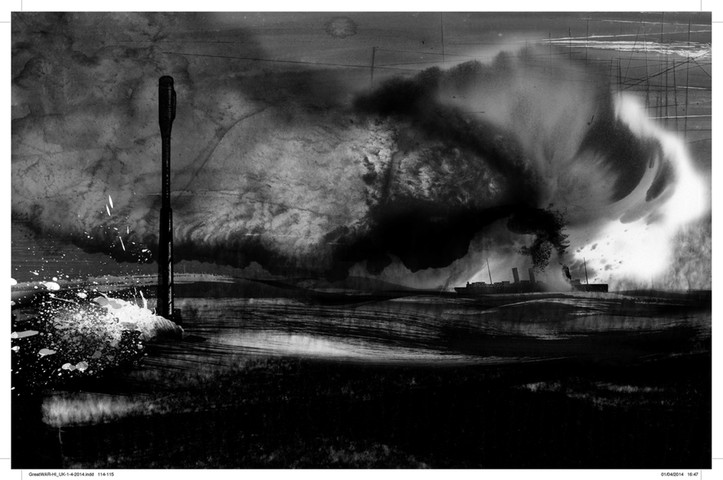
The Lusitania

In 1915 the RMS Lusitania, a British ocean liner, was sunk by a German U-boat 18 kilometres off the coast of Ireland. 1,196 people died. Most of those killed were British and Canadian, but 124 Americans lost their lives. This greatly influenced the USA’s decision to enter the war in 1917.
Photograph: Jim Kay
Great War: School magazines
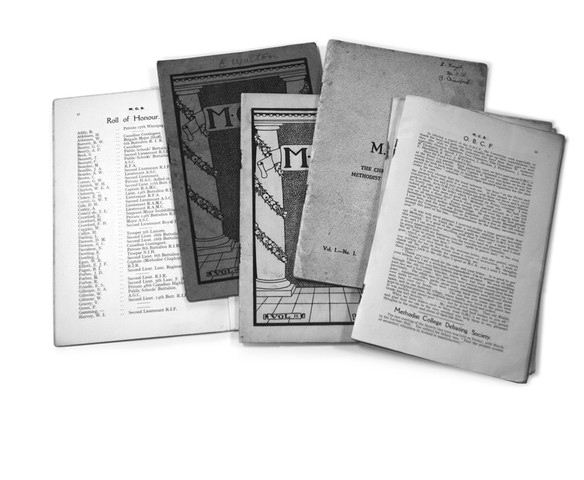
Each Slow Dusk These school magazines inspired Sheena Wilkinson’s story Each Slow Dusk in The Great War anthology. They are the school magazines from the school where Sheena used to teach - Methodist College, Belfast – published 1914–19. In 1914 the mood was enthusiastic and patriotic; by 1916, the magazines were dominated by news of the dead and injured; and in 1919 the war wasn’t mentioned at all. Photograph: ©Sheena Wilkinson
Great War: Warhorsefield
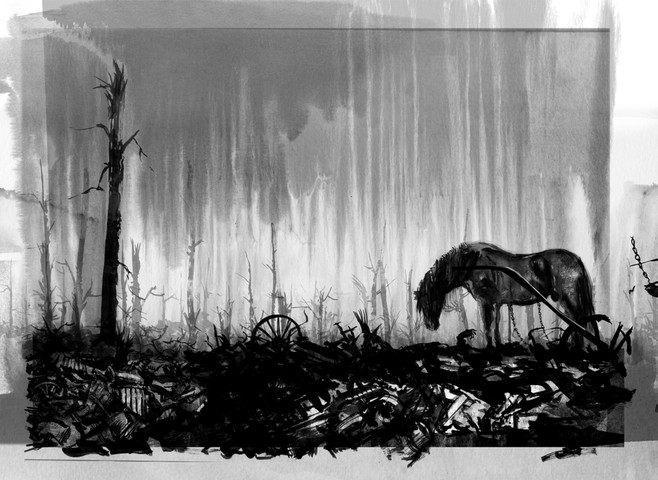
The Abandoned Horse

Horses were indispensable to both sides during the war. They were ridden into battle, they carried supplies and they pulled guns and ambulances. However, when war ended, horses were no longer needed. Many were abandoned or sold for meat.
Photograph: © 2014 Jim Kay
Great War: Wartest
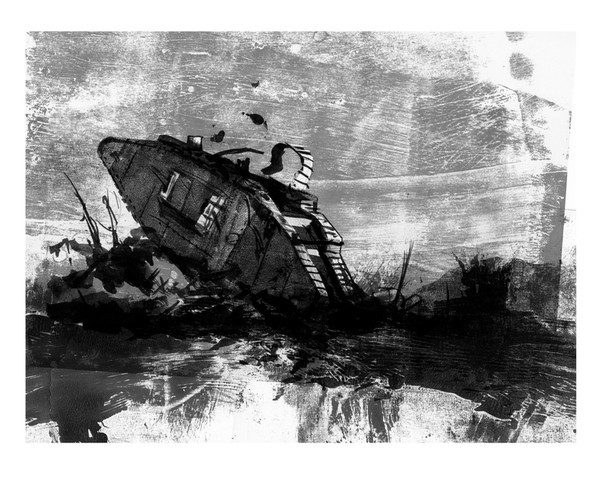
Tank in a Shell Hole

Throughout the first world war, around 10 million tons of shells were fired. Shells were explosive-filled missiles which killed millions of men and left huge gashes in the landscape. Soldiers who were exposed to shellfire were at risk of psychological breakdown, known as shell-shock.
Photograph: © 2014 Jim Kay
Great War: sheet music
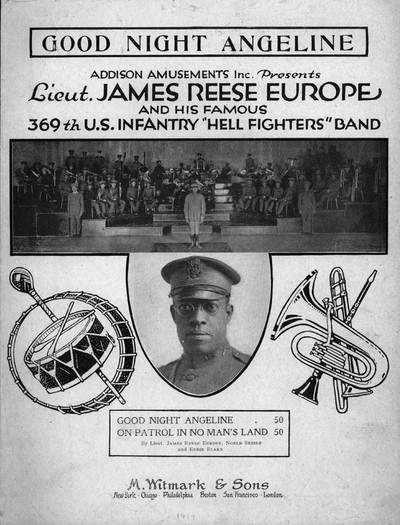
A Harlem Hellfighter and His Horn One of the most famous African American regiments of the first world war was the 369th Infantry Regiment, known as the Harlem Hellfighters. The regiment’s band was directed by James Reese Europe, an incredibly influential band leader, who helped open up music as a career to African Americans. The band travelled across France, entertaining US, British and French troops and starting a craze for ragtime music in Europe. When the regiment went home to the United States they were given a heroes’ welcome. This is the sheet music for two of the Harlem Hellfighters’ most popular songs, and the inspiration for Tanya Lee Stone’s contribution to The Great War. Photograph: The Library of Congress
great war: great war candle
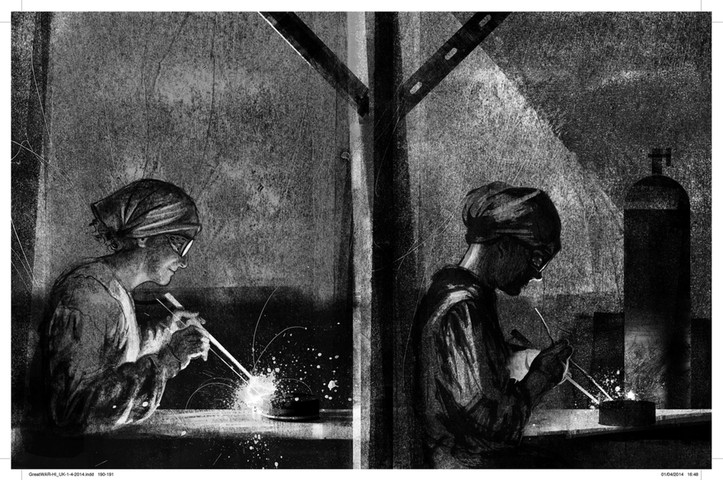
Women Welding

Before 1914, women only worked in “female” jobs such as teaching and domestic service. But when war broke out, women were needed to take over from men in factory, transportation and farm jobs public perceptions of women changed, and many countries, including Britain and the USA, introduced the vote from women soon after the war.
Photograph: Jim Kay
Great War: Great War cover
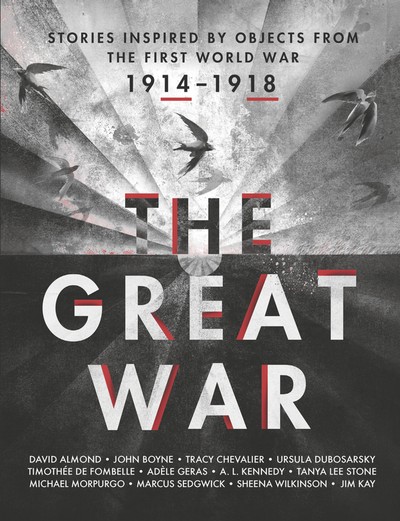
Eleven authors have come together to make The Great War, with illustrator Jim Kay: Michael Morpurgo, Our Jacko (Brodie helmet); AL Kennedy, Another Kind of Missing (Compass); Marcus Sedgwick, Don't Call it Glory (Nose from a Zepellin bomb); John Boyne, The Country You Called Home (Recruitment poster); Tracy Chevalier, When They Were Needed Most (Princess Mary gift fund box); David Almond, A World that Has No War In It (Soldier's writing case); Tanya Lee Stone, A Harlem Hellfighter and His Horn (sheet music); Adele Geras, Maud's Story (War time butter dish); Timothee de Fombelle, Captain Rosalie (Victoria Cross), Sheena Wilkinson, Each Slow Dusk (school magazines) and Ursula Dubosarsky, Little Wars (French toy soldier). Photograph: Walker Books
Sign up to read this article
Read news from 100’s of titles, curated specifically for you.
Already a member? Sign in here
Related Stories
Top stories on inkl right now
One subscription that gives you access to news from hundreds of sites
Already a member? Sign in here
Our Picks
Fourteen days free
Download the app
One app. One membership.
100+ trusted global sources.