What’s all about?
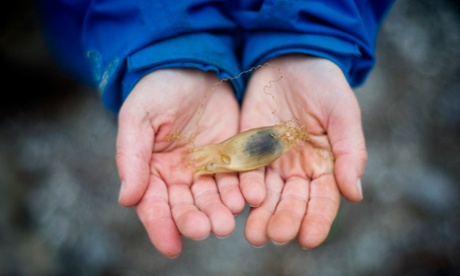
Shark eggs. Or rather the egg cases their embryos leave behind once they have developed. Since 2003, the Shark Trust has been encouraging “citizen scientists” – their supporters – to collect and identify egg cases, commonly known as mermaid’s purses, with a campaign called The Great Eggcase Hunt.
Citizen scientists record their findings with the specialist app, on the website or post them to the charity. The data is used to map shark activity in British waters.

How did it all start?
According to Cat Gordon, conservation officer at the charity the project was originally started up in order to raise awareness of the diversity of sharks in British waters. They wanted to get rid of the idea that only way to find out more about sharks was diving in tropical seas. The egg cases vary in size depending on species of shark – they range from a few centimetres to something bigger than an adults’ hand. Gordon explains how it evolved:
“Once egg case records started coming in, it quickly became apparent that the project was capable of becoming more than just an awareness raising tool: empty egg cases, or mermaid’s purses can indicate the distribution of species and the presence of possible egg-laying or nursery grounds.”
Sounds a bit weird, surely it’s not that popular?
Well the 75,000 collected egg cases would suggest otherwise. The Shark Trust has asked everyone who collects one to explain where they found it (you can even use their app to give them a precise GPS location) and they’ve been able to create an interactive map from the findings. There’s a great deal to learn about the 30 species of shark in British waters, but also a range of sea dwellers including the 16 species of skate and ray who also produce these egg cases. The charity wants to identify the location of shark nurseries – deep ocean spawning grounds about which little is known and which need to be conserved. My personal favourite egg case depositor is the nursehound shark.
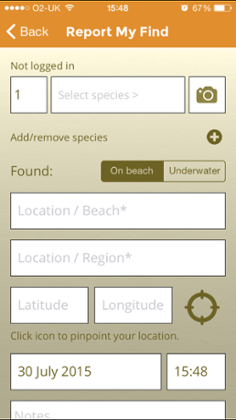
So how does it work?
Download the app and head to the beach. You can take a casual approach or be a bit more scientific about it and time yourself while sticking to limited areas (the charity suggests 20 minutes for 200 metres). Or you can make it into a long walk, following the strandline (the line of debris on the beach) for the full length of the beach recording your observations on the way.
The charity has created some easy to follow guidance on how to go about hunting down these egg cases with a simple and colourful two page (pdf) or an app. These tools explain where on a beach you’re most likely to find egg cases and allow the hunter to upload pictures of what they’ve found. It’s important to show the charity your find, so that it can be verified by experts along with where you found it and when. Other notes can be helpful too, like what material you found it with, or recent weather in the area – storms can often throw up the egg cases on beaches far from where they where laid.
Sometimes you might need to take the egg case home and soak it in water to work out which species it belongs to (if a case dehydrates it can lose some of its shape), which might take a little explaining with friends and family, but heck, it’s a talking point.
What helped it catch on?
Gordon simply thinks egg case hunting is addictive – once you start looking out for them, you can’t help yourself when you head to the beach. She says some hunter groups like to make it competitive and try to find the greatest number of species or race to find the most.
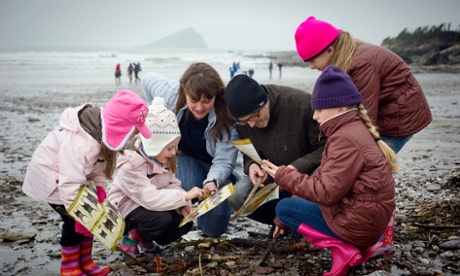
The charity has some dedicated hunters who regularly submit their findings from their local beaches. Giles Brooks, 45, found his first egg case 10 years ago in Devon and often takes his daughter Bea, 5, out hunting regularly:
“It’s free and you never know what interesting things you’re going to find while beachcombing ... we try to remember to record them all. Egg cases can now be found all around our house.”
Bea explained why she enjoys hunting for cases: “They’re called mermaid’s purses and little sharks come out of them. It’s exciting looking for egg cases and it makes me happy when I find one.”
What we like about it
Who knew sharks laid these odd little pouches? It’s certainly a bit different and the campaign shows a small awareness building exercise can become a huge project. Engaging supporters by asking them to help build your charity’s data is also a win-win.
Finding activities than are free and can appeal across age groups is often the source of social media success, but this project shows it’s a factor that’s come from the offline world. The British public are long-term lovers of mass observation, charities could tap into this quirky trait far more often.
For more news, opinions and ideas about the voluntary sector, join our community.