“This is what you call Hard Luck City,” says a man delivering groceries to families displaced to makeshift trailers in the aftermath of the 2010 Deepwater Horizon oil spill. He’s a warm, elderly, bon mot-spewing African American with a thick Alabama accent, and the fact that his name is Roosevelt is a biting irony. These citizens, whose local oyster shucking economy has been destroyed by the negligence of enormous corporations inexorably tied to our government, are getting no New Deal.
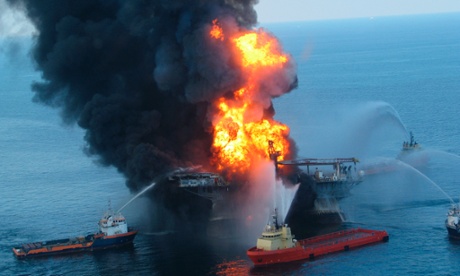
As news cycles spin in seemingly ever-increasing velocity, public outrage is like a chef at an enormous range, placing roiling pots on backburners as the latest crisis comes along demanding attention. In early 2010 the nation was stunned, saddened and furious at BP and its subcontractors after an accident killed 11 workers and spilled over 200m gallons of oil into the Gulf of Mexico. “Something must be done!” shouted our politicians and pundits. It probably won’t surprise you to learn that nothing has been done. The Great Invisible is a reminder that the problem of offshore drilling, and our energy policy in general, is still a bubbling pot.
The last thing we need is another shoddily produced, finger-pointin’ issue-oriented documentary animated solely by indignation. Thankfully, director Margaret Brown understands this. Despite a few talking heads and the occasional reliance on graphics and maps, The Great Invisible is a rebuke to the Alex Gibney factory-style, information-dump doc. Shots are edited and composed. Scenes play out, with subjects artistically lit and the camera mounted on a tripod. It isn’t an immersion experience like, say, Leviathan, but shooting with good lenses, hiring a composer like David Wingo and approaching editing like a storyteller, not a pamphleteer, goes a long way in giving a signal boost to your activist film.
Avoiding a direct A to B storyline, Brown offers a series of tableaux, checking in on different strata of people touched by this tragedy in different ways. She has a knack for finding fascinating subjects, like the gabby shrimp peeler, an immigrant from Vietnam who has lived long enough in bayou country to have the most unique accent you’ll hear in a movie this year.
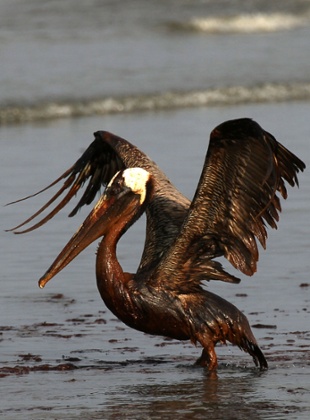
The Great Invisible is, at its heart, a work of advocacy. No one who owns stock in BP or any of the profits-thirsty, corner-cutting third parties will feel too good about themselves while watching grieving fathers talk about their dead sons. Or images of oil-drenched pelicans. Or wealthy conventioneers literally laughing and smoking cigars as they talk wistfully of the old days of even less government oversight.
But Brown puts some spin on the ball. She holds the scene (and it really does feel like a scene, not fly-on-the-wall cinema vérité) until the boozing oil men begin to deviate a bit from the script. These aren’t pig caricatures from Eisenstein’s Strike – these are intelligent men who are well aware that their work can have lasting environmental effects, but is also fundamental to the US and therefore world economy. It may be face-saving, but the implication is that they, too, would like to see change but don’t really have the ability – and certainly not the incentive – to make it happen.
A similarly difficult moment comes early in the film, as we root around the Gulf communities reliant on offshore drilling for employment. Audio of President Obama calling for a moratorium on new drilling – which common sense says would seem welcome as poison is actively spewing into the sea around them – is viewed as a malign government overreach. A sign on the road says that Obama only wants to drill when it’s into your wallet. The litigator hired by BP to oversee a $20bn payment fund (a northerner by the name of Kenneth Feinberg) discusses how many refused to file a claim due to mistrust, while others had no tax returns to prove their work in fishing or other related industries was stunted by the spill. “We do things with a handshake down here” is a cultural leap the suits aren’t ready to take.
Another direction the film looks is right in the lens. How reliant are you on fossil fuels? The Great Invisible isn’t so naïve as to think we should all just abandon our cars, nor expect Americans suddenly to start paying European rates without uprooting the economy. Without giving away the ending, and for a movie about a policy in limbo it actually has something of an ending, it does conclude with something concrete to get angry about. No spoilers, but it’s the government, stupid.
Characters weave in and out Brown’s film, and most striking is the old volunteer Roosevelt. “Mr Rosie,” some call him, as he’s stretching every dollar to boil cheap spaghetti and tomato sauce for 350 people. As the corporations scheme to maximize profits from of the earth, the pesky inhabitants still find a way to get by.