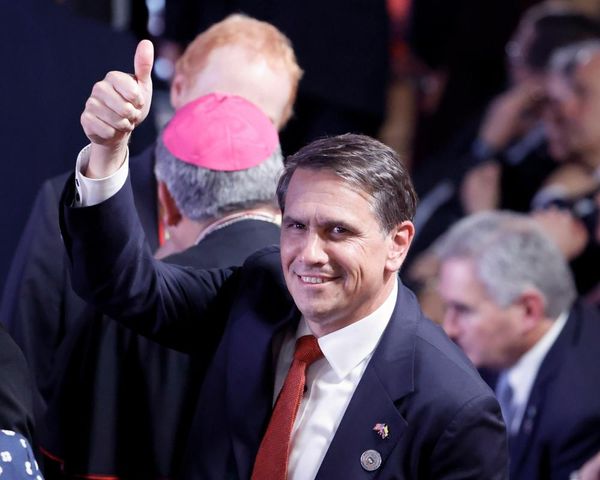
It was both enjoyable and strange to see the EU enlargement commissioner, Marta Kos, present the news on Moldovan TV a couple of months ago. For one thing, she is Slovenian – and she is also a diplomat, not a news anchor. But there she was, announcing that Moldova had made more progress in the last three years than it had in the previous 30, and that negotiations for our country to join the European Union would open soon.
It was equally surprising to spot Kos in the Instagram stories of leading Moldovan influencer siblings Emilian and Nina Crețu at the end of August – she had invited them to her house in Brussels for a Moldovan pie-making workshop. Kos even brought together the two heads of Moldova’s biggest Orthodox churches for a meeting, in spite of their mutual animosity. This is not the way we are used to EU officials communicating.
The departure from stiff, technocratic speeches is part of EU efforts to involve civil society and the public in the EU’s next enlargement process – a difference from the last phase of expansion, from 2004 to 2013, where only the political elites were involved. If the EU is to create a more harmonious kind of European integration, it needs to meet its citizens on the terrain of everyday life like this.
In candidate countries such as Albania, Montenegro and Moldova, EU membership feels like a lifeline. But becoming a member is also an arduous, technical process full of reports and negotiation clusters – it is not easy to make it sexy. In the western Balkans, the process has already been going on for years. At the first meeting of a new EU Enlargement Forum in Brussels in November, the Albanian prime minister, Edi Rama, observed that he had been talking about EU accession for so long that he could track the process in the anatomy of his receding hairline. More than 90% of Albanians are keen to join the EU, while in Moldova the figure has varied between 53% and 65% throughout the years.
For the majority of Moldovans, EU integration promises peace, prosperity, the rule of law and hope that their children could have a better future. The fears of EU-sceptic Moldovans, rooted in unease about the unknown, are boosted by Russian propaganda saying that EU membership means the loss of tradition, identity and sovereignty, or that local companies will not be able to compete against European giants. One other Kremlin-coined narrative is that the EU is about to collapse, just as the USSR did in 1991, or that the EU simply does not want to integrate Moldova. Why would it need a country of 2.4 million people?
In the EU itself, enlargement is probably not especially on the minds of ordinary citizens. Overall, 56% of people within the EU said they believe their country would benefit from further enlargement. Tellingly, the same Eurobarometer survey found about two-thirds of EU citizens said they did not feel well informed about the process. Among their concerns, migration was at the top.
With an ageing population, the EU continues to need more migrant workers: a labour force often drawn from poorer EU members or candidate states. If we are going to create a more perfect union, we cannot see these people as mere economic units, just human resources to be exploited. If the EU wants the free movement of people to lead to genuine cultural exchanges and human connections, and to stronger European identity and solidarity, it must ensure workers have help to learn the language of their host countries.
It is hard to feel fully comfortable living in a country where you don’t speak the language. One theory about the Romanian diaspora’s drift to the far right attributes it to their cultural isolation in their new homes – where social lives exist only through smartphones and sometimes in local Romanian churches. Instead of leaving integration to the labour market and the individual, the EU should encourage people changing countries to take on language classes, perhaps through their employers.
One thing more Europeans should do, in the season of Christmas parties, is to invite cleaners, security staff and everyone else working in our offices who may feel invisible to celebrate together, to have a drink and ask them about their lives. These people are usually left out, they are often from other countries, and a small gesture like this can make them feel so much more respected and welcome.
Beyond the better integration of migrant workers, if the EU wants to create a stronger and more inclusive European identity, it needs to learn from and compete with Russia’s use of soft power through the entertainment industry. Russian comedy shows like KVN (in which the Ukrainian president Volodymyr Zelenskyy once starred), or the weekly figure-skating programme Ice Age, have been hugely popular – not just in Russia, but across the former Soviet world.
Major events like Eurovision and the Champions League may bring Europeans together, but it should not end there. We need more blockbuster shows: what about Europe’s Got Talent, The Voice of Europe, European Top Gear, or The Great European Bake-Off? Why can’t these be broadcast in every EU member and candidate state?
If the EU truly wants to get its citizens more involved in processes that once only concerned governments, it needs to drop its dry bureaucratic culture and create more genuine bridges between us – through language, through storytelling, and through the unifying power of culture.
Paula Erizanu is a Moldovan journalist and writer based in Chișinău