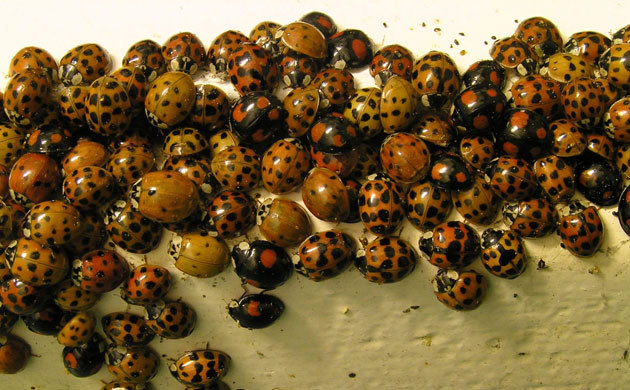
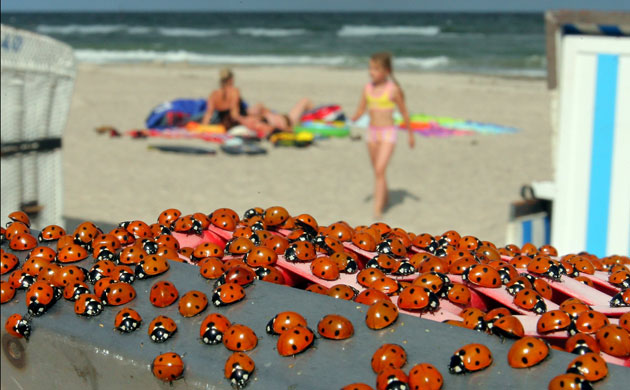
Harlequin ladybirds spend the winter in buildings – often in large numbers. This is a good opportunity to send in photographs. Woolworths.co.uk has developed a Little Ladybird Spotters information pack. The pack includes a Little Ladybird Spotters wallchart, species and photography guide and ladybird cupcake recipe Photograph: Nick Greatorex-Davies/Centre for Ecology & Hydrology/PALadybirds crowd a beach chair on Warnemuende beach, Germany, 2009. The harlequin, native to Asia, was introduced to North America and continental Europe as a biological control agent because it eats more pest insects than any other ladybirdPhotograph: Bernd Wuestneck/EPA/guardian.co.ukUnfortunately, the harlequin ladybird is known to also eat native ladybirds and the food they rely onPhotograph: Fritz Rauschenbach/Corbis
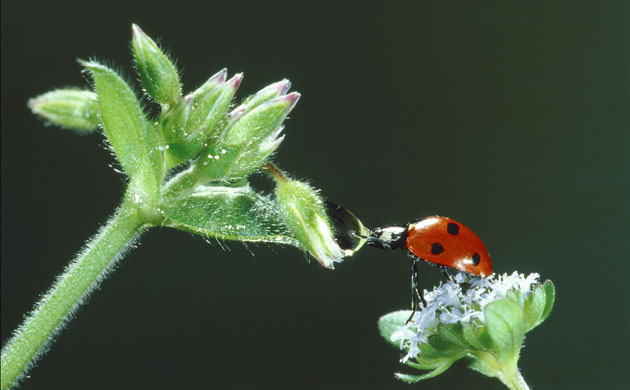
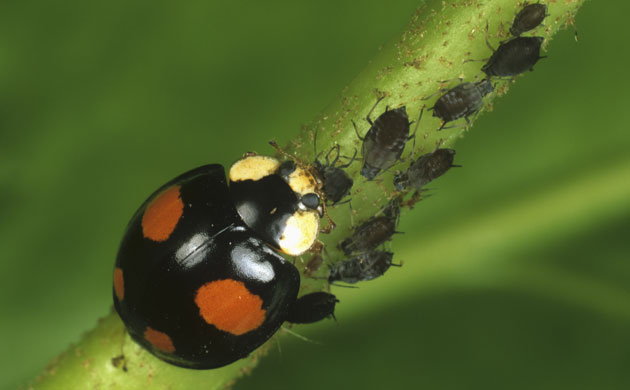
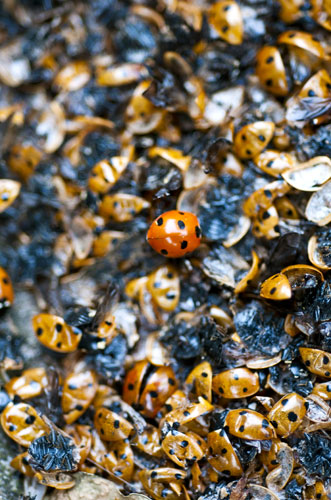
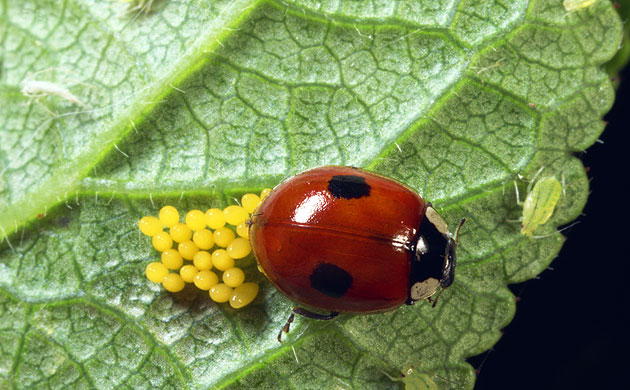
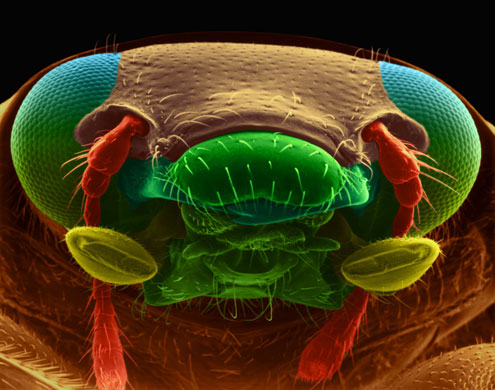
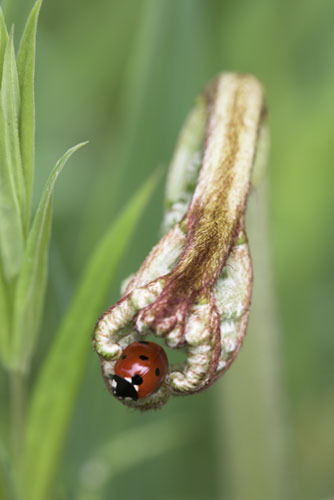
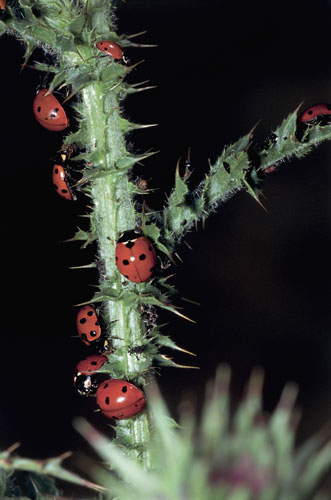
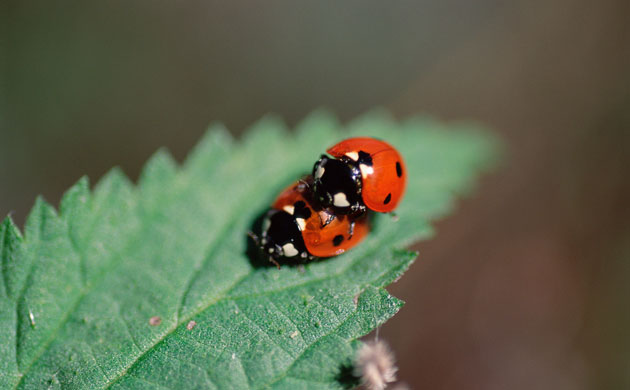
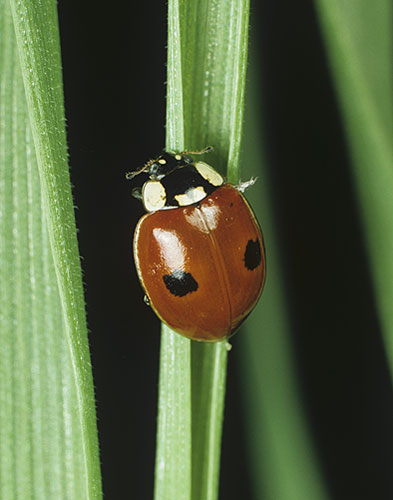
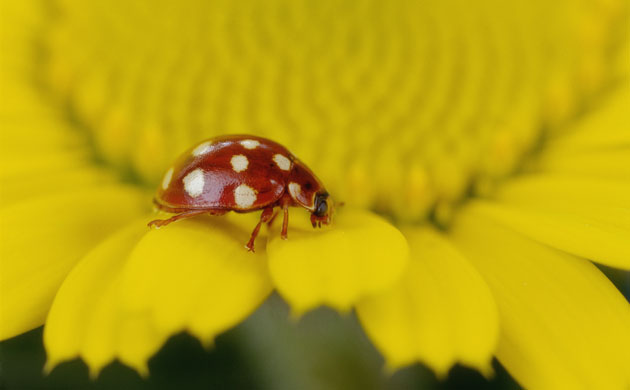
Harlequin ladybirds have a very variable appearance, which can make it difficult to tell them apart from other speciesPhotograph: Craig Tuttle/CorbisA black harlequin ladybird with four red spots eating aphids. The harlequin ladybird survey website has a guide to recognising the beetlePhotograph: Nigel Cattlin/Visuals Unlimited, Inc./Getty ImagesThousands of seven-spot ladybird carcasses carpeted the streets of Cromer after a swarm in the Norfolk coastal townPhotograph: Jason Bye /Rex FeaturesTwo-spot ladybird laying eggs. Two-spot ladybirds are about half the size of a harlequin ladybird and are usually red with one spot on each wing casePhotograph: Robert Harding/Rex FeaturesLadybird (Coccinella novemnotata), head showing its mouth parts, antennae and compound eyesPhotograph: Dennis Kunkel Microscopy/CorbisSeven-spot ladybird (Coccinella septempunctata)Photograph: Steve & Ann Toon/Robert Harding World ImagerySeven-spot ladybirds on a stem. The UK Ladybird Survey website was launched in 2005 and enables volunteers to record ladybird sightings online. The survey has received approximately 60,000 records, mainly from members of the publicPhotograph: DEA/CHRISTIAN RICCI/Getty ImagesOf the 46 ladybird species now found in Britain, only 26 are readily recognisable as ladybirds and these are the focus of the Ladybird SurveyPhotograph: CorbisThere have been reports from across Europe that two-spots are decliningPhotograph: CorbisCream-spot ladybird (Calvia 14-guttata) winters in plant litter, bark crevices and beechnutsPhotograph: Garden Picture/Getty Images
Sign up to read this article
Read news from 100’s of titles, curated specifically for you.