A man arrives late to a meeting, a little flustered and not entirely prepared. A junior planning officer, he has been sent to facilitate a last-ditch attempt to consult with the Little Rikjord community – and convince them to allow the government to demolish their homes.
The residents have a choice to make: relocate their town and keep the local mine where many of them work or keep the town and close the mine.
This is the opening scene to a new production by Cap-a-Pie theatre company, The Town Meeting, which is partly based on my research at Newcastle University into how community groups interact and represent themselves in planning matters.
When producer Katy Vanden got in touch to explain the premise of the play and ask for expertise, the idea immediately chimed with my previous experiences as a council solicitor advising the planning committee. I was just finishing a research project investigating neighbourhood forums and wondered if theatre could be a novel way to research the topic. I agreed to help Vanden and director Gwilym Lawrence to create it.
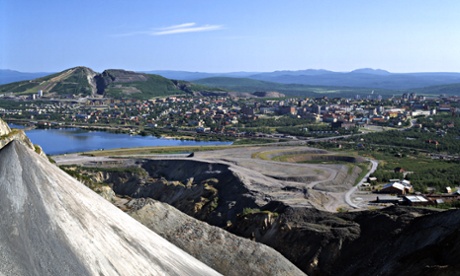
The play is interactive from the outset, with the audience taking on the role of residents of Little Rikjord and debating their dilemma. This fictional town was inspired by the Swedish town of Kiruna, which is being relocated 3km from its present location to make way for mining. It sits within an imaginary fifth country of the United Kingdom, Greater Doggerland. We needed a setting for the play that could conceivably be under the jurisdiction of UK planning laws but also gave the audience freedom to debate issues away from their immediate reality.
We give the audience members secret facts about themselves, such as “your father and brother both work in the mine” or “your parents are buried in the town’s churchyard”. Once they have completed several activities (including drawing a map of Little Rikjord and populating it with their favourite places and buildings) they are asked to discuss solutions to the dilemma facing their town and appoint two representatives. However, at the point they make their choice the planning officer receives a phone call from the minister. A decision has already been taken: mining must continue. As an olive branch, the government is offering to relocate one building from the current town and the audience is asked to form a Community Heritage Board to decide which one.
Audience reaction to the play has been incredible. Prior to the minister’s decision, audience members are nearly always split 50/50 on whether to stay or go, and they appoint two representatives to convey both sides of the argument. Once the minister’s decision is communicated the balance switches to 90/10 against her choice. In all but one case the audience has refused to have anything to do with the Community Heritage Board, even when it is hinted that by protesting through this structure the minister may change her mind. They also get very, very angry, with much rage vented at the planning officer.
This passion highlights the power of theatre to engage people in research, and proves that people are passionate about having a meaningful say in the future of their places. The fiction of the play mirrors reality. Communities jump at opportunities to create neighbourhood plans, which often release gales of creativity and imaginative ideas. However, this soon dissipates in the cold reality of the planning process.
The play was performed six times in March and April, in theatres across northern England. More shows will be put on in October, including in Sheffield and Leeds.
I hope to share findings from this project to improve and develop both the facilitation skills of planners and how we value community involvement in planning.
Paul Cowie is a research associate at the School of Architecture, Planning & Landscape, Newcastle University.
Sign up here for your free weekly Guardian Public Leaders newsletter with news and analysis sent direct to you every Thursday. Follow us on Twitter via @Guardianpublic