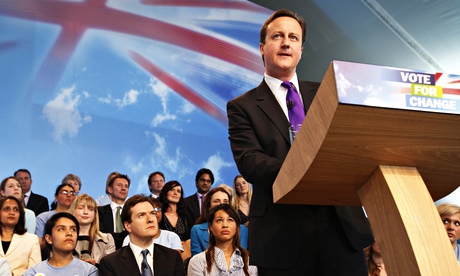
We won’t touch. We’ll change nothing. We’ve mucked you about long enough and will leave you alone, we promise. These are the least likely pledges to be heard during the coming election campaign. No one will promise to stop fussing, meddling, intervening, legislating, regulating. The only coalition that exists is the “coalition for change”, and it embraces all parties. A politician would no more oppose the concept of action than a priest would oppose the concept of God.
In the next two weeks the party manifestos will be published. How wonderful it would be if they were empty, if they just promised to allow recent upheavals in the public sector to calm down and settle. Change, of all sorts, has become the occupational disease of modern British government.
When David Cameron’s coalition came to power, having promised no more “top-town reorganisations”, it set about the umpteenth “fundamental restructuring” of the NHS. It then moved on to school testing, welfare payments, housing benefit, quango reform, local planning and root-and-branch review of Whitehall. All were fiascos, most of them bitterly regretted in hindsight. But ministers could not stop themselves. They were addicts not for ideology but for intervention. They genuinely thought anything they proposed must be for the best.
Labour was no different. Tony Blair could not stop himself mouthing change. When Gordon Brown came to power, his last words on entering Downing Street were “let’s get on with change”. The buzzword of the age is disruption. The change manager is king, the change consultant his charlatan. Head officers are the new autocracy. Toss the poor bloody infantry into the Magimix, they cry, it will only do them good.
Lord Palmerston is said to have replied to a colleague demanding a new statute that parliament could not pass laws indefinitely. “There are too many laws already,” he said, with a wave at a row of statute books. Lord Salisbury was probably the last leader to espouse the politics of inertia. In 1877 – in a letter to Lord Lytton, then viceroy of India – he said that “English policy is to float lazily downstream, occasionally putting out a diplomatic boat-hook to avoid collisions”. On foreign intervention he was particularly emphatic: “There is no practice which the experience of nations more uniformly condemns, and none which governments more consistently pursue.” As recently as 2010-11, Belgium survived 589 days without a law-making government.
Ask any frontline professional today whether they would welcome more legislation on their area of concern, and the response is unanimous: “For God’s sake no.” Doctors plead, leave us alone, if only for a year. Teachers beg, just let us teach. Not a new tax regime, moan the accountants. Please not another Home Office initiative, wail the police. Change has been relentless for the past decade. Nothing is left to settle.
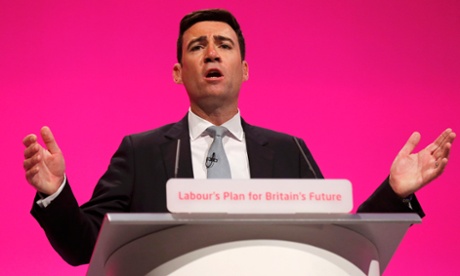
I asked a GP about the new Tory commissioning regime, on which he was agnostic except that it would take years to bed down. The Labour change had not had time to do that. Yet now, Labour’s shadow health secretary, Andy Burnham, is proposing another change. Surgery and hospital staffs have spent much of the past decade simply absorbing and then re-absorbing changes from the centre, a total distraction from their daily work and effectiveness.
Most of us tend to want to meddle in other people’s jobs but not for others to meddle in ours. I certainly feel that about the press. But the fact is that cost of meddling is never set against the proclaimed benefits. The most banal example I know is the current London craze for digging basements. It increases the value of a property, but the environmental cost of doing so to the neighbourhood is never calculated, let alone taxed. When all planning changes are assumed to be good, even by those claiming to be “conservative”, the value of the cost is taken as read.
This is not the old moan about over-regulation, chronic though it has become. Every country suffers from it. The US federal government’s register of regulations was 2,600 pages in 1936; it is now 80,000 pages long. Under Margaret Thatcher, parliament was passing 1,700 laws per year. This has now broken through the 3,000 barrier. Between May 2012 and May 2014, the coalition created 607 new criminal offences, repealing just 353. The government promises to reduce red tape of every sort, but I cannot find a single area in which it has. In employment law and building regulation, quite the opposite.
New laws, such as those now sprawling over security and surveillance, are never subject to value-for-money audit, let alone a “freedom” one. They are introduced because every minister derives machismo from legislating. Rego ergo sum: I rule therefore I am. Passing a law is the reason for being. There may be an argument as to what a law should say. Lobbies crowd round every one. But there is never a lobby for no law. A minister who declined a “slot” in the parliamentary timetable would be thought mad by colleagues and officials.
People in most walks of life crave to be left alone to go about their lawful business. They do not intend malice or illegality. They try to adhere to a skill or professional code. They may need some regulating, but not more each year. A social worker now claims to spend a quarter of each day simply filling in bureaucratic forms, so do some nurses. Each form may have good intent, but the loss of service is never assessed.
The language of politics has degenerated into the language of action and reaction. As the lobbyists clamour round the manifesto scribes, what bliss it would be if they were told that the first year of the new parliament would be completely free of laws. The first queen’s speech would state: “My government will spend its first session reflecting and pondering. Existing monetary and fiscal aggregates will remain in place, otherwise nothing will change. The press can discuss something else. A year on, my government will assess whether this has left the country better or worse. Only then will it decide what change is required, if any.”
You would hear the cheer from Land’s End to John O’ Groats.
• This article was amended on 3 April 2015. An earlier version said that at the 1895 election, Salisbury pledged that his government would “drift slowly downstream, occasionally putting out a boat-hook to avoid collision”.