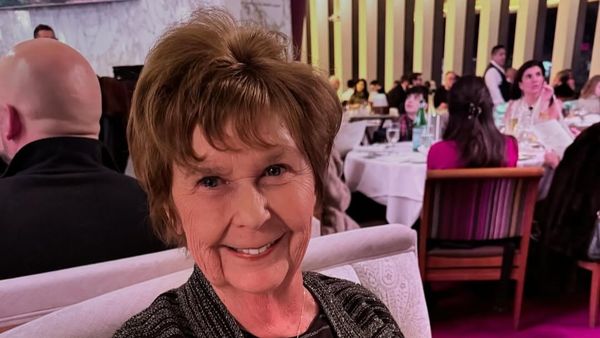
Sapling founder Sarah Forster wants NZ kids books to woke up
I have loved Aotearoa’s children’s books and their writers ever since I realised they existed as a child. In 2007, I did the Whitireia Diploma in Publishing, and subsequently started working at the NZ Book Council, then moved to Booksellers NZ, starting The Sapling in 2017 alongside Jane Arthur. We started The Sapling after each of us had over a decade’s experience in the industry, knowing that others were just as passionate as we were—and hoping to convert a few minds and souls along the way.
So here’s some observations I have—all of these have been talked through with my co-editors Nida Fiazi and Briar Lawry, and the co-founder, Jane Arthur.
1. We need humans, not animals
This is actually something I heard pointed out by a judge at a NZ Book Awards for Children and Young Adults, around 15 years ago, and it hasn’t stopped being true.
Animals are a rich source of metaphor, which I appreciate. But all too often they are used instead of actual and visible diversity of characters. A kid may enjoy a fun rhyming book about a penguin/cat/dog/kiwi/tūī getting into mischief. It is important for books to be fun, to engage future readers. But when it comes to learning how to be a good friend, or learning what different cultures have to teach them, or learning how to negotiate the first day at school, or learning more about themselves, it’s really good for them to be able to see themselves in the books they are reading.
That is why I have really enjoyed the smaller publishers filling this gap lately. Wildling Books, in particular, has created beautiful books about emotions for young people—starting with Aroha’s Way, and more recently How Do I Feel: A dictionary of emotions for children. I often find books about wellbeing difficult, because they can lean towards didacticism—it’s a delicate balance, but this series is a complete package, and has a diverse cast of recognisable characters.
2. Let’s talk about diversity
Part of the reason I’ve always loved reading is because as I grew up an only child, I learned how other people work from books. I could see myself in them, as we all should be able to. I’m passionate about our local publishing in part because this is where we should see people like us. There are still too few mirrors for those who don’t look like me in Aotearoa’s publishing.
A book published this year has an evil Chinese man as part of a group of villains. He is—wait for it—a smuggler of giant wētā for use in Chinese medicine ... This is—very clearly—not good enough
My co-editor Nida Fiazi rarely sees herself—a Hazara Kiwi Muslim—in Aotearoa’s picture books, let alone in our junior fiction and young adult novels.
As far as representation of Pacific peoples goes, Lani Wendt Young is ably holding up her end on the young adult spectrum of books—having started her own publishing company, and now putting her physical books out via OneTree House. But Dahlia Melealu recently got so frustrated with people who look like her not being in picture books, that after publishing her first My Gagana series with Little Island Press, she started her own publishing company, Mila’s Books. Her essay 'Following the brown brick road' makes for sobering—and inspiring—reading. OneTree House picked up the second My Gagana series, and Dahlia continues to publish independently.
This year’s book awards were outstanding—so were last year's—for the number of Māori winners. Huia Publishers are reaping the fruits of the investment they have made in Māori writers for children and adults for the past decade, through the Te Papa Tupu programme and 20 years of the Pikihuia awards. They are also taking risks on writers, and helping them develop, to the point where they are winning every award going, and their writing is reaching thousands.
Shilo Kino, Steph Matuku, Whiti Hereaka, Ben Ngāia—all are from the Te Papa Tupu programme, which is led by the Māori Literature Trust, Te Waka Taki Kōrero. And all are recent award-winners.
T.K. Roxborogh has been a published author for years. This year she won the Margaret Mahy Book of the Year award for the first time, with her incredible Charlie Tangaroa and the Creature from the Sea, and I know this is thanks to the investment made in her by the team at Huia Publishers. I’ve read many of her books over the years, and I know every publisher brings their own skills to an individual author’s books, but I could feel that Charlie was from the heart, and that made it next level.
Things in the sea are touching me, by Linda Jane Keegan, is the first book published in Aotearoa that presented a family with two mums
So Huia are publishing Māori writers, but what about other publishers?
I believe that, while there is a drive towards diversity as part of a wider understanding of what it means to be partners in Te Tiriti o Waitangi, Pākehā-led publishing companies are still publishing books with a Pākehā audience in mind. Most have one or two Māori authors (though no depth as far as Pacific or Asian authors go), but there needs to be further development to ensure everybody can see themselves in a book.
And let’s talk about diversity in picture books as far as disabilities, gender representation, and things like same-sex and different-shaped families go. Things in the sea are touching me, by Linda Jane Keegan, is the first picture book published in Aotearoa that presented a family with two mums—and it was a picture book finalist in the NZ Book Awards for Children and Young Adults in 2019 for its excellence.
I remember Kiri Lightfoot and Ben Galbraith’s Every Second Friday from a decade or more ago because it showed the process of two kids getting ready to go to their other parents’ house for the week. This is a very common occurrence, yet I haven’t seen this republished, and there are no further books published here that address this.
We’ve started seeing diversity in all sorts of areas in illustrations, and there are a couple of books, including Of course you can / Ka Taea Tonu e Koe, by Karen Hinge and Nicky Sievert, and Colour the stars, by Dawn McMillan and Keinyo White featuring central characters with disabilities—but what about a book that just happens to have a disabled character in it doing things all characters do? Disabled people don’t exist to inspire, as disability consultant Robyn Hunt points out.
3. Telling major moments in Aotearoa’s history
One gap Scholastic NZ has filled for a long time is that of historical fiction. The My Story books are written in a diary style, recounting key moments in NZ history, and the most recent of these are fit in the “own voices” movement.
Sometimes, you just want to see kids that look like you riding dragons, rather than having breakdowns or major life reckonings
But we need more. Where are our books about key moments for people with disabilities—perhaps the inclusion of NZSL as an official language? For that matter, how about how about the fight Māori had to have te reo Māori included as an official language of Aotearoa—or to speak their own language at all? And how about LGBTQIA+ rights? I think the time is right for a perspective of a 12-year-old who has just understood they were gay—perhaps in the 1980s, to learn more about the battles that this community had to fight for their right to exist.
Just the other week, The Sapling was tagged in a question on Twitter about Chinese history representation in books. After a short look around, the only book I could find was called Chinatown Girl, by Eva Wong Ng, from the My New Zealand Story series.
This call-out isn’t only on one publisher—every publisher is capable of this type of publishing, and the ‘diary’ style isn’t by any means patented. Allen & Unwin Australia do a similar series.
A recent title relied heavily on Māori bushlore and had two lead Māori characters—but they haven’t indicated anywhere that they have actually consulted with iwi
But also: writers from certain backgrounds may not want to write their most painful stories. So invite them to write the story they want to tell, and don’t expect them to dive into the most awful periods of their lives. The Parry kids made an excellent point in their reckoning about transgender people in literature—sometimes, you just want to see kids that look like you riding dragons, rather than having breakdowns or major life reckonings.
4. Writing diversity without consultation
Where we have an attempt to include diversity, we aren’t always getting it right. Sometimes, we find Pākehā writers writing diverse characters that are downright racist. Other times, we can see they know what they are talking about, for instance there was a recent title which relied heavily on Māori bushlore and had two lead Māori characters—but they haven’t indicated anywhere that they have actually consulted with the iwi they are presenting the knowledge of.
In the US, and in the UK—even in Australian publishers to some extent—the use of sensitivity readers is established. Here in Aotearoa, the industry has yet to emerge. It’s probable that writers who care about representation have a diverse group of friends and ask for their opinions—but it’s not an obvious part of our publishing. It could be—in the back of her book The Tomo, Mary-Anne Scott gave an account of her discussions with several iwi members from the area she’d written about.
Meanwhile there is a book published this year, which has an evil Chinese man as part of a group of villains. He is—wait for it—a smuggler of giant wētā for use in Chinese medicine. I would say you couldn’t make this shit up, but it was literally in a book published in the year of our lord 2021.
This is—very clearly—not good enough.
5. Going up
In some areas, the improvements have been vast since I began my career. I don’t have the stats, but I’d say the volume of books published in te reo Māori has at least doubled since the year we began. The Kotahi Rau Pukapuka series from Auckland University Press is continuing great work in this area—a Marvel comic, Te Pakanga A Ngāti Rānaki Me Te Ranga-tipua, will release in November.
Our authors are as good as those working anywhere else in the world
And let’s talk about production standards. As a rule, our non-fiction picture books in particular are finally reaching the standards expected internationally. Gecko Press has always been there. But now our mainstream publishers are catching up.
We have the glorious Aotearoa, signalling a move to high-value publishing as a standard for Penguin Random House back in 2017. Huia Publishers, Mary Egan Publishing, Te Papa Press, and Beatnik Books are also doing great work on the picture book front. Scholastic NZ has flashes of brilliance when they invest in good covers, and Oratia Books have some good clean design happening these days.
We are also improving considerably in the area of children’s book cover design. We have some amazing book designers, and they are doing great work. Never underestimate a fantastic cover for drawing eyes and minds to your books.
I’m proud of being a champion of Aotearoa’s books. I know our authors are as good as those working anywhere else in the world. I’ve had so many heart-stopping moments of joy in the pages of our books, and I’m going to keep on going, because books grow humans.